Peptide Medix product catalog

Peptide Medix

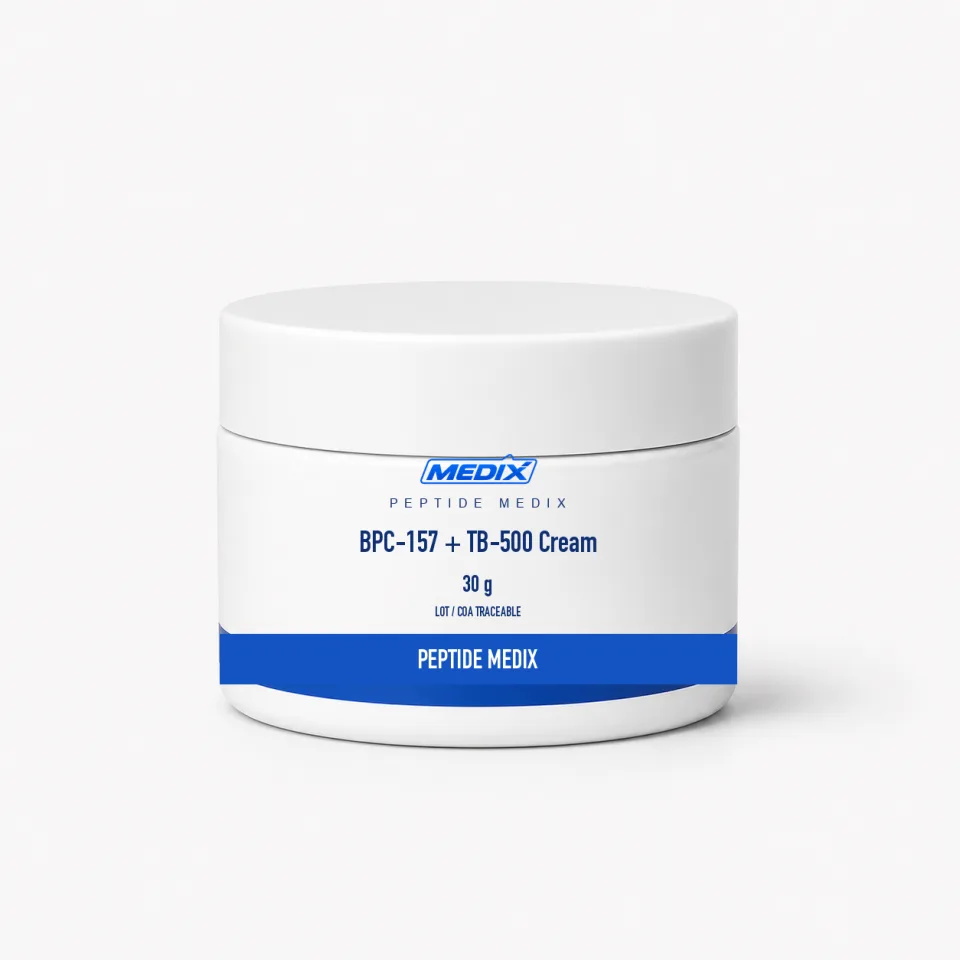
BPC-157 + TB-500 Cream

Two-peptide emollient cream, 500 mcg/g each of BPC-157 and TB-500

Review catalog details Secure payments
Available to order · 2 of 2 options available
$97.00 $115.00 15% OFF

Choose an option

1
Categories: bpc-157 tb-500 cream , topical peptides , peptide blends

Choose your delivery method

Standard Shipping is automatically selected at checkout. Customers can upgrade to a faster delivery option anytime.

Overview

This cream carries both tissue-repair peptides from our vial range in a single emollient oil-in-water base, at 500 micrograms per gram of each — 0.05% w/w apiece, 1 mg of total peptide per gram. A 30 g jar therefore holds roughly 15 mg of BPC-157 and 15 mg of TB-500; a 50 g jar holds about 25 mg of each. Both actives are built from ≥99% HPLC-purity material with a lot-matched certificate of analysis.

The two peptides are combined because their published mechanisms sit at different points in the repair sequence. BPC-157 is a synthetic 15-amino-acid fragment of a gastric protein, sequence Gly-Glu-Pro-Pro-Pro-Gly-Lys-Pro-Ala-Asp-Asp-Ala-Gly-Leu-Val, studied largely for angiogenic signalling, fibroblast behaviour and mucosal integrity. TB-500 is the acetylated thymosin beta-4 (17–23) heptapeptide, Ac-Leu-Lys-Lys-Thr-Glu-Thr-Gln, which carries the actin-binding motif of its parent protein and appears in the literature on cell migration and wound closure. Researchers pairing them are usually testing whether vascular and migratory endpoints respond differently together than apart.

Specifications

Brand Peptide Medix
Category Tissue Repair & Healing Peptides
Form Emollient oil-in-water cream in a screw-top jar
Available sizes 30 g and 50 g jars
Active concentrations 500 mcg/g BPC-157 and 500 mcg/g TB-500 (0.05% w/w each, 1 mg/g total)
Approximate peptide content ≈15 mg of each peptide per 30 g jar; ≈25 mg of each per 50 g jar
Peptide purity input ≥99% by HPLC per component; lot-matched COA available
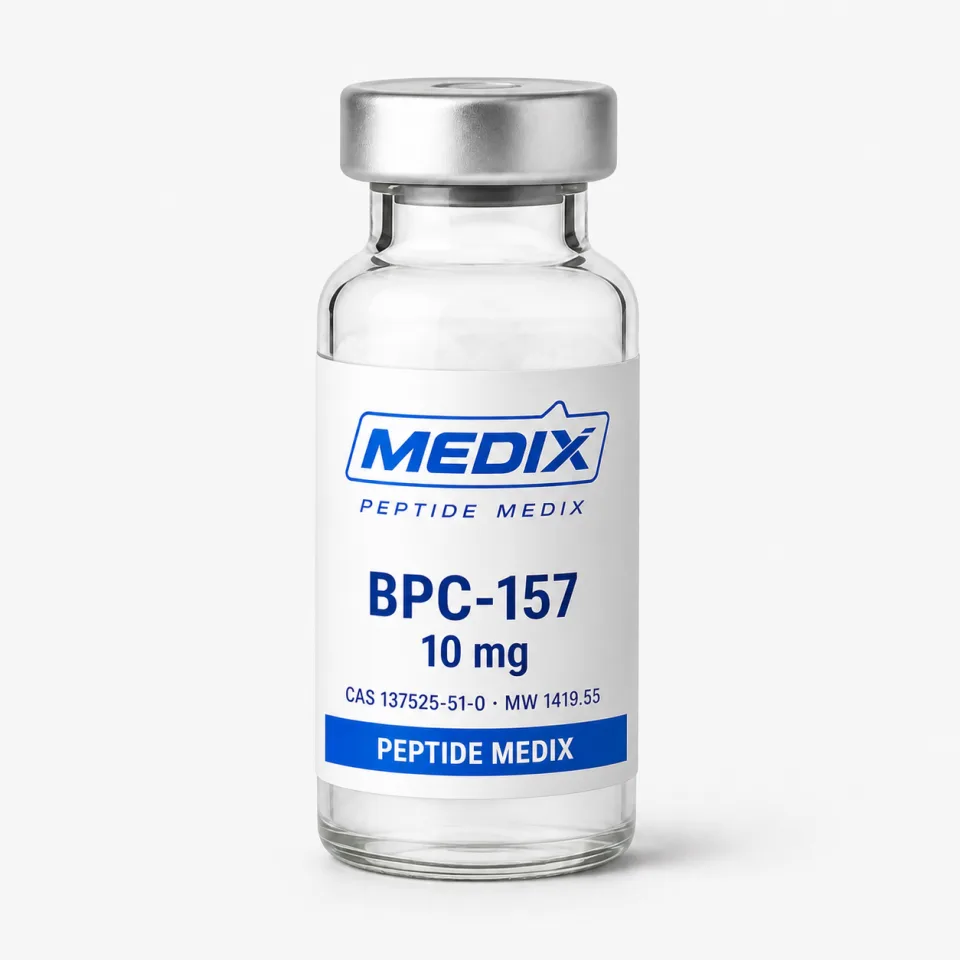
BPC-157 identifiers CAS 137525-51-0 · C62H98N16O22 · 1419.55 g/mol
BPC-157 sequence Gly-Glu-Pro-Pro-Pro-Gly-Lys-Pro-Ala-Asp-Asp-Ala-Gly-Leu-Val
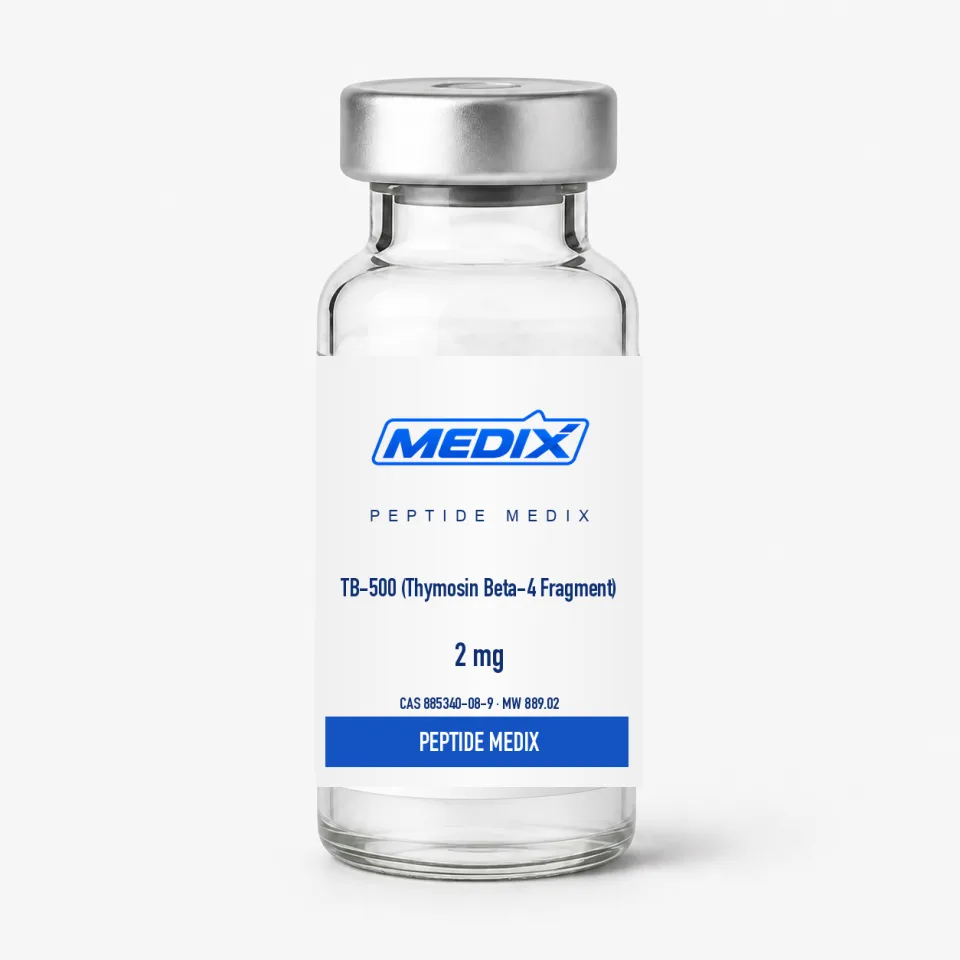
TB-500 identifiers CAS 885340-08-9 · C38H68N10O14 · 889.02 g/mol
TB-500 sequence Ac-Leu-Lys-Lys-Thr-Glu-Thr-Gln (thymosin beta-4 residues 17–23)
Vehicle Emollient oil-in-water base, no added fragrance or colourant
Research areas Percutaneous penetration of large hydrophilic peptides, vehicle and occlusion effects, ex vivo skin models, fibroblast migration and wound-model work
Storage Cool and dark, ideally 2–8 °C; keep the jar closed between uses
Preparation required None — fixed loading per gram, no reconstitution step
SKU BPC-157-TB-500-CREAM-30-G

Highlights

  • 500 mcg/g of BPC-157 and 500 mcg/g of TB-500 — 1 mg total peptide per gram
  • Jar sizes of 30 g (≈15 mg of each peptide) and 50 g (≈25 mg of each)
  • Both actives built from ≥99% HPLC-purity peptide with lot-matched COAs
  • Same sequences as our lyophilized BPC-157 and TB-500 vials, for cross-format comparison
  • Unfragranced oil-in-water base intended for vehicle, occlusion and barrier-state studies
  • Fixed loading per gram — no reconstitution, weighing or blending step
  • Cool, dark storage preferred; ships from the United States
  • Research use only — not a cosmetic, drug or consumer product

What's Included

  • The product option and size selected above
  • Final item and quantity confirmed in cart
  • Review the current ingredient listing before purchase

Research Overview

Why these two peptides are paired

Repair models tend to separate into vascular and migratory endpoints, and the two actives here map onto that split. BPC-157 appears in rodent tendon, ligament and gastrointestinal literature with proposed mechanisms including modulation of the nitric oxide system, effects on VEGFR2 signalling and increased fibroblast migration in culture. TB-500 carries the actin-binding domain of thymosin beta-4 and features in work on G-actin sequestration, keratinocyte and endothelial cell migration, and corneal and cardiac repair models. Combining them is a question, not a claim: whether endpoints observed separately behave additively when both are present in one vehicle.

The barrier problem for a two-peptide cream

Passive permeation across intact stratum corneum strongly favours small, moderately lipophilic molecules, with a practical ceiling often quoted near 500 daltons. Both actives sit well above it and are hydrophilic. Unless a study demonstrates otherwise in its own model system, meaningful passive flux through undamaged skin should not be assumed, and the two peptides may not behave identically — the 889 g/mol heptapeptide and the 1420 g/mol pentadecapeptide differ enough in size and charge distribution that differential partitioning is itself worth measuring.

What a fixed-loading blend is useful for

  • Comparing single-active and dual-active creams from the same base, using our BPC-157 cream as the reference arm
  • Occlusion studies, where raised skin hydration commonly increases apparent flux
  • Barrier-state comparisons — intact versus tape-stripped, abraded or wounded models
  • Analytical separation of the two peptides in receptor fluid or tissue extract, which needs a method resolving both
  • Formulation stability, since acetylated and free-N-terminus peptides age differently in an emulsion

Interpreting results honestly

The great majority of published BPC-157 and TB-500 data comes from parenteral or oral routes in animals. Percutaneous delivery is a distinct and far less characterised question, and results from systemic studies should not be carried across to a topical article without direct evidence.
BPC-157 + TB-500 Cream FAQ

How much peptide does each jar contain?
Both actives are loaded at 500 micrograms per gram, so a 30 g jar holds approximately 15 mg of BPC-157 and 15 mg of TB-500, and a 50 g jar approximately 25 mg of each. Total peptide content is 1 mg per gram of cream.
How does this differ from the single-peptide BPC-157 cream?
The base and the BPC-157 loading are the same; this version adds TB-500 at an equal 500 mcg/g. That makes the two products a natural pair for studies isolating what the second peptide contributes, since the vehicle and the first active are held constant.
Will peptides this large cross intact skin?
Not to any degree that should be assumed. Both are hydrophilic and well above the several-hundred-dalton range passive diffusion favours. Whether measurable flux occurs depends on vehicle, occlusion, contact time and barrier state, and it needs demonstrating in the model system being used.
Is a certificate of analysis available?
Yes. Each peptide lot used in manufacture is analysed by reverse-phase HPLC to ≥99% purity with identity confirmation, and lot-matched certificates are available on request. Quote the batch code printed on the jar when asking for them.
How should the cream be stored?
Cool and dark, ideally refrigerated at 2–8 °C, with the jar tightly closed. Emulsions are more sensitive to temperature cycling than lyophilized powder, so avoid repeated warming and cooling, and discard if the base separates, discolours or changes odour.

This catalog listing is for laboratory research use only. It is not represented as a drug, food, supplement, cosmetic or diagnostic product, and it is not offered for human or veterinary use.

Customer Reviews

0 reviews
5 star
0%
4 star
0%
3 star
0%
2 star
0%
1 star
0%

Leave Your Review

Rating

No reviews yet — be the first!

Leave Your Review

Rating

Keep exploring

Related Products & Shopping Guides

Compare BPC-157 + TB-500 Cream with relevant categories, product topics, and practical shopping information.

Often researched together

Related research peptides, blends and lab supplies frequently ordered with BPC-157 + TB-500 Cream.

15% OFF
BPC-157 Cream

Peptide Medix

BPC-157 Cream

bpc-157 cream

2 options

$68.00 $80.00

View options and product details

15% OFF
BPC-157

Peptide Medix

BPC-157

bpc-157

7 options

$34.00 $40.00

View options and product details

15% OFF
Pentosan Polysulfate Sodium

Peptide Medix

Pentosan Polysulfate Sodium

pentosan polysulfate

2 options

$72.00 $85.00

View options and product details