Research Overview
Chemistry and origin
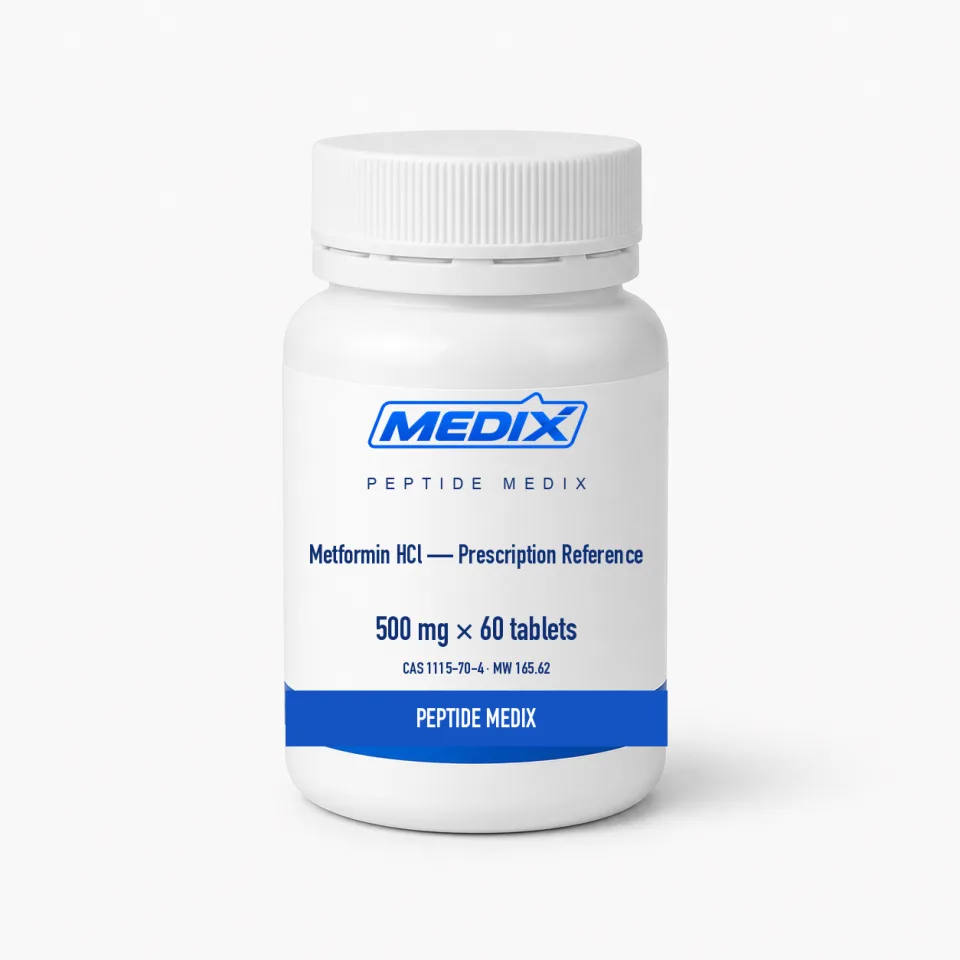
Metformin belongs to the biguanide class, two guanidine units sharing a nitrogen, with a dimethylated terminal nitrogen. The scaffold traces to galegine and related guanidines found in Galega officinalis, a plant with a long record of use in traditional herbal practice for symptoms now recognised as diabetes. Metformin's very high polarity and permanent positive charge at physiological pH mean it does not cross membranes freely; distribution depends on organic cation transporters, principally OCT1 in hepatocytes and OCT2 in the renal tubule, with MATE transporters handling efflux into urine. It is not metabolised at all and leaves the body unchanged, which is why renal function governs its accumulation.
Mechanism of action
The dominant effect is a reduction in hepatic glucose output. The best-supported molecular account is mild, reversible inhibition of mitochondrial respiratory chain complex I, which raises the cellular AMP:ATP ratio, activates AMP-activated protein kinase and restrains gluconeogenic flux; AMP also directly inhibits fructose-1,6-bisphosphatase and adenylate cyclase. A parallel mechanism, inhibition of mitochondrial glycerophosphate dehydrogenase, shifts the cytosolic redox state and limits gluconeogenesis from lactate and glycerol. AMPK-independent effects, gut-based actions on GLP-1 secretion, bile acid handling and the intestinal microbiome are all active areas of study.
Approved use as a public regulatory fact
- Indicated as an adjunct to diet and exercise to improve glycaemic control in adults and paediatric patients aged 10 years and older with type 2 diabetes mellitus
- Labelling carries a boxed warning for lactic acidosis, with risk raised by renal impairment, hepatic impairment, hypoxaemic states and excess alcohol intake
- Contraindicated in severe renal impairment, with defined eGFR thresholds for initiation and continuation