Research Overview
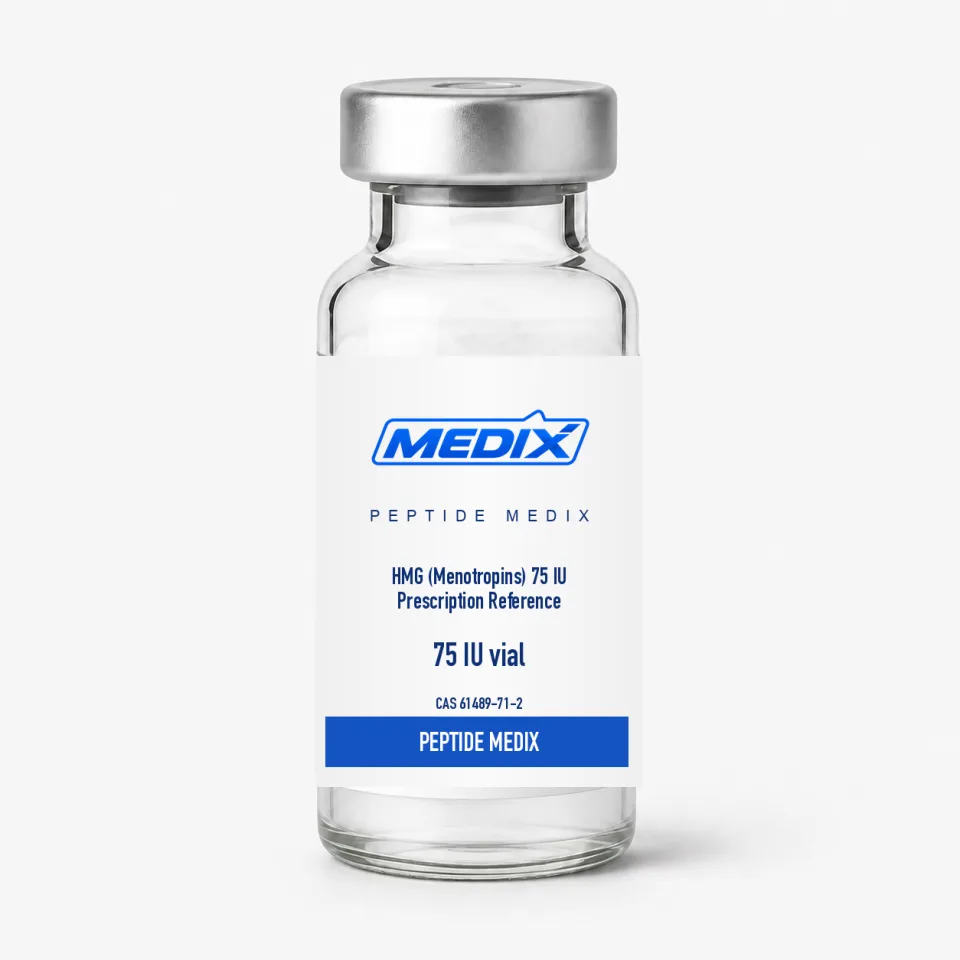
What menotropins actually is
Unlike a synthetic peptide, menotropins is a purified biological preparation. Postmenopausal urine contains elevated gonadotropins because the negative feedback from ovarian steroids has been removed, and the manufacturing process concentrates and purifies that material to a defined activity. The result is not a single molecular entity: it contains glycoprotein hormone isoforms differing in glycosylation, and this heterogeneity is exactly why potency must be assigned by bioassay in international units rather than measured as milligrams of active substance.
Two activities, two receptors
FSH acts at the FSH receptor on granulosa cells, driving follicular growth and aromatase expression. LH activity acts at LHCGR on theca and, later, granulosa cells, supplying the androgen precursors that aromatase converts to oestradiol and triggering the events of ovulation and luteinisation. The two-cell two-gonadotropin model of ovarian steroidogenesis is the standard framework for understanding why a preparation containing both differs from one containing FSH alone. In highly purified menotropin products, part of the measured LH activity is contributed by chorionic gonadotropin from the source material, since hCG acts at the same receptor with a longer circulating half-life.
- Approved in the United States and other jurisdictions for use in assisted reproductive technology, with ovulation induction included in some product licences
- Ovarian hyperstimulation syndrome and multiple gestation are recognised risks addressed in approved labelling
- Comparative literature examines urinary menotropins against recombinant FSH across oocyte yield, oestradiol profile and cycle outcome measures