Research Overview
Molecule and manufacture
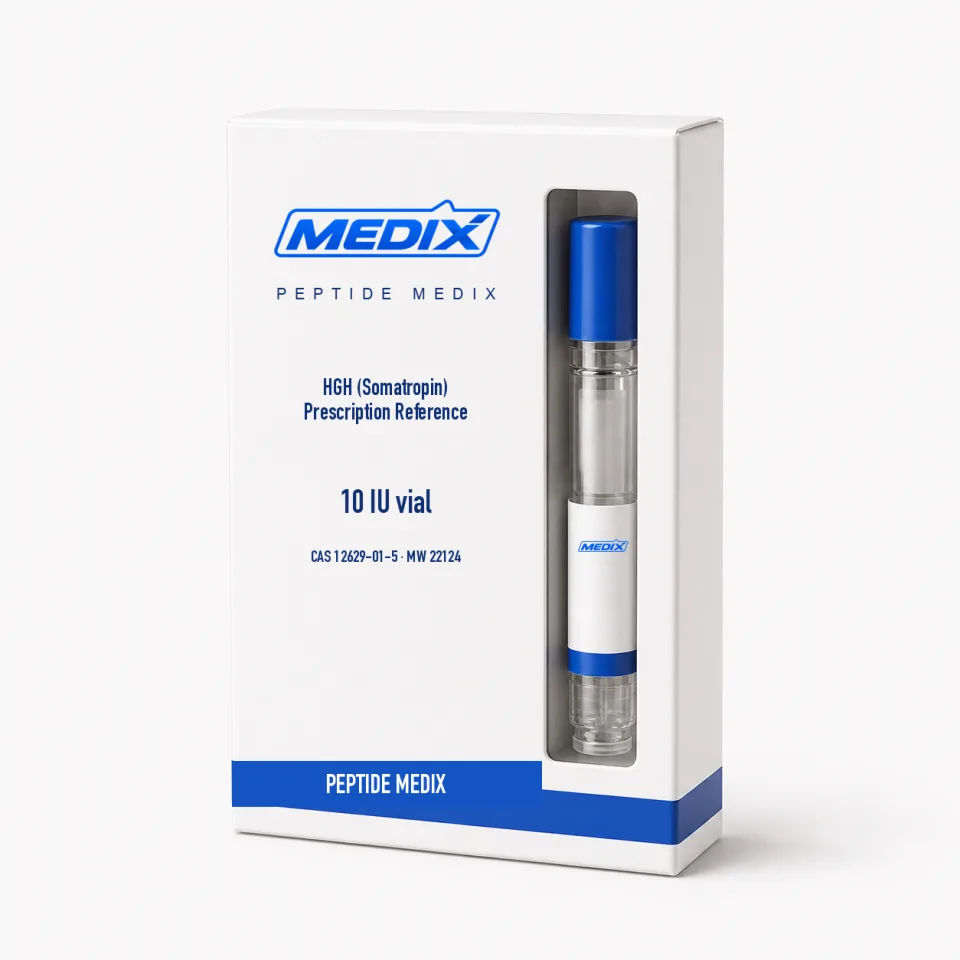
Human growth hormone is a 191-residue single-chain protein of the somatotropin family, folded into a four-helix bundle and stabilised by two disulfide bonds. Recombinant somatropin reproduces this sequence exactly, distinguishing it from the earlier pituitary-derived extracts that were withdrawn in the mid-1980s after cases of Creutzfeldt-Jakob disease were traced to cadaveric material. Modern product is expressed recombinantly and purified chromatographically; because it is a protein rather than a small molecule, it is heat- and shear-sensitive and cannot be given orally.
Mechanism of action
Approved indications as a public regulatory fact
- Growth failure due to inadequate endogenous growth hormone secretion in children
- Growth hormone deficiency in adults, of either childhood or adult onset
- Short stature associated with Turner syndrome, Noonan syndrome and SHOX deficiency
- Prader-Willi syndrome, and growth failure in children born small for gestational age without catch-up growth
- Growth failure associated with chronic kidney disease in children, and idiopathic short stature in defined cases
- Selected brands additionally carry approvals for HIV-associated wasting and for short bowel syndrome
Regulatory context and restrictions
Beyond ordinary prescription controls, human growth hormone is subject to unusual statutory restriction in the United States: federal law makes it an offence to distribute or possess hGH for any use other than an indication approved by the FDA and authorised by a prescription. It is also a prohibited substance in sport under the World Anti-Doping Code. This catalogue therefore lists somatropin strictly as a reference entry, and does not describe or facilitate any non-prescribed use.