Peptide Medix product catalog

Peptide Medix

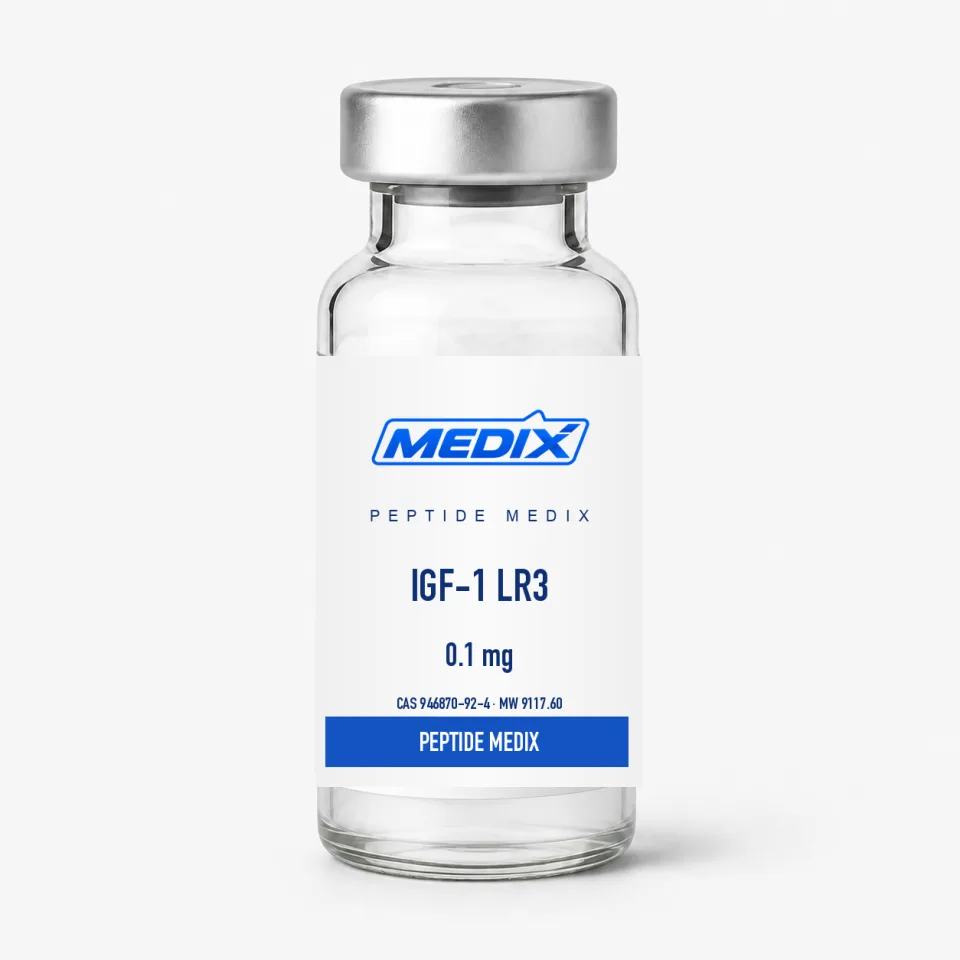
IGF-1 LR3

Long R3 IGF-1 — 83-residue recombinant analogue, low IGFBP affinity

Review catalog details Secure payments
Available to order · 2 of 2 options available
$34.00 $40.00 15% OFF

Choose an option

1
Categories: igf-1 lr3 , long r3 igf-1 , igf peptides

Choose your delivery method

Standard Shipping is automatically selected at checkout. Customers can upgrade to a faster delivery option anytime.

Overview

IGF-1 LR3, or Long R3 insulin-like growth factor 1, is an 83-residue recombinant analogue of human IGF-1. Two engineered changes define it: arginine replaces glutamate at position 3, and a 13-amino-acid extension is added to the N-terminus. Together these raise the molecular weight to roughly 9118 g/mol and, more importantly, sharply reduce affinity for the IGF binding proteins that normally sequester more than 95% of circulating IGF-1.

Specifications

Brand Peptide Medix
Category IGF & Muscle Peptides
Form Lyophilized powder, sealed glass vial
Purity ≥99% by HPLC; lot-matched COA available
Available sizes 0.1 mg, 1 mg
Also known as Long R3 IGF-1, LR3 IGF-1
CAS number 946870-92-4
Molecular formula C400H625N111O115S9
Molecular weight 9117.60 g/mol
Chain length 83 amino acids (70-residue IGF-1 core plus 13-residue N-terminal extension)
Key modifications Arg substituted for Glu at position 3; N-terminal 13-residue extension
Protein class Recombinant insulin-like growth factor analogue
Primary target IGF-1 receptor (IGF-1R), a receptor tyrosine kinase
Research areas IGF-1R signalling, myoblast and cell proliferation assays, serum-free culture
Storage (lyophilized) −20 °C or below, sealed and protected from light and moisture
SKU IGF-1-LR3-0-1-MG

Highlights

  • ≥99% purity by HPLC with a lot-matched Certificate of Analysis available
  • Stocked in 0.1 mg and 1 mg lyophilized vials for cell culture and assay work
  • 83-residue recombinant IGF-1 analogue: Arg3 substitution plus 13-residue N-terminal extension
  • Engineered for markedly reduced IGF binding protein affinity in culture media
  • Widely used as an IGF-1 receptor agonist and serum substitute in bioprocess research
  • Larger and more fragile than small synthetic peptides — carrier protein often used
  • Cold-chain packed, stored at −20 °C or below, shipped from a United States facility

What's Included

  • The vial option and size selected above
  • Final item and quantity confirmed in cart
  • Laboratory-research-use labeling

Research Overview

Why the binding proteins matter

Receptor signalling

LR3 is studied as an agonist at the IGF-1 receptor, a receptor tyrosine kinase that autophosphorylates and recruits IRS-1 and Shc adaptors. Downstream, work focuses on the PI3K–Akt–mTOR axis associated with protein synthesis and survival, and the Ras–MAPK arm associated with proliferation. Cross-reactivity with the insulin receptor and hybrid receptors is a standard control consideration in these experiments.

Applications in culture and bioprocess

  • Serum-free and reduced-serum media formulations, where LR3 substitutes for insulin or serum growth factors in CHO and hybridoma production systems
  • Myoblast and satellite cell studies examining differentiation, hypertrophy signalling and myotube formation in vitro
  • Comparative assays against native IGF-1 and IGF-1 DES(1-3) to separate binding-protein effects from receptor-level potency

Handling as a protein, not a peptide

At 83 residues with multiple disulfide bonds, LR3 behaves like a small protein: it adsorbs to plastic and glass at low concentration, is sensitive to freeze–thaw, and is commonly reconstituted with a carrier such as 0.1% bovine serum albumin for dilute working stocks. All described use is laboratory research; none of it concerns human application.
IGF-1 LR3 FAQ

What is IGF-1 LR3?
IGF-1 LR3 is an 83-amino-acid recombinant analogue of insulin-like growth factor 1, carrying an Arg3 substitution and a 13-residue N-terminal extension. Both changes reduce IGF binding protein affinity, making it a dependable IGF-1 receptor agonist in cell culture.
How does it compare with IGF-1 DES(1-3)?
Both evade IGF binding proteins, but by different routes. DES(1-3) removes the first three N-terminal residues, while LR3 substitutes Arg at position 3 and adds an extension. LR3 is larger and generally reported to have the longer working stability.
Is a Certificate of Analysis provided?
Yes. Each lot is third-party tested by HPLC for ≥99% purity and identity, with a lot-matched Certificate of Analysis available on request. Verify the lot number on your vial against the certificate before entering the material into your laboratory records.
Why is a carrier protein recommended?
At the low concentrations typical of cell culture, proteins adsorb onto plastic tubes and pipette tips, silently lowering the delivered amount. Adding a carrier such as 0.1% BSA to dilute working stocks occupies those surfaces and preserves the concentration you intend to apply.

This catalog listing is for laboratory research use only. It is not represented as a drug, food, supplement, cosmetic or diagnostic product, and it is not offered for human or veterinary use.

Customer Reviews

0 reviews
5 star
0%
4 star
0%
3 star
0%
2 star
0%
1 star
0%

Leave Your Review

Rating

No reviews yet — be the first!

Leave Your Review

Rating

Keep exploring

Related Products & Shopping Guides

Compare IGF-1 LR3 with relevant categories, product topics, and practical shopping information.

Often researched together

Related research peptides, blends and lab supplies frequently ordered with IGF-1 LR3.

15% OFF
IGF-1 DES (1-3)

Peptide Medix

IGF-1 DES (1-3)

igf-1 des

2 options

$34.00 $40.00

View options and product details

15% OFF
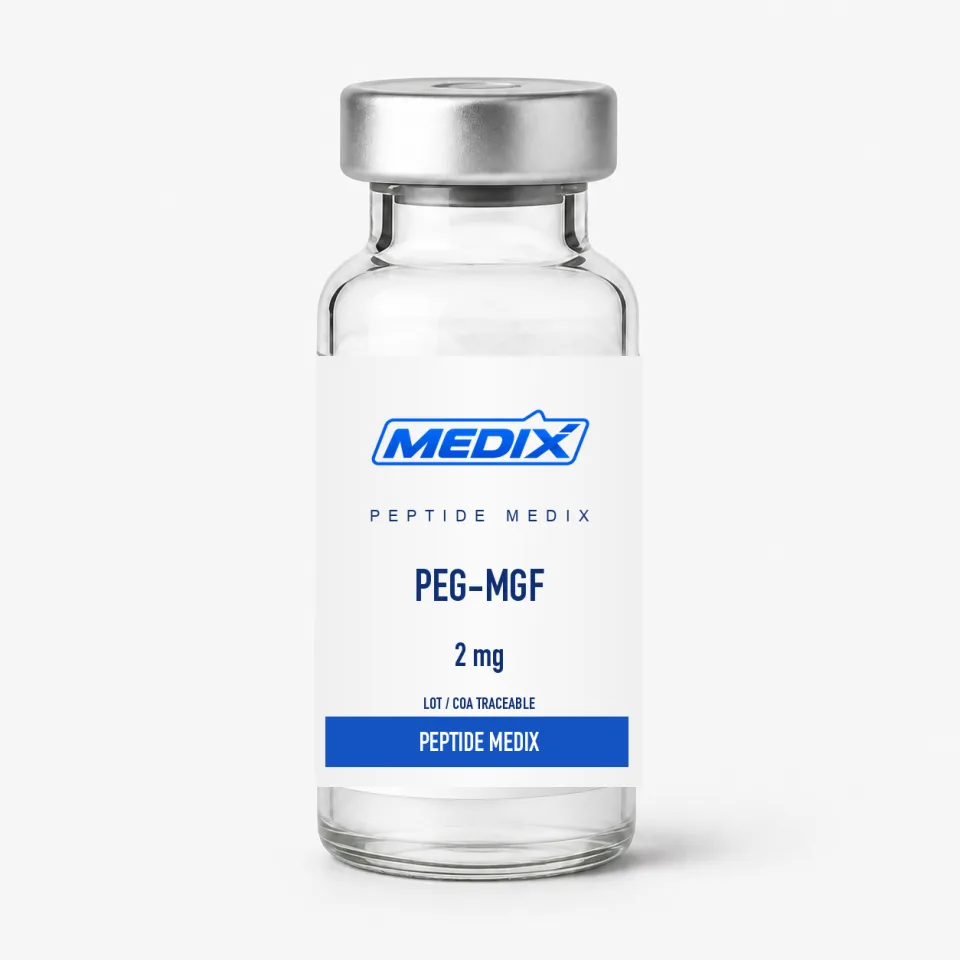
PEG-MGF

Peptide Medix

PEG-MGF

peg-mgf

2 options

$55.00 $65.00

View options and product details

15% OFF
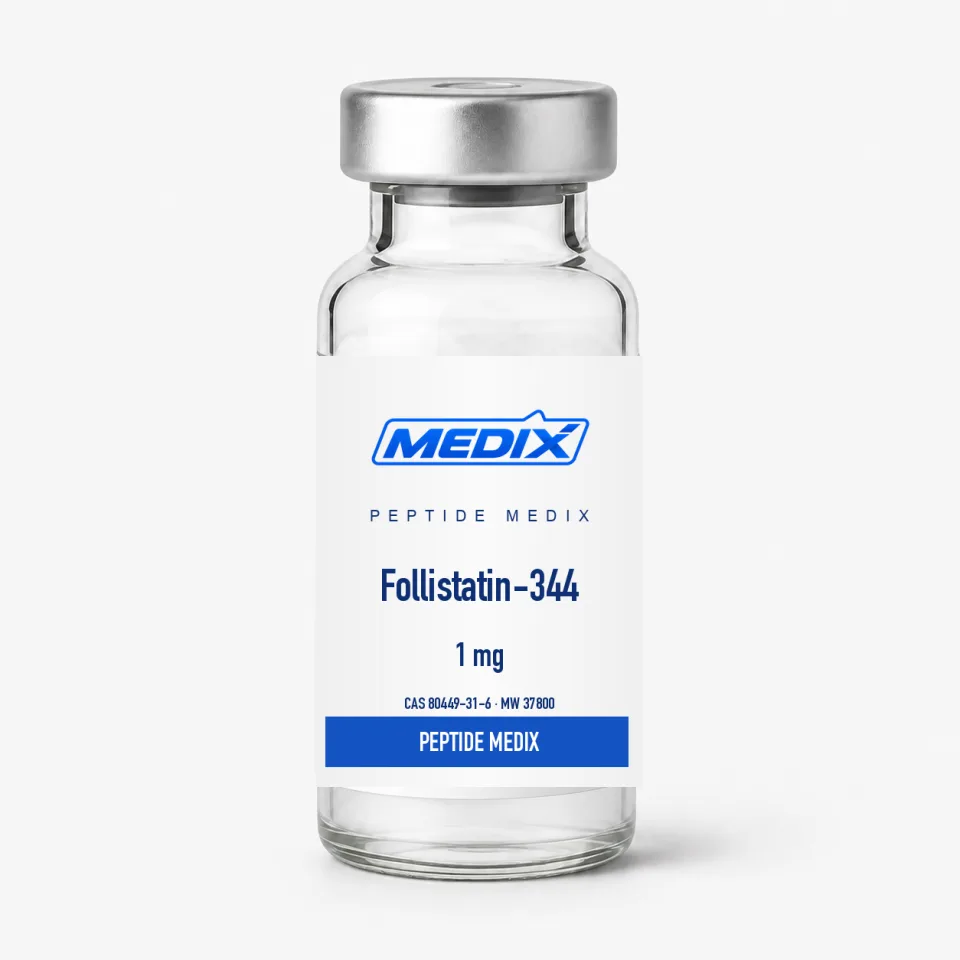
Follistatin-344

Peptide Medix

Follistatin-344

follistatin-344
$182.00 $215.00

View options and product details