Research Overview
Molecule and formulation
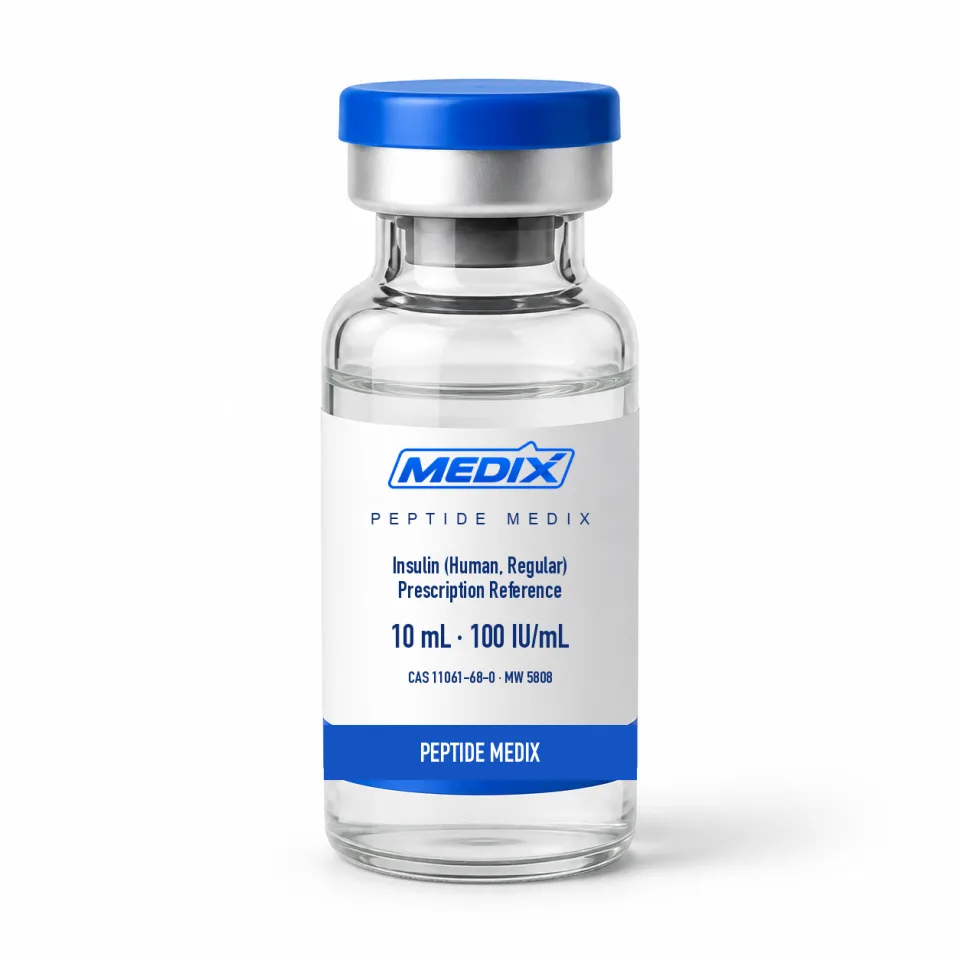
Insulin is synthesised in beta cells as preproinsulin, processed to proinsulin, and cleaved to release C-peptide and the mature two-chain hormone. Recombinant human insulin reproduces the mature sequence exactly. In a vial the protein is formulated near neutral pH with zinc ions and a phenolic preservative, conditions that favour stable hexamers; on dilution the hexamer dissociates to dimers and monomers, and it is the monomer that crosses the capillary endothelium and engages the receptor. This association behaviour is the reason regular insulin acts more slowly than the engineered rapid-acting analogues, whose sequence changes weaken self-association.
Mechanism of action
The insulin receptor is a disulfide-linked α2β2 glycoprotein of the receptor tyrosine kinase family. Hormone binding to the extracellular α subunits triggers a conformational change and trans-autophosphorylation of the β subunits, recruiting insulin receptor substrate proteins. The PI3K/Akt branch drives translocation of GLUT4 vesicles to the plasma membrane in muscle and adipose tissue, activates glycogen synthase, suppresses hepatic gluconeogenesis and inhibits lipolysis; the Ras/MAPK branch mediates growth-related transcription. The net effect is a coordinated shift from fuel mobilisation to fuel storage.
Approved use as a public regulatory fact
- Indicated to improve glycaemic control in adults and children with diabetes mellitus
- Regular human insulin is the form conventionally used for intravenous administration in hospital settings, including in diabetic ketoacidosis and hyperglycaemic crises
- Since 2020 insulins are regulated in the United States as biological products rather than as drugs, which changed the approval and interchangeability pathway
- There is no approved indication for body composition, athletic or performance use of any kind