Research Overview
Molecular design
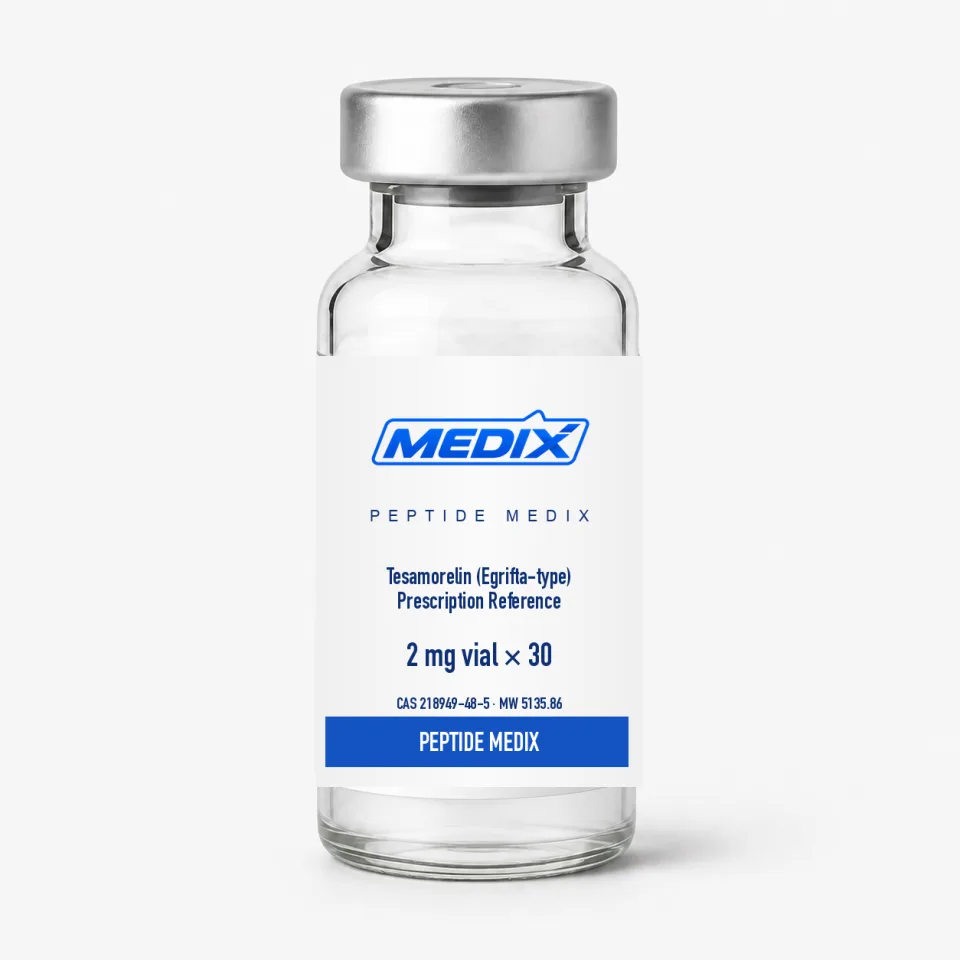
Native GHRH is a 44-amino-acid hypothalamic peptide whose activity is short-lived: dipeptidyl peptidase-4 clips the bond between residues 2 and 3, generating an inactive fragment within minutes. Tesamorelin addresses that liability without altering the receptor-binding face of the molecule, attaching a trans-3-hexenoyl group to the α-amino group of Tyr1. The full-length sequence is retained, so receptor recognition is preserved while the hydrophobic cap sterically protects the cleavage site. This is the same molecule described in the research-grade tesamorelin listing; what distinguishes the entry on this page is pharmaceutical manufacture, approved labelling and prescription status.
Pharmacology
Tesamorelin binds the GHRH receptor, a class B G protein-coupled receptor on anterior pituitary somatotrophs. Receptor activation raises cyclic AMP, activates protein kinase A and promotes both synthesis and secretion of growth hormone. Because the drug works upstream of the pituitary rather than replacing growth hormone directly, the resulting secretion retains its pulsatile character and remains subject to negative feedback from IGF-1 and somatostatin — a pharmacological distinction from exogenous somatropin. Rising IGF-1 is the standard laboratory marker of the pharmacodynamic effect.
Approved indication as a public regulatory fact
- Approved in the United States for the reduction of excess abdominal fat in adults with HIV infection and lipodystrophy
- Labelling notes that the effect on cardiovascular risk and long-term outcomes has not been established
- Successive formulations have altered vial strength, reconstitution and storage requirements while keeping the same active moiety