Research Overview
Why the N-terminal acyl group matters
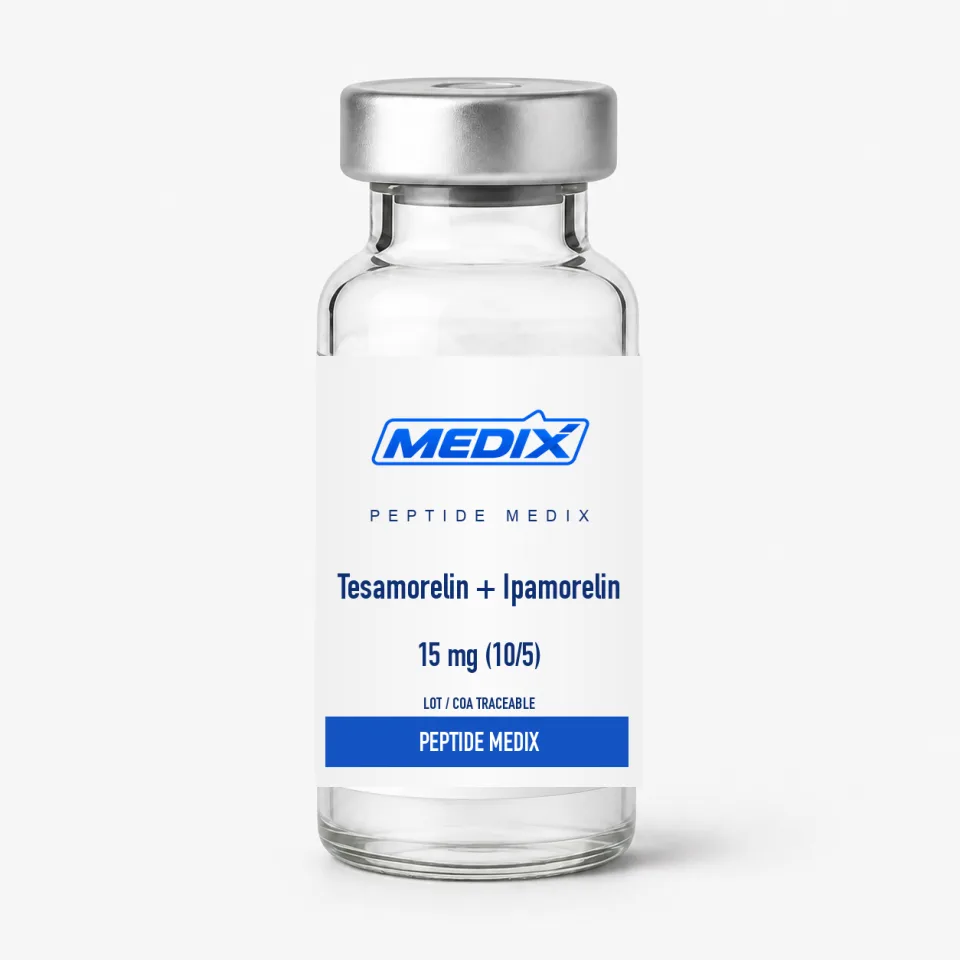
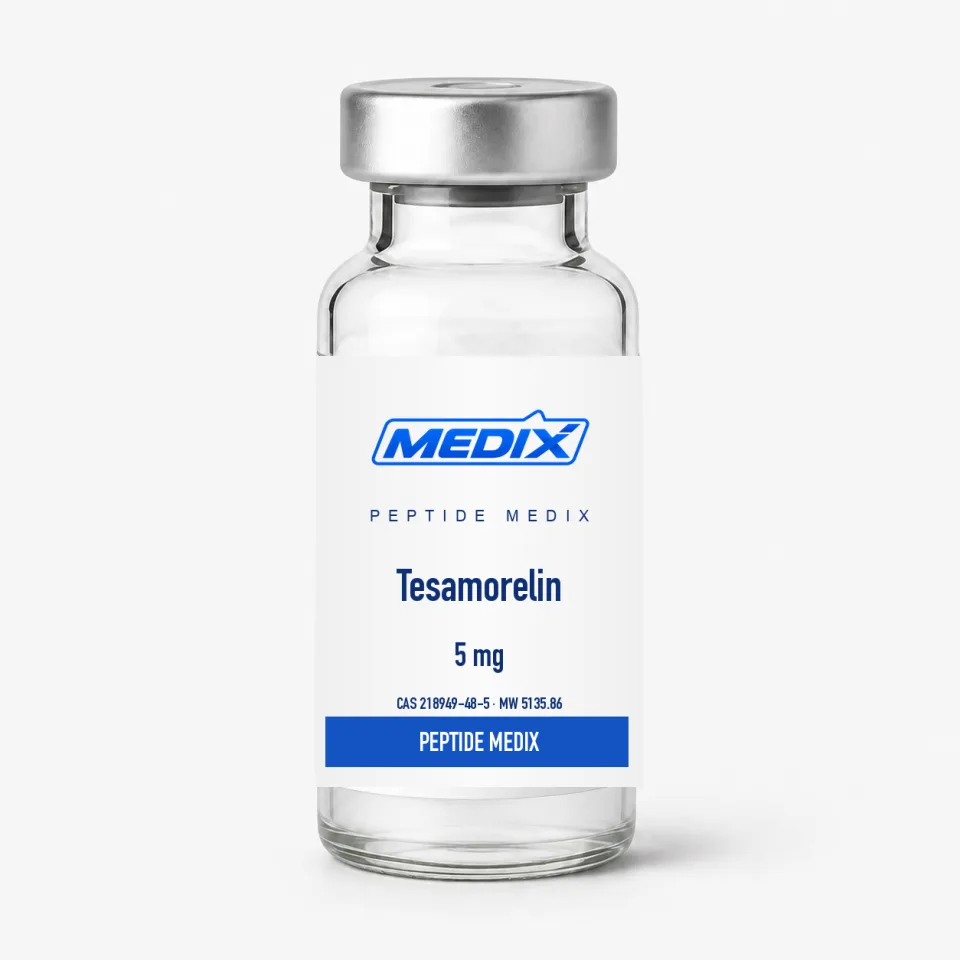
Native GHRH is cleaved between residues 2 and 3 by dipeptidyl peptidase-4, which limits its useful window in biochemical assays. Tesamorelin carries a trans-3-hexenoyl group on Tyr1, and much of the published characterisation examines how this hydrophobic cap alters susceptibility to peptidase attack while leaving the receptor-binding face of the molecule intact. Structure–activity work in this family compares acylation against other stabilising strategies such as D-amino-acid substitution.
Receptor engagement
Like other GHRH-family peptides, tesamorelin is studied as an agonist at the pituitary GHRH receptor, a class B GPCR coupled to adenylate cyclase. Cell-based assays measure cyclic AMP accumulation and downstream growth hormone release from somatotroph cultures, with the full 1–44 sequence allowing comparison against truncated 1–29 fragments.
Metabolic and adipose research
- Investigation of the growth hormone–IGF-1 relationship as an intermediate step in observed metabolic changes
- Comparative studies against ghrelin-receptor secretagogues to separate GHRH-driven from GHS-R-driven effects