Research Overview
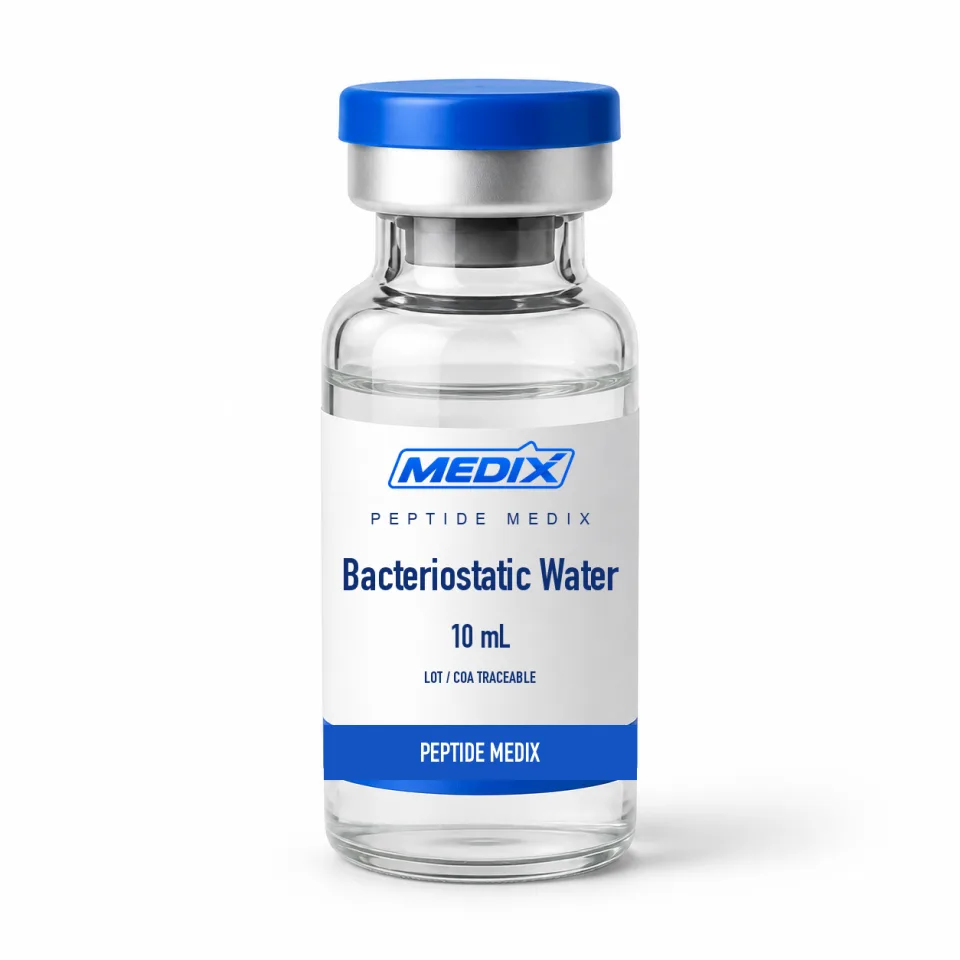
What bacteriostatic water is
Role in peptide reconstitution
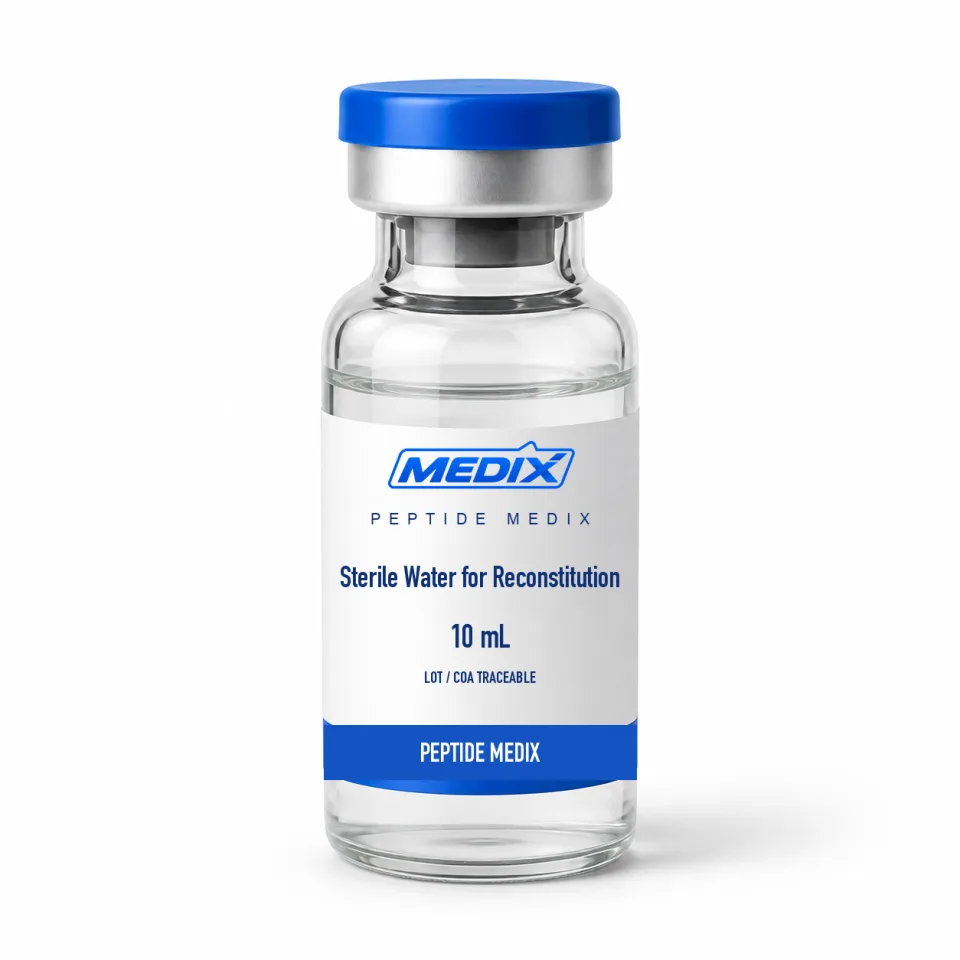
Lyophilized peptides are shipped as a dry cake or powder that must be dissolved before use. In laboratory practice a measured volume of diluent is drawn into a syringe, introduced slowly down the inside wall of the peptide vial, and the vial is gently swirled rather than shaken until the powder is fully dissolved. Bacteriostatic water is the usual choice for this step because the resulting solution can be sampled multiple times over a study period while stored at 2–8 °C.
- Peptide concentration is set by the volume of diluent added to a known mass of powder
- Slow addition and gentle mixing help protect fragile peptides from foaming and shear
- Refrigerated storage after reconstitution slows chemical degradation
Choosing between bacteriostatic and sterile water
Plain sterile water is appropriate when a vial will be used once and discarded, or when a compound is known to be sensitive to benzyl alcohol. Bacteriostatic water is generally the better fit for research vials that will be entered repeatedly. Some laboratories also use it to prepare working dilutions in sterile empty vials so that the stock vial is punctured less often.
Quality considerations
Researchers typically confirm the solution is clear and colorless before use, check that the cap seal is intact, and record the vial lot number in the experiment log. Any diluent that appears cloudy, discolored or contains particulates should not be used. Because the vial is intended for repeated access, the stopper should be wiped with an alcohol prep pad before every entry.