Research Overview
Why a kit
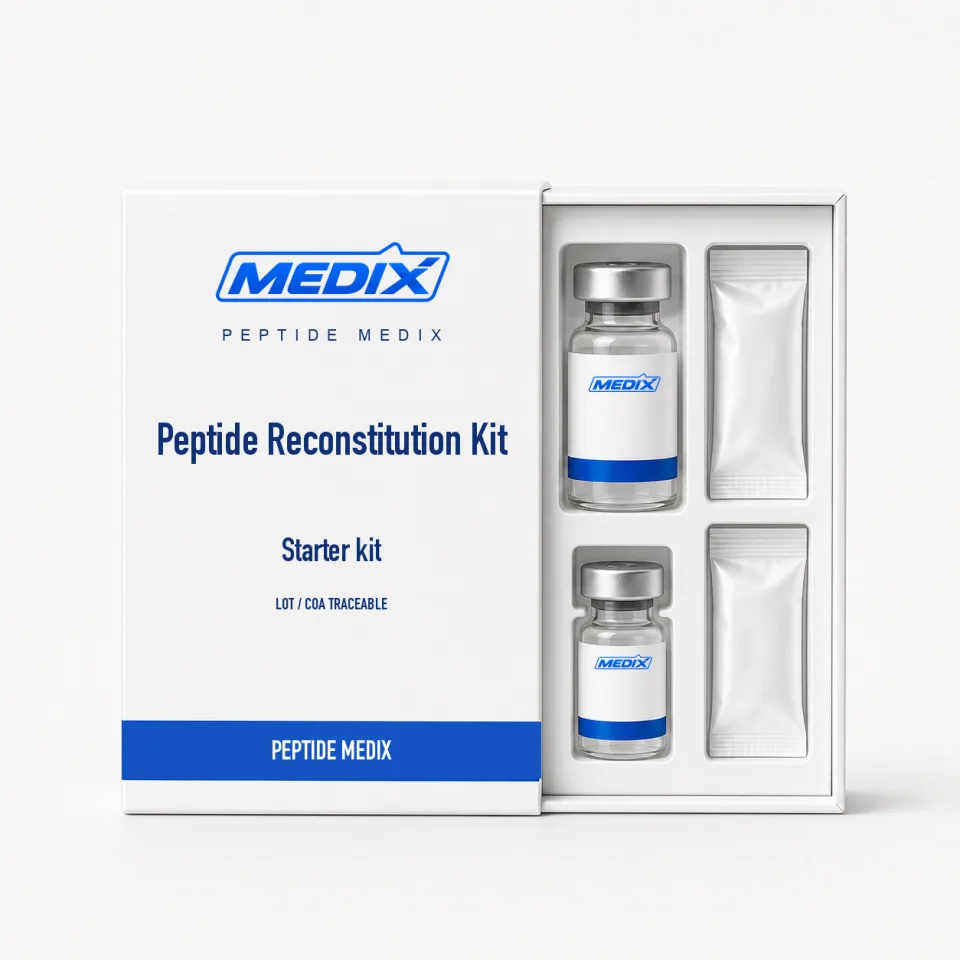
Reconstitution is the step where a dry, lyophilized peptide is dissolved into a solution of defined concentration. It is simple in principle, but doing it reproducibly and without contaminating the vial depends on having the right consumables to hand: a preserved diluent, a sterile syringe that measures small volumes accurately, and a swab to disinfect stoppers. The starter kit collects those three items so that a laboratory's first peptide order arrives with everything required to prepare it.
Component roles
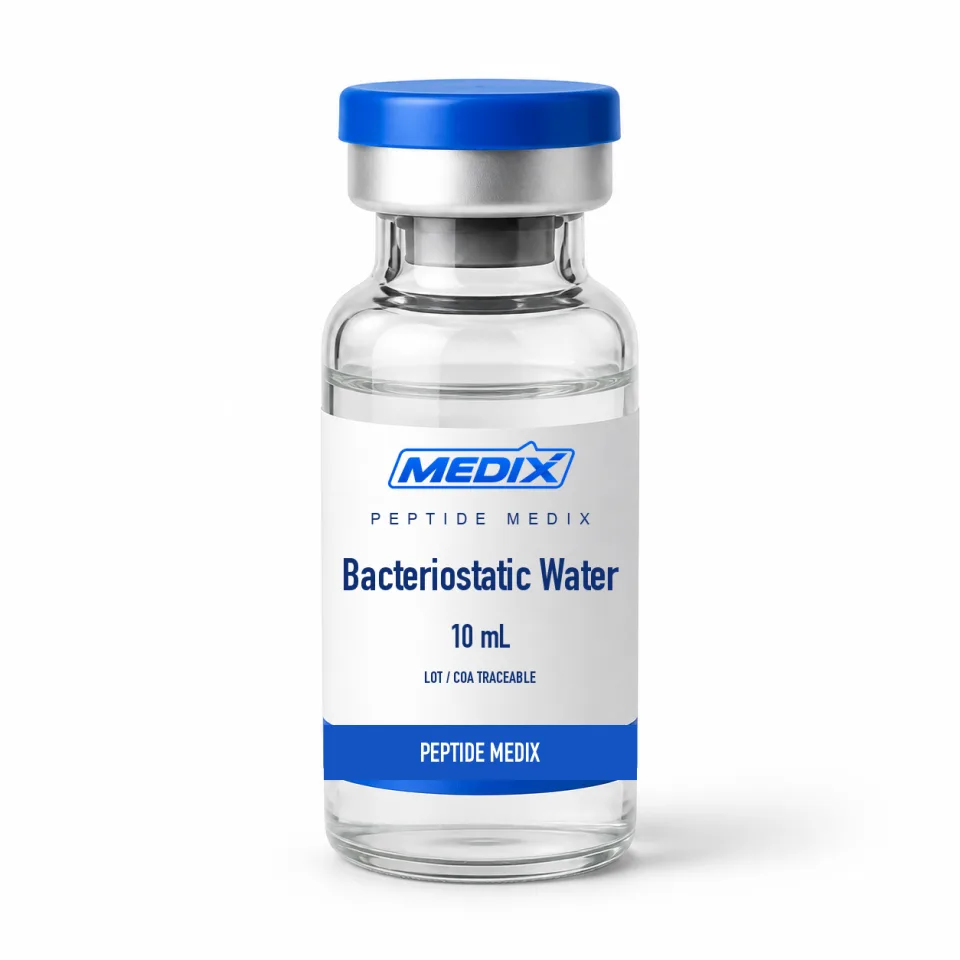
- Bacteriostatic water — the solvent. The 0.9% benzyl alcohol preservative inhibits bacterial growth, which matters because both the water vial and the reconstituted peptide vial are entered repeatedly during a study.
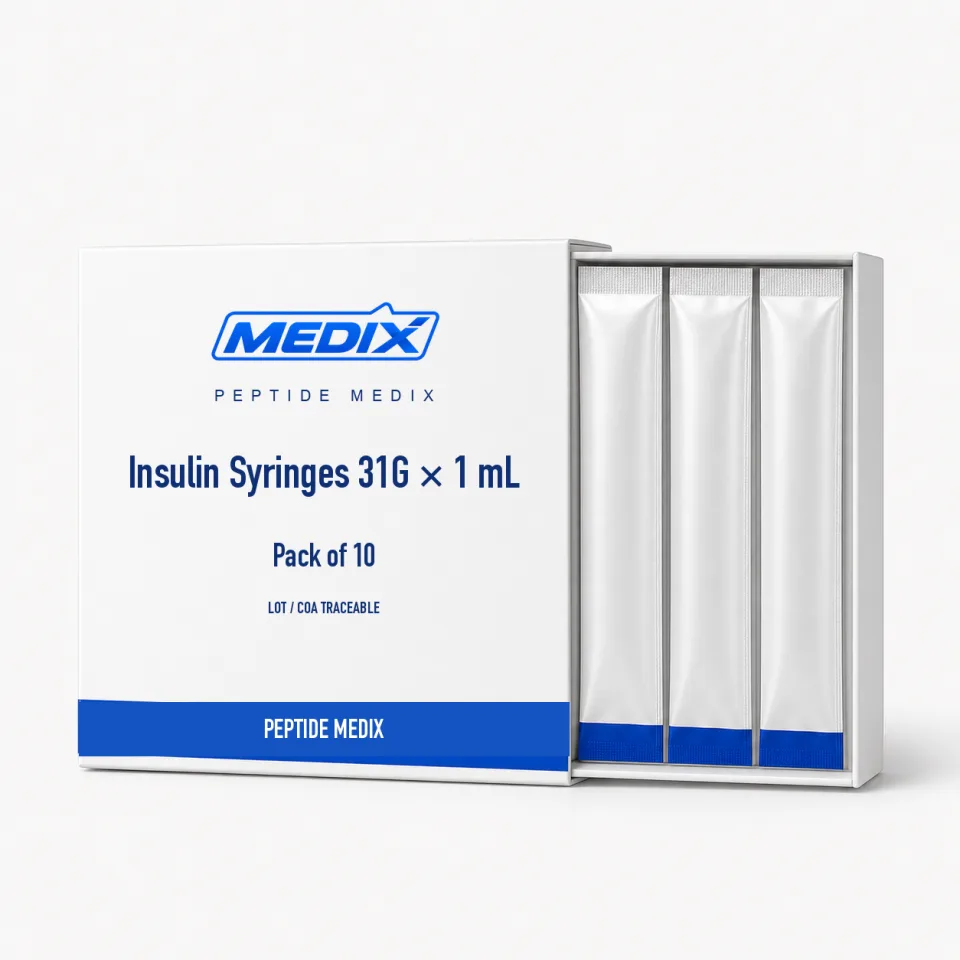
- 31G × 1 mL insulin syringes — the measuring device. Fixed fine-gauge needles minimize stopper coring and dead space, and 0.01 mL graduations allow the diluent volume, and therefore the final concentration, to be set precisely.
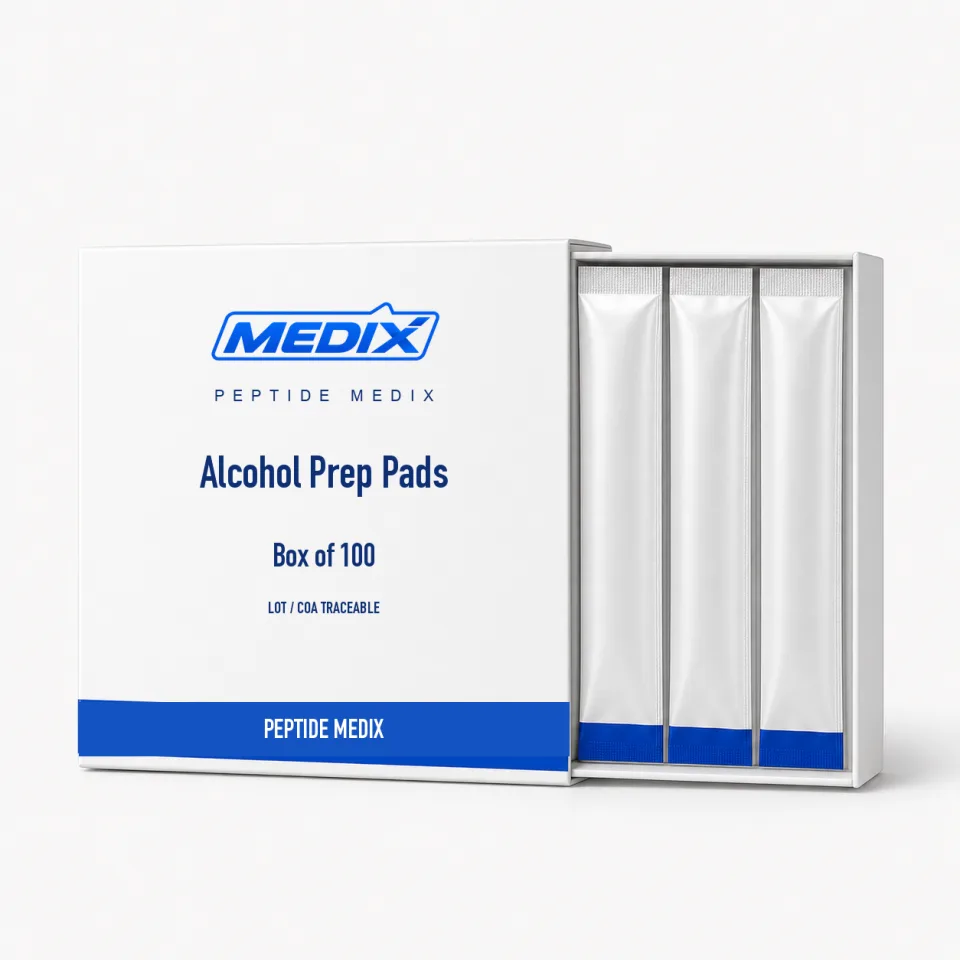
- Alcohol prep pads — the aseptic step. Wiping the stopper of both the water vial and the peptide vial before every puncture is standard aseptic technique.
Basic reconstitution workflow
What the kit does not include
The kit does not include the peptide itself, sterile empty vials for aliquoting, or a sharps container. Laboratories preparing many vials, splitting stock into working aliquots, or generating a large number of used needles should add those items; they are listed as related products.