Research Overview
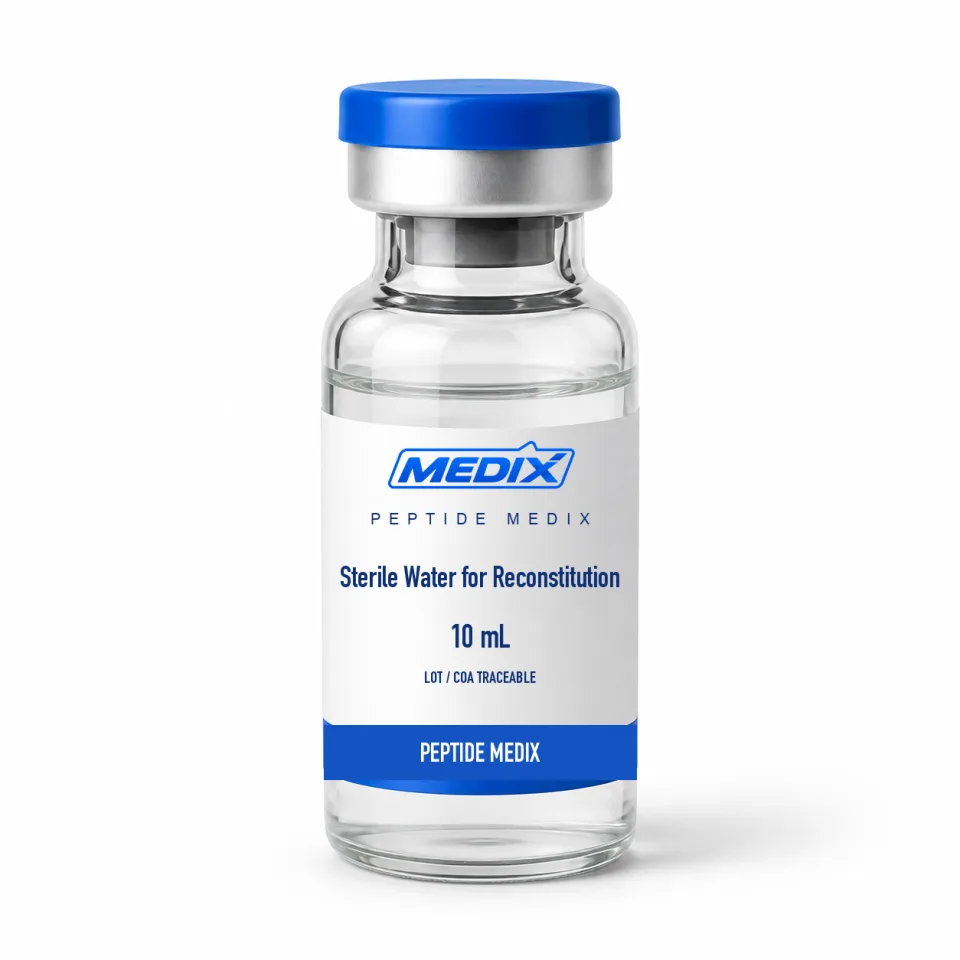
What sterile water for reconstitution is
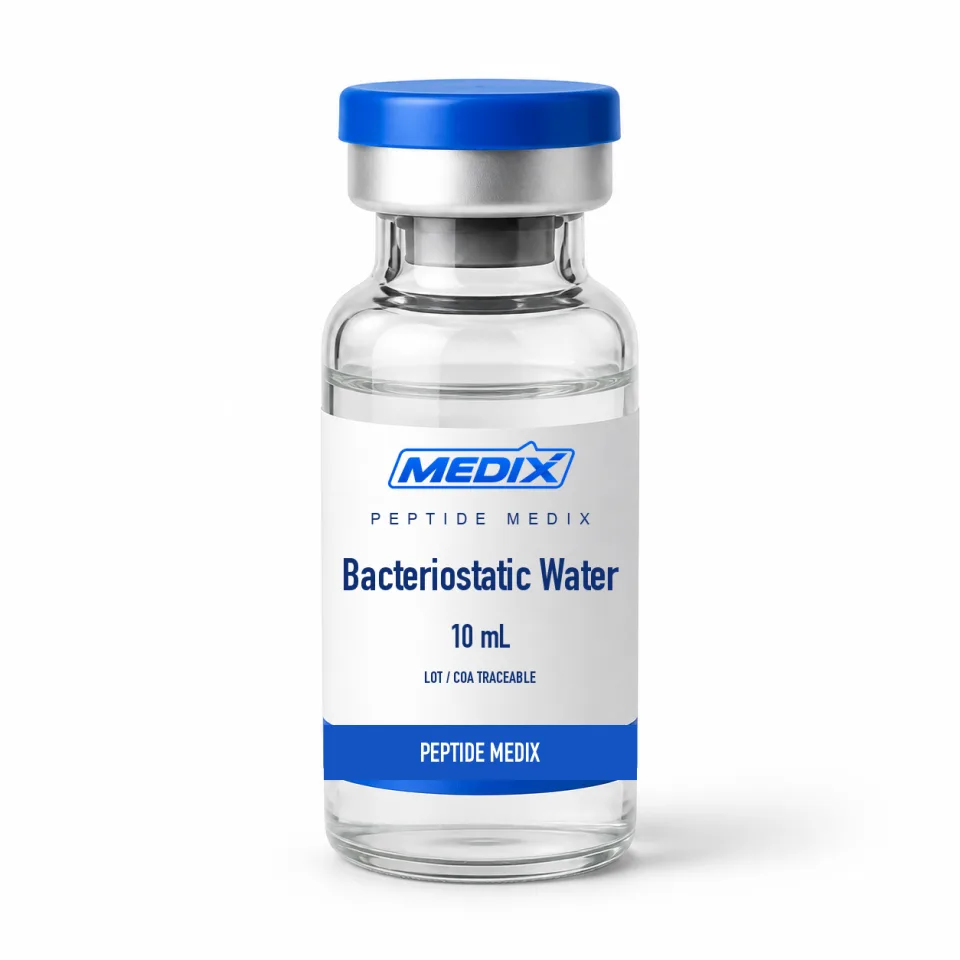
Sterile water for reconstitution is water that has been purified, sterilized and sealed in a container designed for syringe access. It contains no antimicrobial agent, so it offers no protection against organisms introduced during repeated draws. That is exactly why it is specified for single-use applications: the vial is opened, the required volume is withdrawn, and any remainder is discarded.
When laboratories choose sterile over bacteriostatic water
The two products overlap in most peptide work, but sterile water is the better choice in a few situations:
- When the full reconstituted volume will be used immediately in one experiment
- When the peptide solution will be divided into aliquots and frozen, so a preservative is unnecessary
- When benzyl alcohol could interfere with a cell-based assay, analytical method or a benzyl-alcohol-sensitive compound
- When a protocol explicitly calls for preservative-free diluent
Use in reconstitution workflows
The reconstitution procedure is the same as with bacteriostatic water. A measured volume is drawn with a sterile syringe, introduced gently against the inner wall of the peptide vial, and the vial is swirled until the lyophilized cake dissolves. Concentration is calculated from the mass of peptide stated on the vial and the volume of water added. Researchers who need several small working volumes often reconstitute with sterile water and then dispense into sterile empty vials for frozen storage.
Practical notes
Because there is no preservative, the sealed vial should be inspected for an intact cap and clear contents before use, and the stopper swabbed with an alcohol pad even for a single entry. Any opened vial that is not used at once should be discarded rather than saved. Sterile water is hypotonic and unbuffered, so it is a dissolution vehicle rather than a formulation; researchers requiring buffered or isotonic solutions add those components separately according to their protocol.