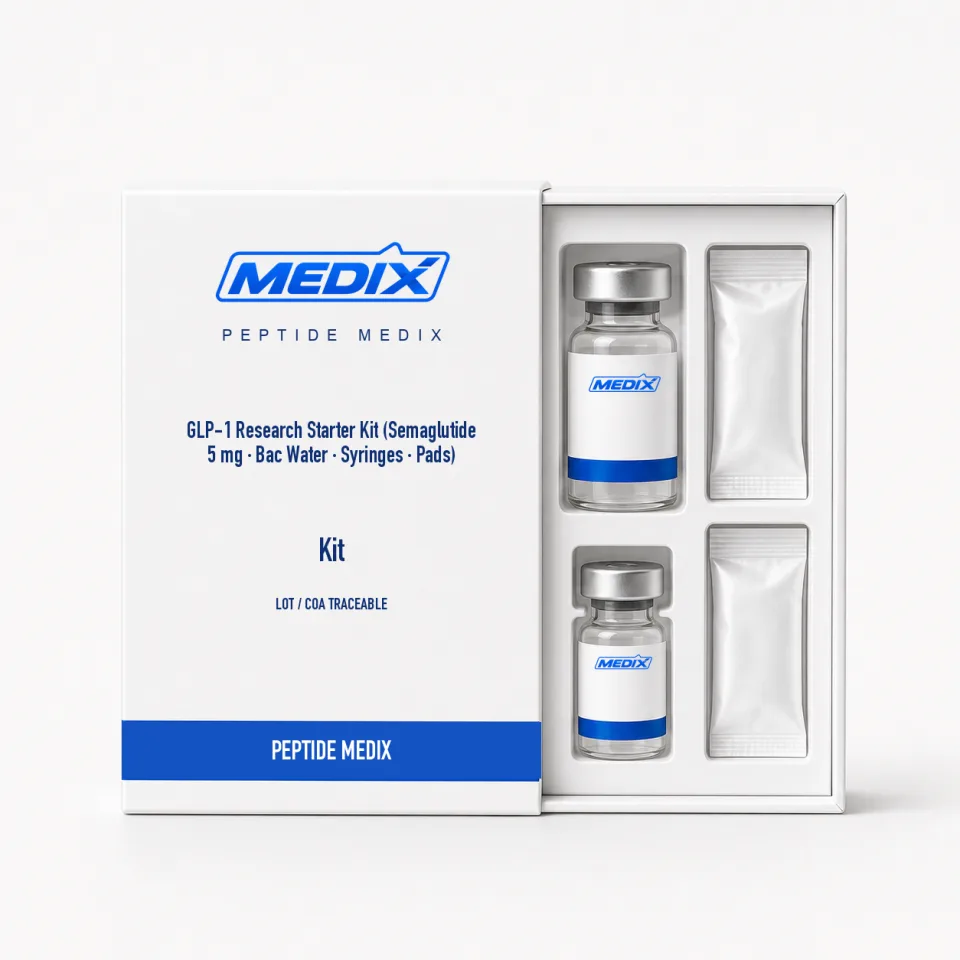
Research Overview
Why labelling is a technical control
What belongs on the vial
- Compound name and the lot number from the original vial
- Diluent used and the volume added
- Resulting concentration, calculated and written rather than assumed
- Date and time of reconstitution
- Operator initials
- A use-by or re-verify date consistent with the study's stability assumptions
What belongs on the sheet
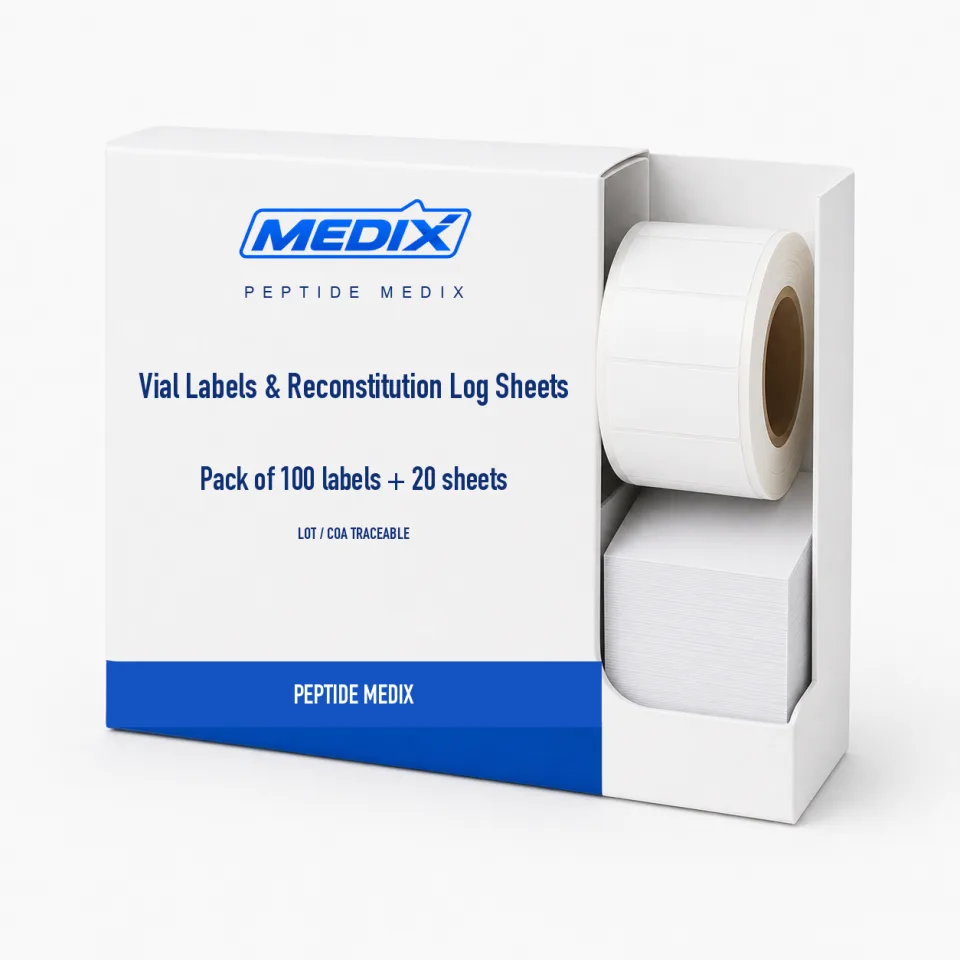
The vial label is a working identifier; the log sheet is the durable record. Sheets survive the vial's disposal, capture entries the label has no room for, and make it possible to reconstruct which lot produced which dataset. Where several vials of the same compound are in use at once — different lots, different concentrations, different storage locations — a written log is the only practical way to keep them distinguishable.
Cold-storage practicalities
Labels fail in predictable ways: paper stock wicks condensation and delaminates, standard adhesives release from cold glass, and water-based inks run when a vial is swabbed with alcohol. A synthetic film with permanent acrylic adhesive and a marker-compatible matte surface addresses all three. Applying labels to dry vials at room temperature before chilling gives the adhesive time to bond properly, which is the single most common handling mistake with cold-storage labelling.