Research Overview
Why these four together
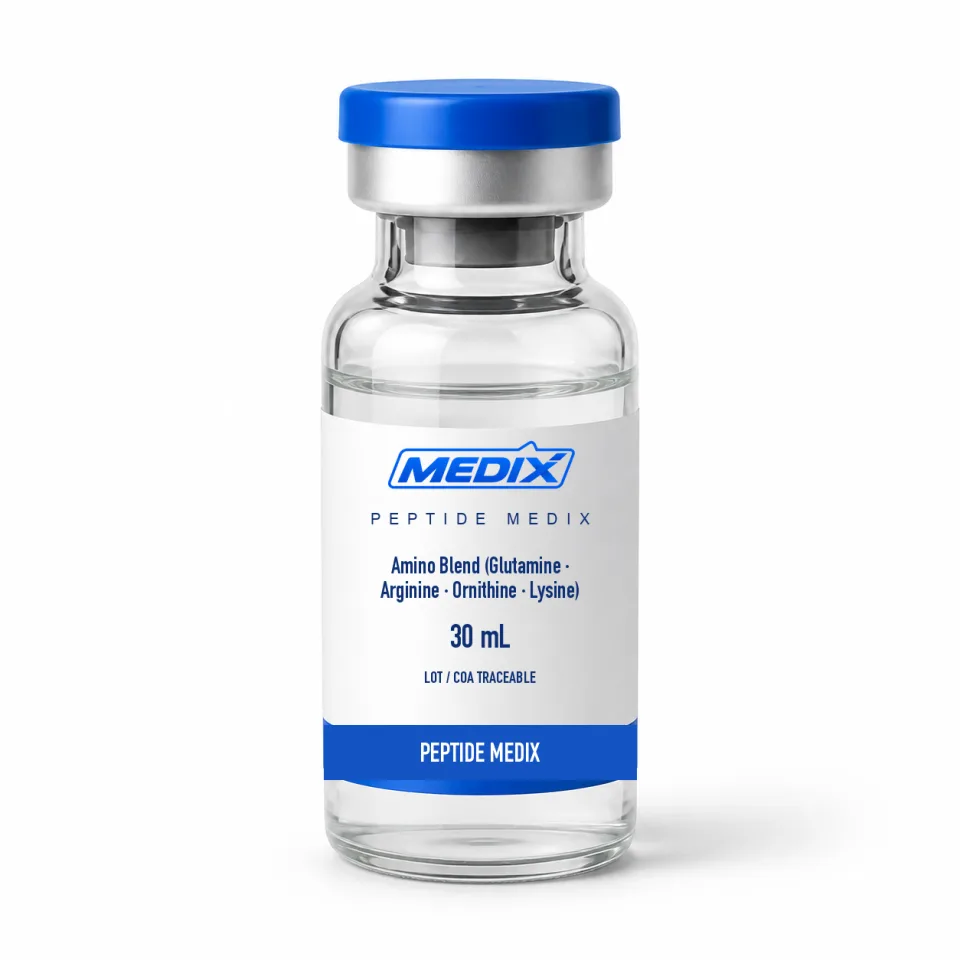
The combination is not arbitrary. Arginine is hydrolysed by arginase to ornithine and urea, so the two sit adjacent in the urea cycle and ornithine feeds directly into polyamine synthesis via ornithine decarboxylase. Lysine shares the y-plus cationic amino acid transporters with arginine, which is why competition between them appears throughout transport studies. Glutamine stands slightly apart: it is the most abundant free amino acid in plasma and muscle, a nitrogen and carbon donor for nucleotide synthesis, and the fuel of choice for enterocytes and activated lymphocytes.
Growth hormone physiology
Arginine has a long history in endocrine testing as a provocative stimulus for growth hormone release, an effect generally attributed to suppression of somatostatin tone rather than direct somatotroph stimulation. Older studies paired oral arginine with ornithine or lysine and reported variable secretagogue responses, with intravenous administration producing far more consistent effects than oral. Contemporary research uses these amino acids largely as reference stimuli when characterising GHRH analogs and ghrelin-receptor agonists.
Research areas in the literature
- Glutamine supplementation in intestinal barrier and mucosal integrity studies
- Arginine as the substrate for nitric oxide synthase, and its role in vascular research
- Ornithine as the entry point to putrescine, spermidine and spermine synthesis
- Amino acid transport competition and pharmacokinetic interaction studies
Practical notes for study design
Free amino acid solutions are chemically simple but not inert: glutamine in aqueous solution degrades over time to pyroglutamate and ammonia, and that rate rises with temperature. Investigators comparing lots or time points should account for storage history, and vehicle-only controls matter because the preserved aqueous base itself is a variable. No claims are made about outcomes in people; this is a research reagent.