Research Overview
What thymosin alpha-1 is
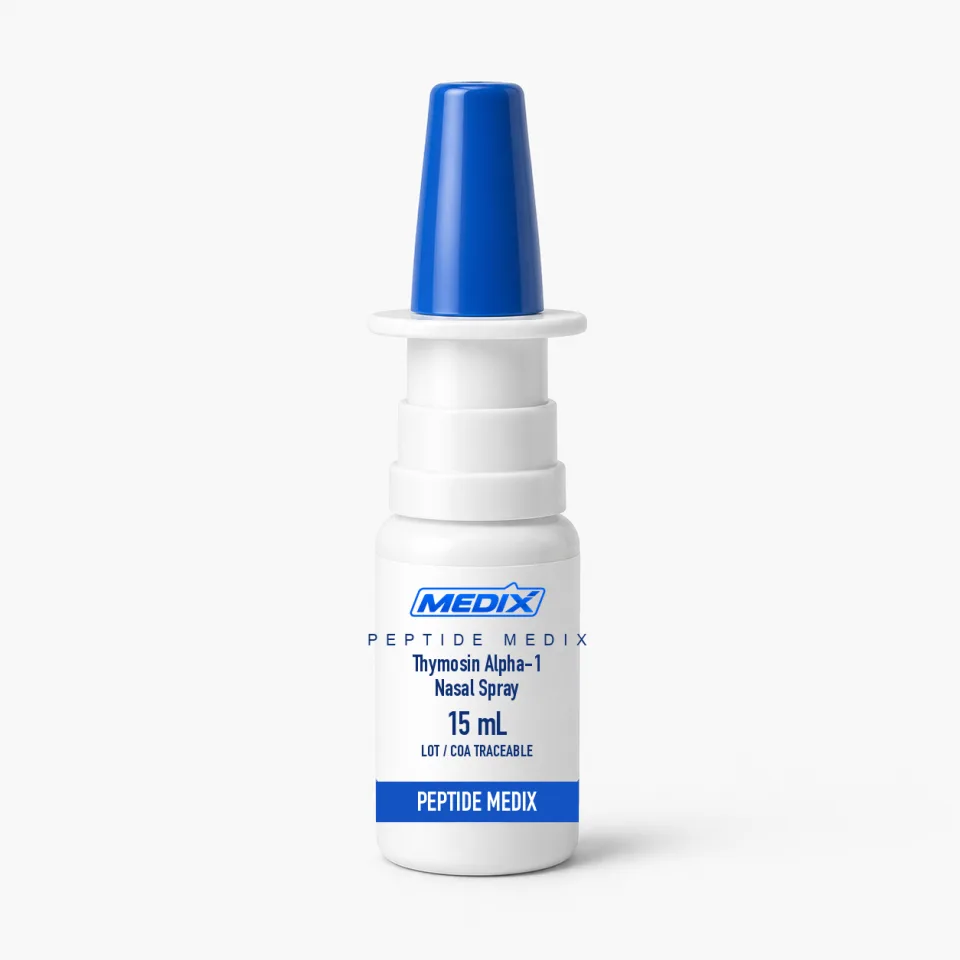
Thymosin alpha-1 is a 28-amino-acid acetylated peptide corresponding to the N-terminal region of prothymosin alpha. It was originally characterised from thymosin fraction 5, a thymic tissue extract, and is now made by solid-phase synthesis. The sequence is unusually acidic, with a high proportion of glutamate and aspartate residues, which is why it dissolves readily in water and is comfortable in an aqueous nasal vehicle.
Signalling pathways investigated
Why the intranasal route is studied
- The nasal mucosa is rich in immune tissue, making it a site of interest for studies of local mucosal responses
- Intranasal administration avoids first-pass metabolism, a limitation for orally delivered peptides
- Nasal deposition patterns and mucociliary clearance rates are active questions in peptide formulation science
- Comparative route studies frequently pair a nasal preparation against a parenteral one to examine relative exposure
Formulation and stability considerations
Peptides in solution face a different set of degradation pathways than lyophilized powders: deamidation of asparagine and glutamine residues, oxidation, and aggregation are all pH- and temperature-dependent. Because thymosin alpha-1 contains several asparagine and glutamine residues, solution-phase stability studies on this molecule typically track pH, storage temperature and time. Researchers using the spray format commonly log lot number, opening date and cumulative actuations so that any observed drift can be interpreted against the age of the bottle.