Research Overview
The peptide itself
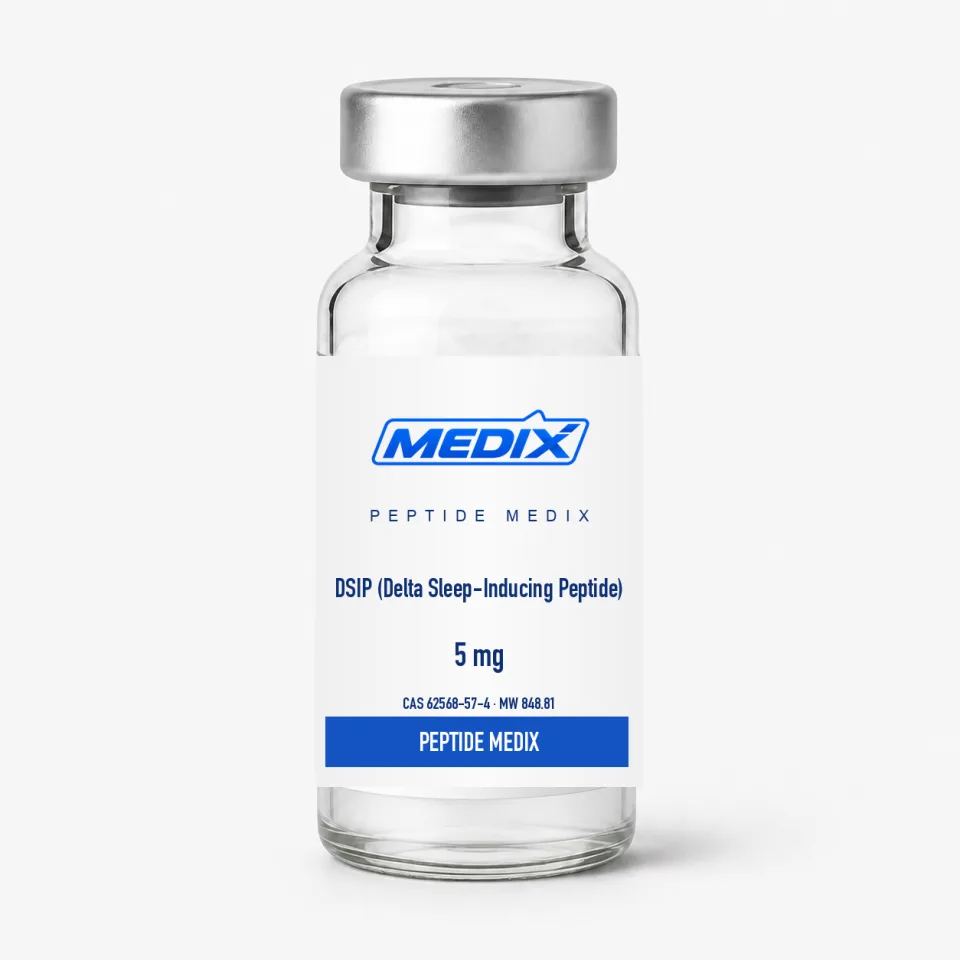
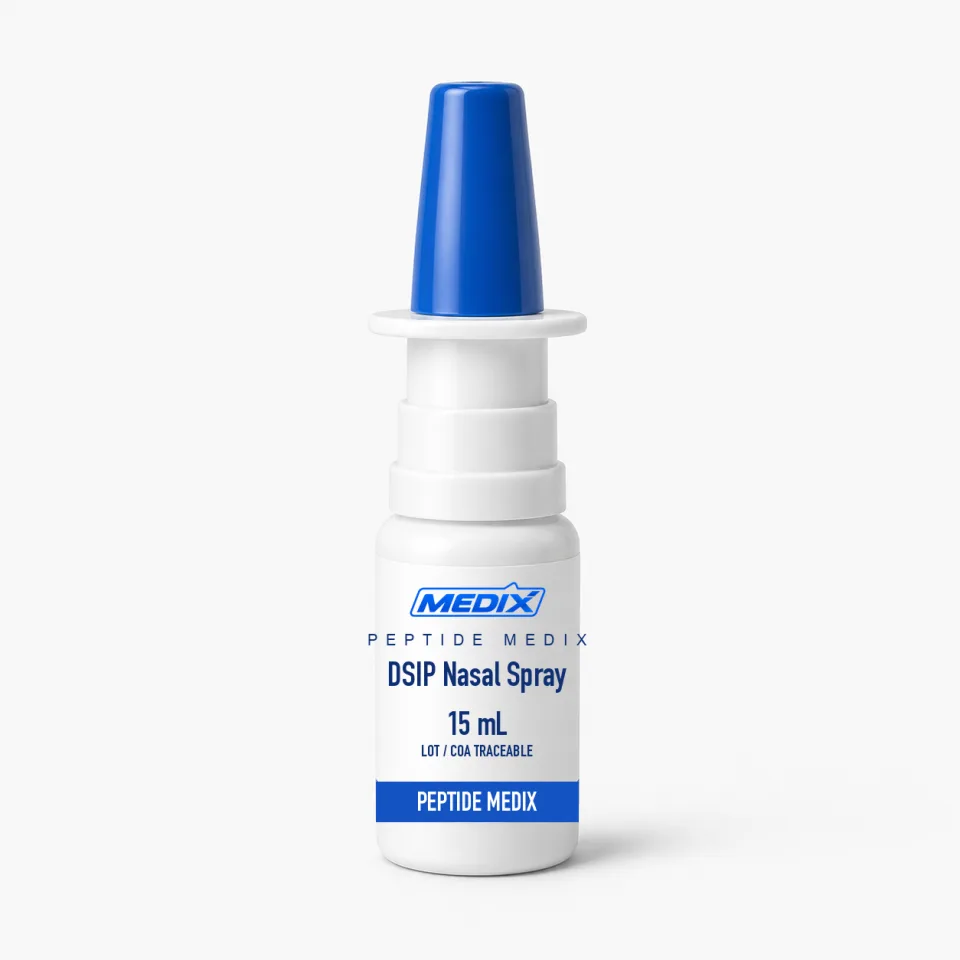
DSIP was identified in the 1970s from the cerebral venous blood of rabbits during induced slow-wave sleep, and named for the delta-wave activity associated with that state. Despite the name, its role is not settled: subsequent work has examined effects on sleep architecture that are inconsistent across species and protocols, alongside reports touching stress hormone release, thermoregulation and nociception. It is best described as an endogenous peptide with a broad and somewhat unresolved research record.
Why an intranasal format
The nasal cavity presents a thin, highly vascularised epithelium and, in the olfactory region, a direct anatomical connection to the central nervous system along olfactory and trigeminal nerve pathways. For peptides, which are cleared rapidly from circulation and cross the blood-brain barrier poorly, that route is of standing interest. The practical constraints are equally well documented: absorption area is small, mucociliary clearance removes deposited liquid within minutes, and nasal proteases degrade peptide substrates.
Endpoints in intranasal delivery research
- Fraction of peptide recovered from nasal wash versus that crossing the epithelium
- Permeation across excised nasal mucosa in diffusion-cell systems
- Effect of pH, tonicity, viscosity modifiers and permeation enhancers on transport
- Deposition pattern as a function of spray plume geometry and actuation force
- Peptide integrity after exposure to nasal enzyme preparations
Solution-phase stability
A pre-mixed peptide solution is chemically less stable than a lyophilized cake. DSIP contains an aspartate residue and adjacent glycines, a motif associated with deamidation and isomerisation chemistry in aqueous media, and the tryptophan at position one is oxidation- and light-sensitive. Refrigerated, dark, upright storage slows both processes, and periodic chromatographic verification is preferable to assuming label concentration across a long study.
Comparison arms
Where the research question is the delivery route rather than the peptide, a matched arm prepared from reconstituted vialed DSIP is the standard comparator.