Research Overview
The molecule is unchanged
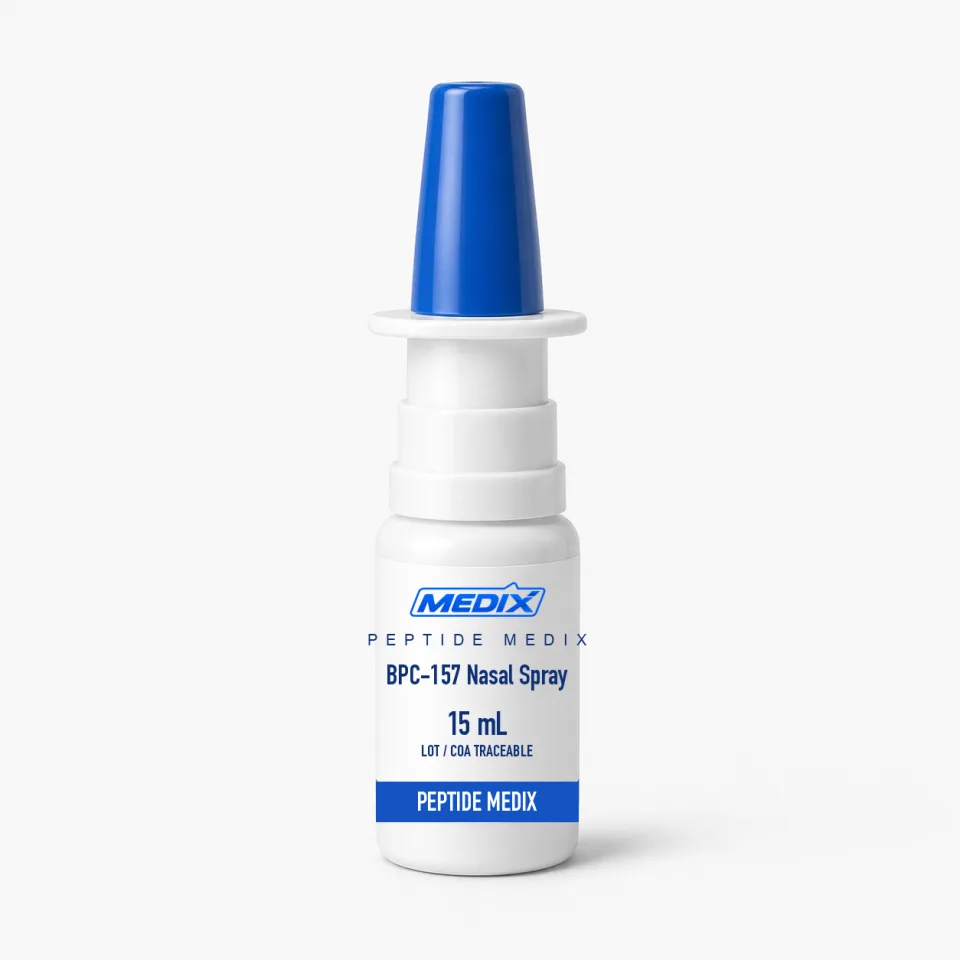
Delivery format alters exposure, not identity. The peptide in this bottle is the same pentadecapeptide characterised across the BPC-157 literature: a stable partial sequence of body protection compound isolated from gastric juice, studied in rodent models of tendon, ligament, muscle and gastrointestinal injury. Reported mechanisms include modulation of the nitric oxide system, upregulation of growth-factor receptors such as VEGFR2, and effects on fibroblast migration in culture.
Why an intranasal presentation exists
Peptides survive the gastrointestinal tract poorly and are largely removed by first-pass hepatic metabolism. The nasal respiratory epithelium is only a few cell layers thick and sits on a dense capillary bed, so intranasal delivery appears in the literature as a route worth quantifying. Studies consistently report faster appearance in circulation than oral administration alongside high inter-subject variability driven by deposition pattern and mucociliary clearance.
Formulation variables researchers track
- Metered actuation volume and resulting droplet size distribution
- Solution pH and tonicity relative to nasal fluid
- Viscosity and any mucoadhesive or permeation-modifying excipient
- Preservative system and its influence on peptide stability over the in-use period
- Pump priming behaviour and actuation-to-actuation consistency across the bottle
Stability in solution
BPC-157 is more robust in water than many peptides, but a solution is still less stable than a lyophilized cake. Hydrolytic degradation and oxidation both accelerate with warmth and light, and the larger 30 mL bottle implies a longer in-use period, so investigators running extended timelines usually re-verify concentration analytically rather than assuming label value throughout the study.