Research Overview
What EDR is
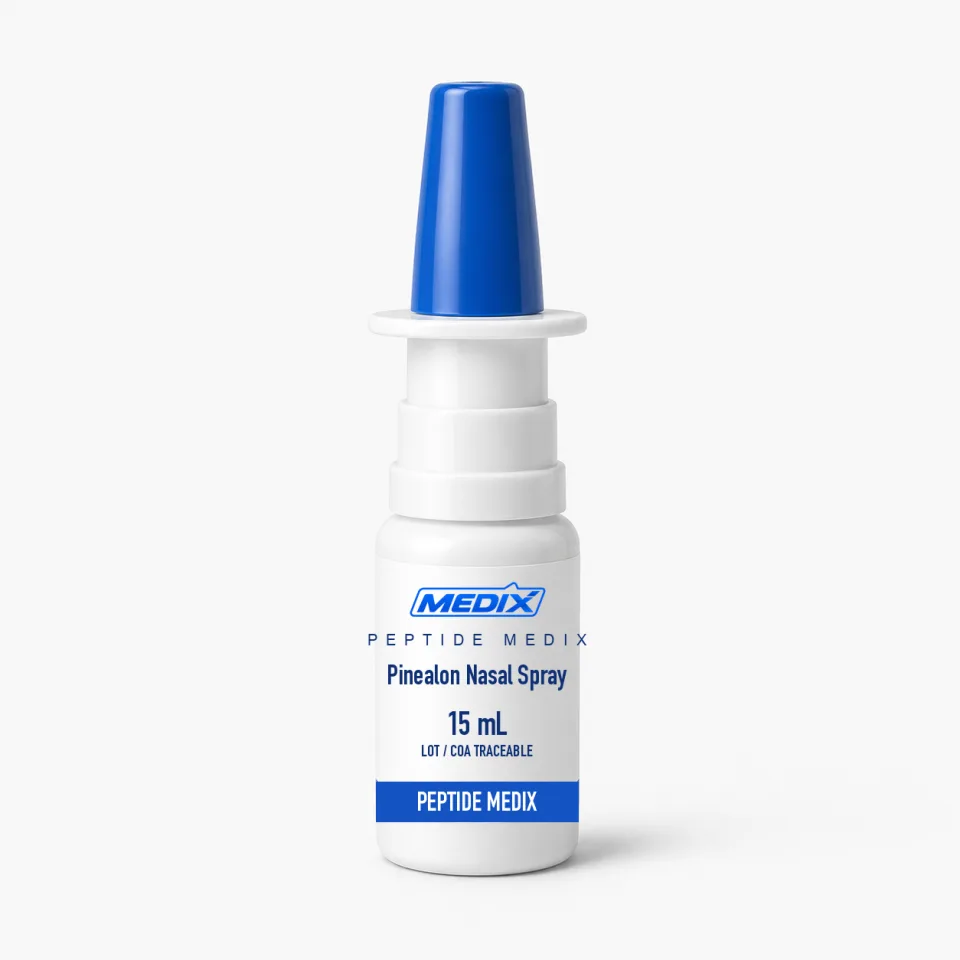
Pinealon is a tripeptide of glutamic acid, aspartic acid and arginine. It belongs to the family of short peptides isolated or modelled from tissue extracts in the Saint Petersburg Institute of Bioregulation and Gerontology programme, where each sequence is associated with a particular tissue — Epitalon with the pineal gland, Vilon with thymus, Pinealon with brain and pineal preparations.
Proposed mechanism
The central hypothesis in that literature is that very short peptides can enter cells and nuclei without a receptor and interact with specific DNA sequences or histone-associated regions, modulating transcription. Supporting work includes molecular-modelling studies of peptide–DNA binding and cell studies reporting changes in proliferation and protein-synthesis markers. This mechanism remains contested outside the originating research group, and independent confirmation is sparse.
- Neuronal survival in cell cultures exposed to hypoxia, hyperthermia or oxidative stress
- Behavioural and memory-task performance in aged or stressed rodents
- Markers of apoptosis and of ribosomal or protein-synthesis activity in nervous tissue
- Changes in expression of stress-response and antioxidant genes