Research Overview
Discovery and identity
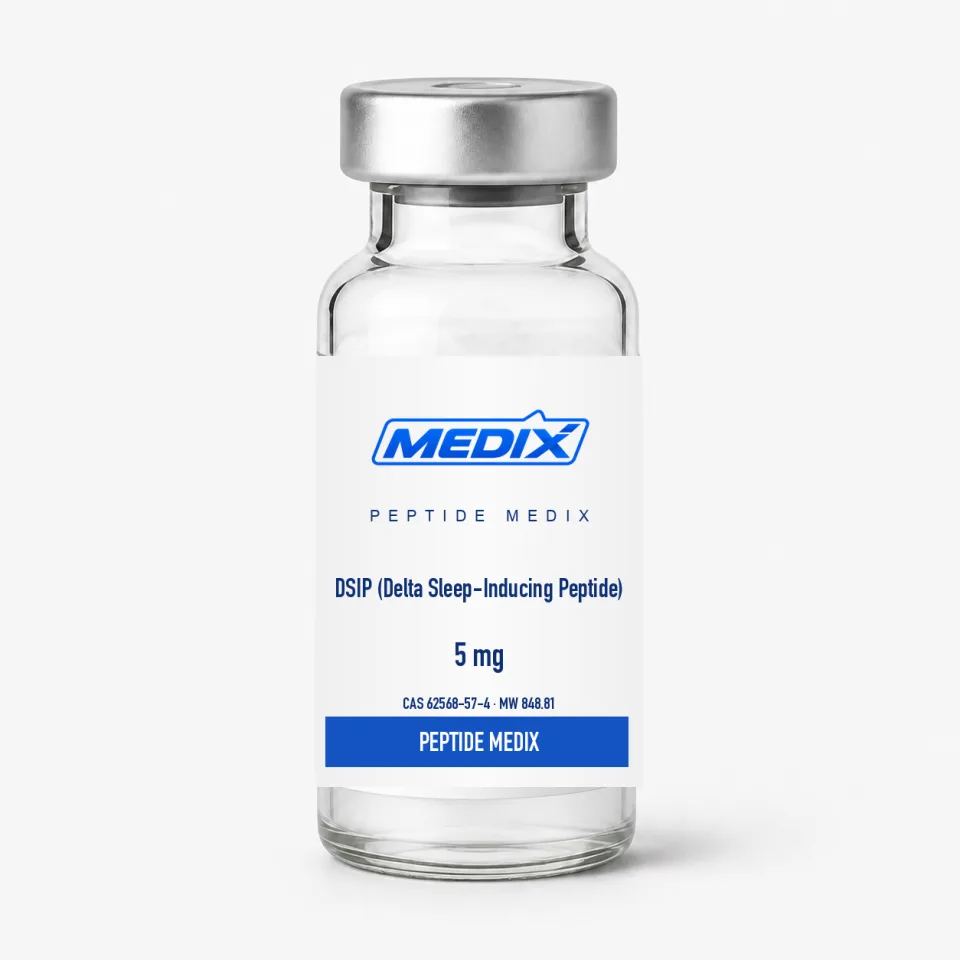
DSIP was isolated after researchers perfused blood from rabbits in electrically induced delta sleep into recipient animals and observed EEG changes, then purified the responsible fraction. The resulting nonapeptide has been synthesized routinely since, and its sequence and mass are among the better-established facts about it. Its endogenous distribution and physiological role, by contrast, remain debated.
Sleep and EEG research
Animal studies have measured delta-wave power, sleep-stage distribution and latency after administration, with results that vary considerably by species, route and time of day. Some groups reported enhanced slow-wave activity, others found weak or inconsistent effects, and this heterogeneity is a recurring theme in reviews of the peptide.
Neuroendocrine and stress endpoints
- Studies measuring corticotropin, cortisol and growth-hormone-associated markers under stress conditions
- Thermoregulation and circadian rhythm experiments in rodent models
- Animal work on opioid withdrawal-related behavior and autonomic endpoints
- Assays of antioxidant and stress-response markers in tissue preparations
Mechanistic uncertainty
Analytical practice
The N-terminal tryptophan gives DSIP usable absorbance at 280 nm, which supports quick concentration checks alongside HPLC quantification. Given the reported instability of the peptide in biological matrices, studies that measure exposure generally include a stability control — an aliquot of the working solution analyzed at the end of the session — so that degradation during handling can be separated from the biological result.