Research Overview
Spadin and the TREK-1 hypothesis
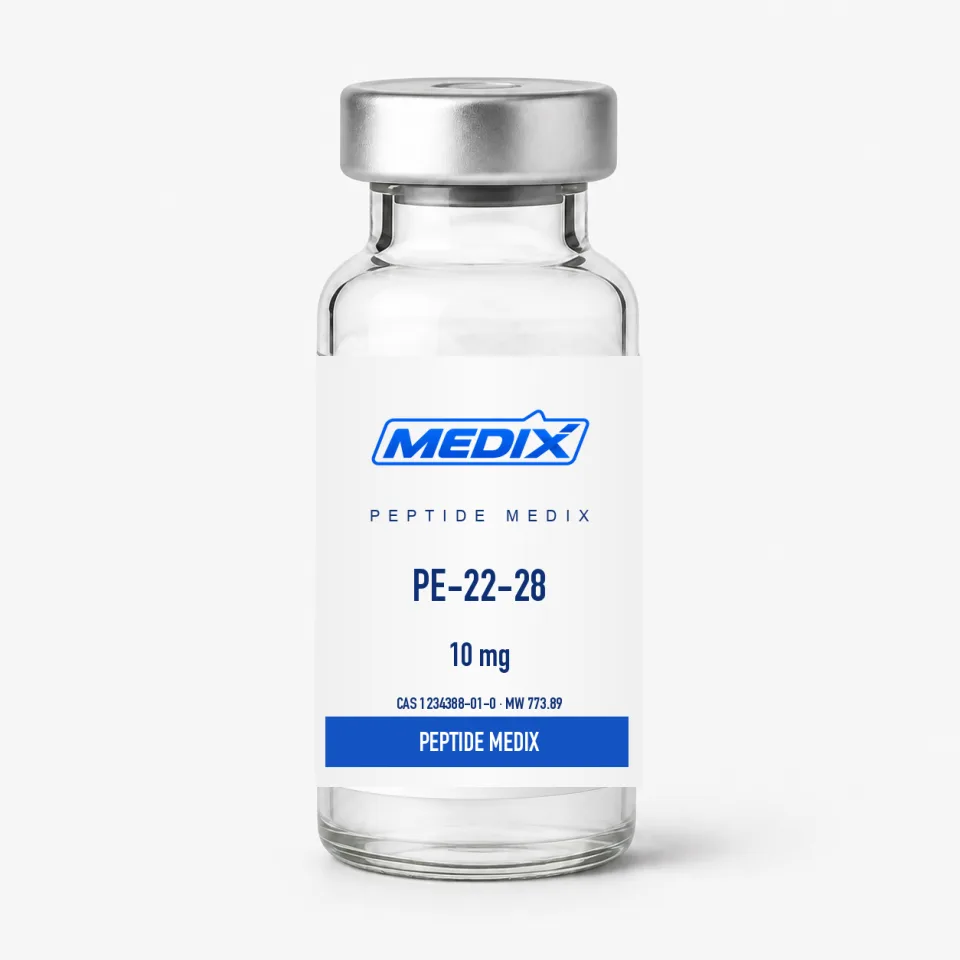
TREK-1 is a background potassium channel encoded by KCNK2. Rodent work reported that animals lacking TREK-1 display a phenotype resembling that produced by serotonergic antidepressants, which made pharmacological blockade of the channel an attractive research question. Spadin, released during sortilin maturation, was identified as an endogenous blocker; PE-22-28 is the minimal active fragment mapped from that sequence.
Electrophysiological characterization
- Whole-cell patch-clamp recordings measuring TREK-1 current inhibition in transfected cell lines
- Selectivity panels comparing activity at related two-pore-domain channels such as TRAAK and TASK
- Concentration-response profiling used to establish potency relative to full-length spadin
Behavioral and plasticity endpoints
Evidence status
Analytical practice
The tryptophan residue in the sequence gives usable 280 nm absorbance, which makes spectrophotometric concentration checks straightforward alongside HPLC quantification. Net peptide content and counterion values from the certificate of analysis should still be applied when normalizing stocks, since the difference between gross and net peptide mass is easily large enough to shift a concentration-response curve by a meaningful margin.