Research Overview
Design rationale
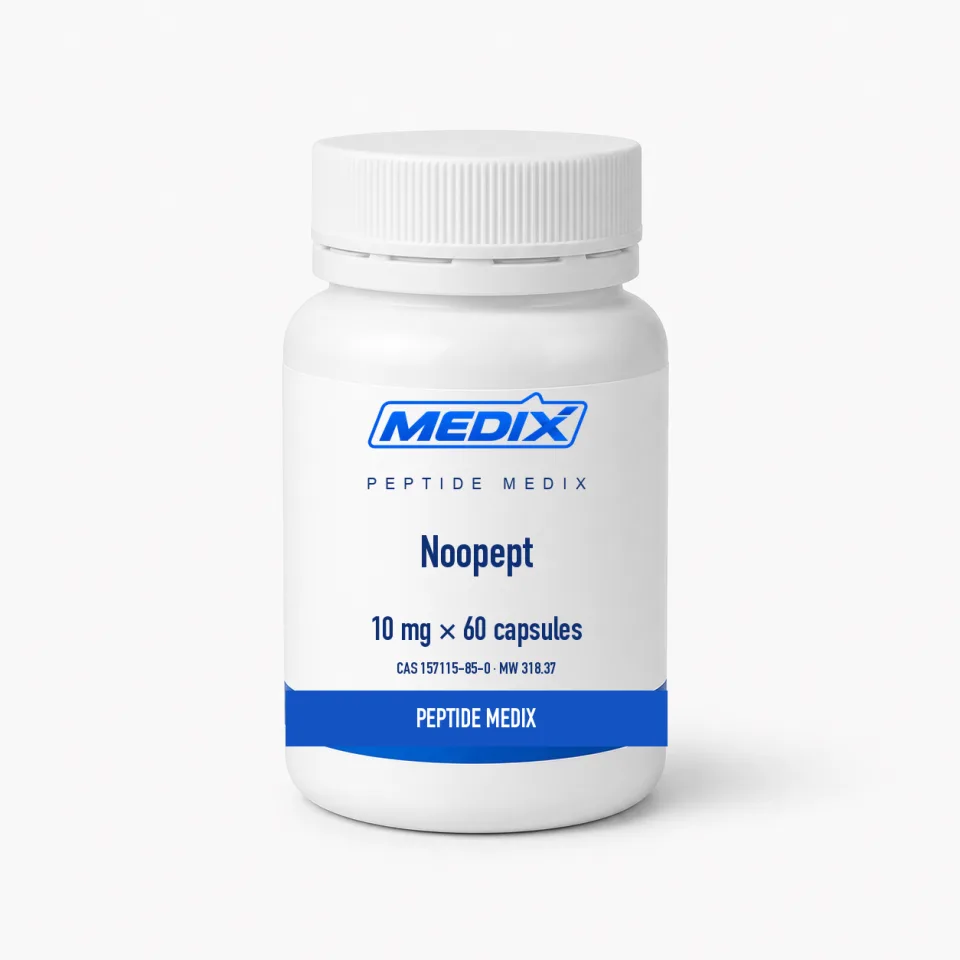
The racetam family drew attention as cognition-related tool compounds in the 1970s, and Soviet pharmacologists pursued dipeptide analogues on the reasoning that a proline-containing dipeptide could reproduce the pharmacophore in a smaller, more metabolically tractable molecule. Noopept was the compound that emerged. It is not a peptide drug in the modern sense — it is a capped, esterified dipeptide derivative — and that hybrid character explains why it appears in both nootropic and peptide catalogues.
Neurotrophin signalling
- Increased NGF and BDNF mRNA reported in rat hippocampus after repeated administration in published Russian work
- Effects on hippocampal long-term potentiation examined in slice preparations
- Antioxidant and anti-inflammatory endpoints described in models of oxidative injury
These reports come largely from a limited number of groups, and independent replication outside that literature remains sparse, so mechanistic conclusions are usually stated cautiously.
Metabolite question
Cycloprolylglycine forms readily from the parent compound and is also present endogenously in brain tissue. Because the cyclic dipeptide has its own reported activity at AMPA and glycine-site targets, some investigators argue that Noopept acts largely by raising cycloprolylglycine levels. Study designs that compare the parent compound with the isolated metabolite are the standard way to test this.
Behavioural and regulatory context
Rodent studies have used passive-avoidance, conditioned-reflex and maze paradigms alongside anxiety models. Outside Russia and neighbouring countries, Noopept has no marketing approval; in the United States the FDA has stated that it does not qualify as a dietary ingredient, and products marketing it as a supplement have received enforcement attention. It is stocked here as a research chemical for laboratory work only.