Research Overview
Where it sits in the racetam family
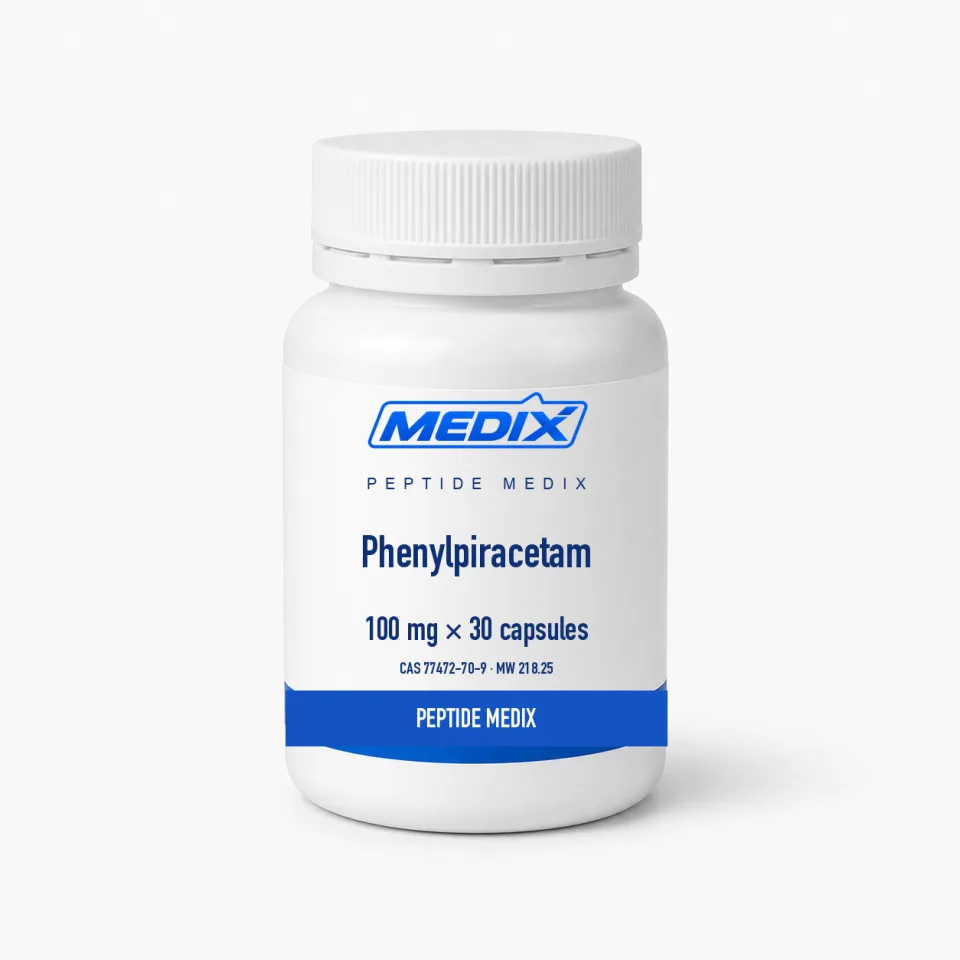
Piracetam is the parent of a chemical family that now runs to dozens of analogues, most sharing a 2-oxo-pyrrolidine acetamide core and differing in ring substitution. Phenylpiracetam's addition of a phenyl group raises lipophilicity substantially, and comparative studies typically frame it against piracetam and aniracetam when asking how substitution changes distribution and behavioural readouts.
What the literature has examined
- Rodent behavioural work covering locomotor activity, exploratory behaviour and learning tasks.
- Models of hypoxia and physical stress adaptation, a strong theme in the original Soviet-era research programme.
- Comparative studies against piracetam intended to isolate the contribution of the phenyl substitution.
- Enantiomer-resolved work reporting that the R-form accounts for much of the observed activity in animal models.
A recurring limitation across this body of work is that much of it was published in Russian-language journals under methodological standards that differ from current expectations, and independent replication in Western laboratories is limited. Mechanistic accounts remain unsettled: proposals in the literature include effects on cholinergic and dopaminergic signalling, but no single mechanism has been established.
Stereochemistry as a research variable
Regulatory and analytical context
Phenylpiracetam appears on the WADA Prohibited List as a stimulant, which makes it a recurring analyte in anti-doping method development — detection windows, metabolite profiling and mass-spectrometry method validation are all active areas. It is not approved as a drug in the United States and does not qualify as a dietary ingredient, so it is handled purely as a research chemical.