Research Overview
Mechanism
Nitric oxide released from endothelium and nitrergic nerves activates soluble guanylate cyclase, raising intracellular cyclic GMP. Cyclic GMP drives protein kinase G signalling that lowers cytosolic calcium and relaxes vascular smooth muscle. PDE5 terminates that signal by hydrolysing cGMP to 5'-GMP. Sildenafil binds the PDE5 catalytic site competitively with cGMP, so it does not initiate signalling itself — it amplifies and prolongs whatever nitric-oxide tone is already present, which is why its effects depend on an intact upstream NO supply.
Approved uses as regulatory facts
Selectivity and pharmacology
- High selectivity for PDE5 over most other phosphodiesterase families
- Measurable PDE6 cross-reactivity, the accepted explanation for transient visual colour effects reported in labelling
- CYP3A4-dependent metabolism, giving well-documented interaction potential with strong inhibitors and inducers
- Contraindication with nitrates arises directly from convergent action on the same cGMP pathway
Use as a laboratory tool compound
Regulatory and supply position
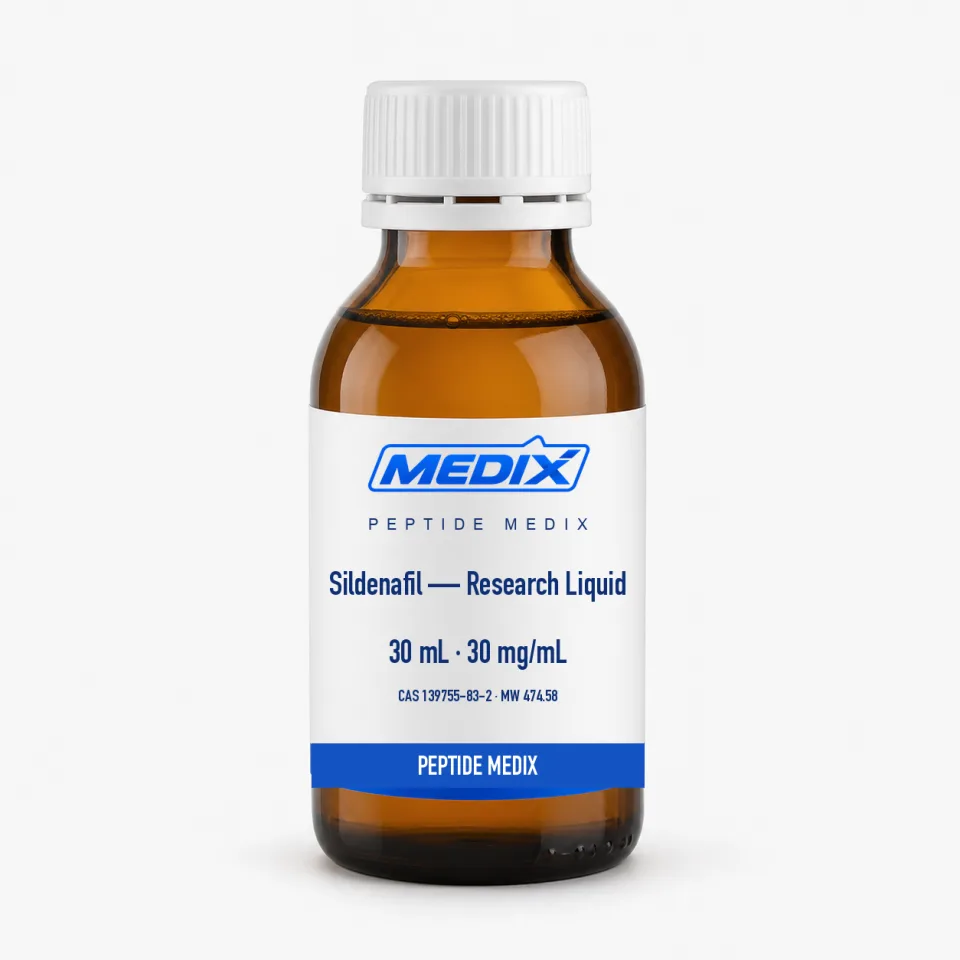
Sildenafil is a prescription medicine in essentially every regulated market. It is listed in this catalog for institutional reference and is supplied only against a valid prescription or documented authorisation. We provide no dosing, administration or acquisition guidance, and nothing on this page should be read as a recommendation to use the medicine.