Research Overview
Enzyme target and selectivity
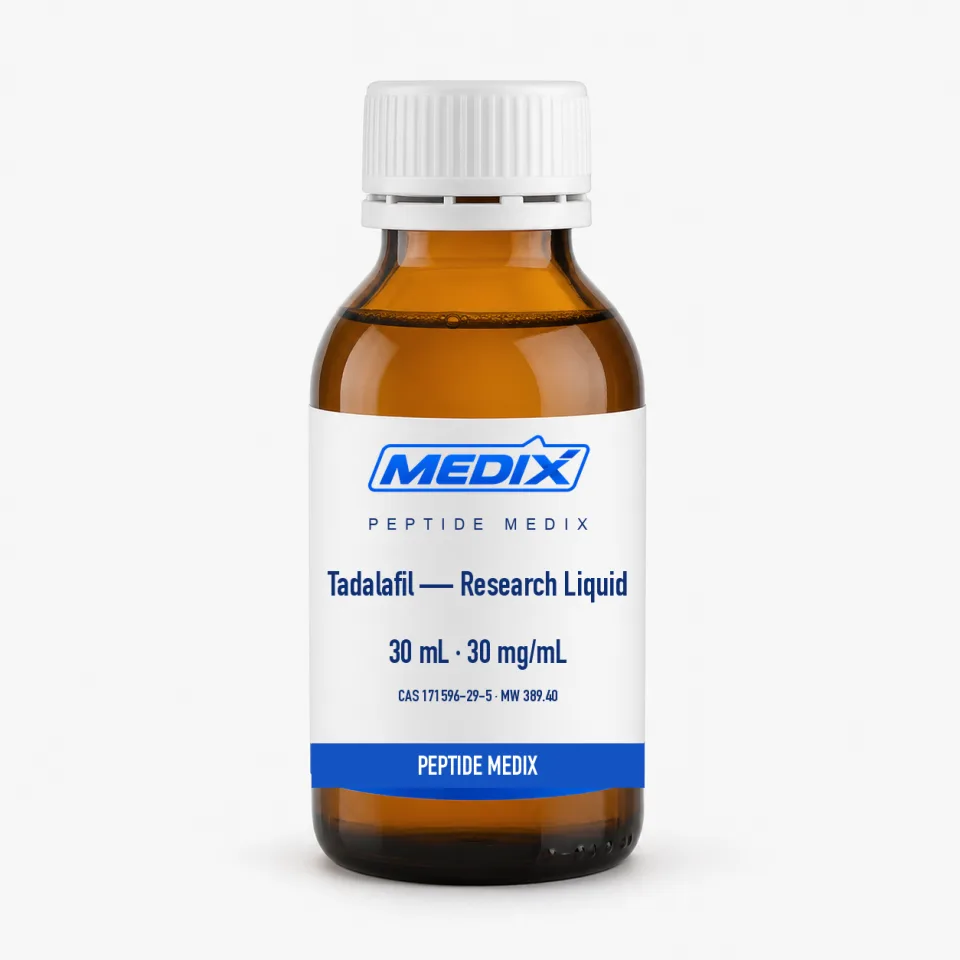
PDE5 is one of eleven phosphodiesterase families and is concentrated in vascular and visceral smooth muscle, including the corpus cavernosum and the pulmonary vasculature. Inhibiting it slows the breakdown of cGMP generated downstream of nitric oxide signalling, so the smooth-muscle relaxation triggered by that pathway persists longer. Selectivity profiling against the other PDE families is a standard part of the literature on this class; tadalafil is characterised as highly PDE5-selective with a measurable but much weaker affinity for PDE11.
Pharmacokinetic distinctiveness
The property that separates tadalafil from earlier PDE5 inhibitors in the published record is its elimination half-life, reported at roughly 17.5 hours, considerably longer than sildenafil or vardenafil. Metabolism proceeds mainly through CYP3A4, which is why the interaction literature focuses on strong CYP3A4 inhibitors and inducers. The combination of a long half-life and once-daily suitability is what supported its separate development for continuous rather than on-demand use.
Areas of published investigation
- Cardiopulmonary haemodynamics in pulmonary arterial hypertension, the basis of a separate approval
- Lower urinary tract symptoms associated with benign prostatic hyperplasia
- Endothelial function and nitric-oxide pathway biology in vascular research models
- Contraindicated interaction with organic nitrates, a well-documented pharmacodynamic hazard
- Analytical chemistry — LC-MS/MS quantification and, notably, screening for undeclared tadalafil and analogues adulterating consumer products