Research Overview
TB-500: the actin side
Thymosin beta-4 is the principal G-actin sequestering protein in mammalian cells, and the heptapeptide supplied here carries its actin-binding motif. Research using the fragment and its parent protein has examined cell migration and proliferation in scratch and transwell assays, corneal and dermal wound closure in rodents, angiogenic sprouting and cardiac repair models. The recurring theme is cytoskeletal reorganisation — how readily cells detach, migrate and repopulate a defect — rather than matrix deposition itself.
GHK-Cu: the matrix side
GHK was identified in human plasma as a factor whose concentration declines markedly with age, and it binds copper(II) with high affinity. Fibroblast culture work reports changes in collagen, elastin, decorin and glycosaminoglycan synthesis, and gene-expression surveys have described broad transcriptional shifts consistent with a remodelling programme. The copper ion is not incidental: it is a required cofactor for lysyl oxidase and superoxide dismutase, and the complexed form is the species most of the literature actually studies.
Why the two are combined
- Different upstream nodes: cytoskeletal dynamics versus matrix biosynthesis
- Sequential logic in repair models — cells must migrate into a defect before matrix is laid down
- Both appear in dermal, follicle and soft-tissue literature, so the readouts overlap
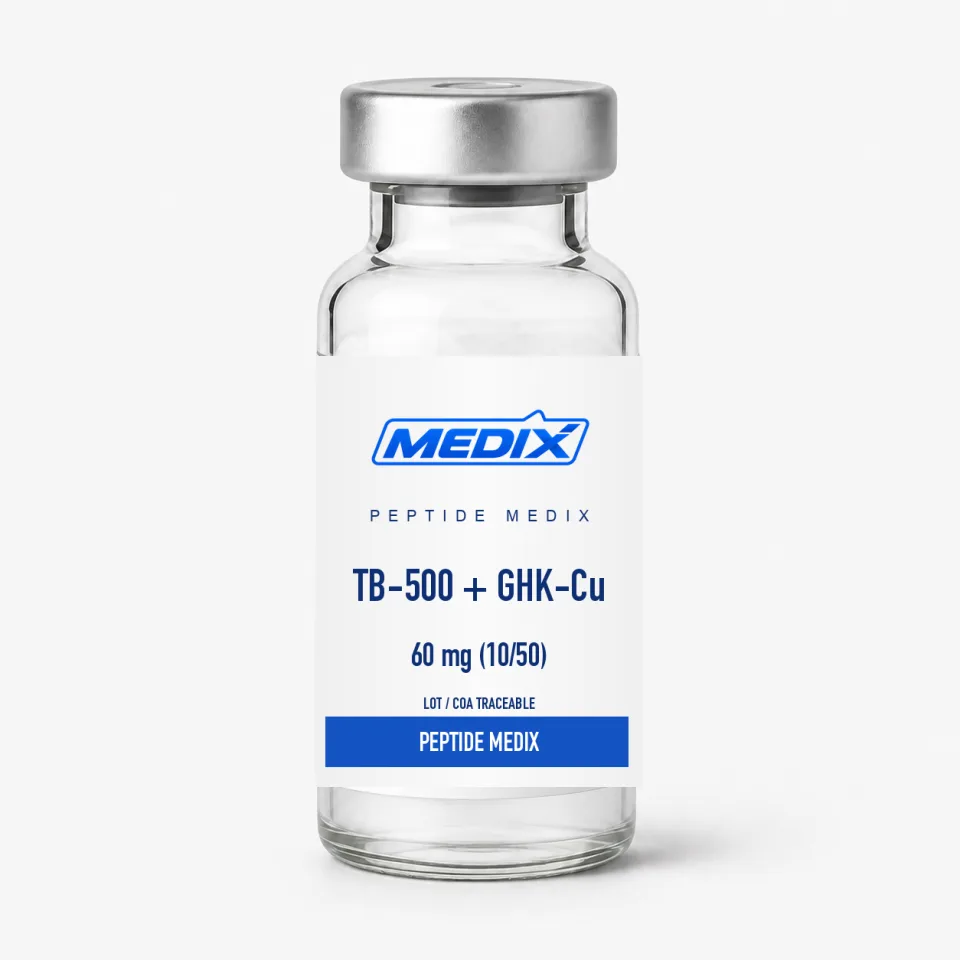
- A fixed-ratio co-lyophilized vial removes preparation variance between arms of a study
Handling implications of the copper complex
The copper species imposes constraints the TB-500 component alone would not. Strong chelators such as EDTA, reducing agents and phosphate-heavy buffers can disturb or strip copper coordination, changing the identity of what is being tested. Colour is the practical readout: a blue cake and a blue solution indicate the complex is intact, while fading, greening or precipitate warrants investigation before the material is used in an experiment.