Research Overview
Why a dedicated sharps container
Reconstitution work generates used needles at a steady rate: one syringe to draw diluent, one to fill each aliquot vial, more for dilutions. A used insulin syringe is a contaminated sharp regardless of how small it is, and placing it in general waste puts anyone who handles that waste at risk of a needle-stick. Regulations in most jurisdictions require sharps to be collected in a rigid, puncture-resistant, labeled container and disposed of through an approved route. A benchtop sharps container makes compliance the path of least resistance because the container is right where the syringes are used.
Design features
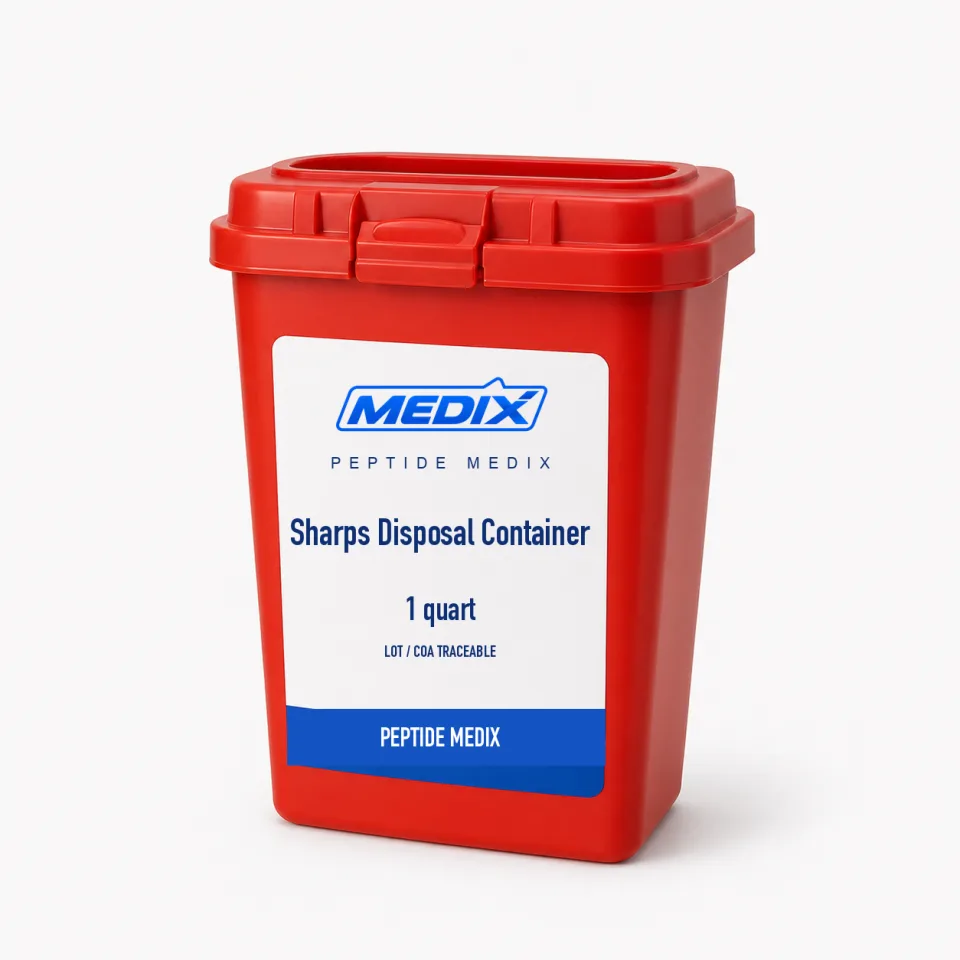
- One-way lid: the drop opening allows a syringe to be inserted horizontally without hands entering the container, and the temporary closure keeps contents covered between uses.
- Permanent lock: once the fill line is reached the lid is pressed into its final position and cannot be reopened, sealing the contents for disposal.
- Marking: the biohazard symbol and fill line make the container's purpose obvious to anyone in the laboratory.
Use at the bench
Sizing
The 1-quart container is appropriate for a single bench that reconstitutes and aliquots a modest number of vials per week; a box of 100 insulin syringes will fill it over time. High-throughput laboratories may prefer several containers positioned at each workstation rather than one large central bin, since sharps should never be carried across the room in the hand.