Research Overview
NAD+: the metabolic component
Nicotinamide adenine dinucleotide is a dinucleotide coenzyme that shuttles between oxidised and reduced forms in hundreds of dehydrogenase reactions. Beyond redox chemistry, it is consumed stoichiometrically as a substrate — sirtuins cleave it during protein deacetylation, PARP enzymes consume it during DNA-damage signalling, and CD38 hydrolyses it as part of calcium signalling. Because those enzymes destroy rather than recycle it, cellular NAD+ concentration reflects a balance between salvage-pathway synthesis and consumption, and reported age-related decline in that balance is the central premise of NAD+ research.
Epitalon: the signalling component
Why a bundle rather than separate orders
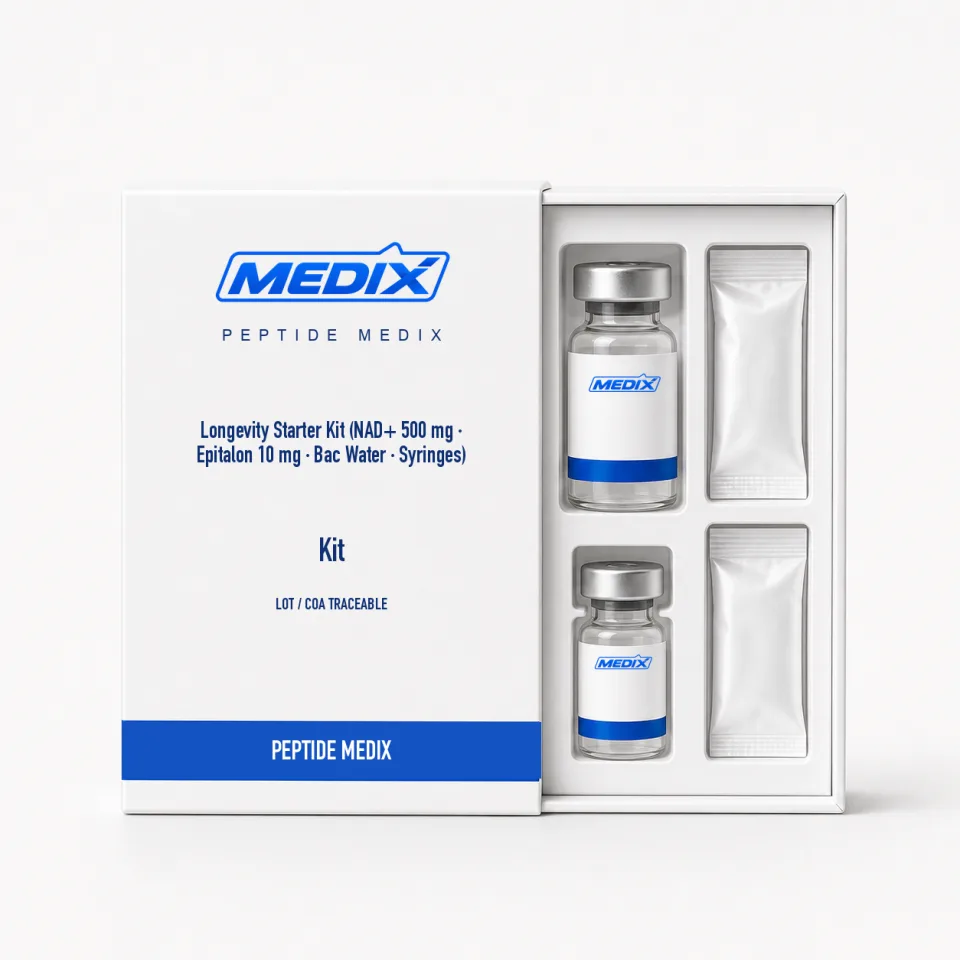
- Comparative study design frequently needs a metabolic and a signalling intervention in the same model system
- Both actives arrive as lyophilized powder requiring the same reconstitution workflow, diluent and labware
- A single multi-draw diluent vial serves both peptide vials, reducing the number of entries and contamination opportunities
- Fine-graduation syringes are the limiting consumable for accurate small-volume withdrawal from either vial
- Ordering together keeps lot documentation for a study aligned in one shipment
Working with the two together
The kit supplies the compounds; it does not imply that they should be combined in a single preparation. They differ in chemistry — NAD+ is acid-sensitive at alkaline pH and hydrolyses readily, while the tetrapeptide is comparatively robust — and mixing them in one solution complicates both stability and attribution of any observed effect. Standard practice is to reconstitute and store each vial separately, and to design experiments with single-agent arms so that effects can be attributed.