Research Overview
Why the intranasal format is studied
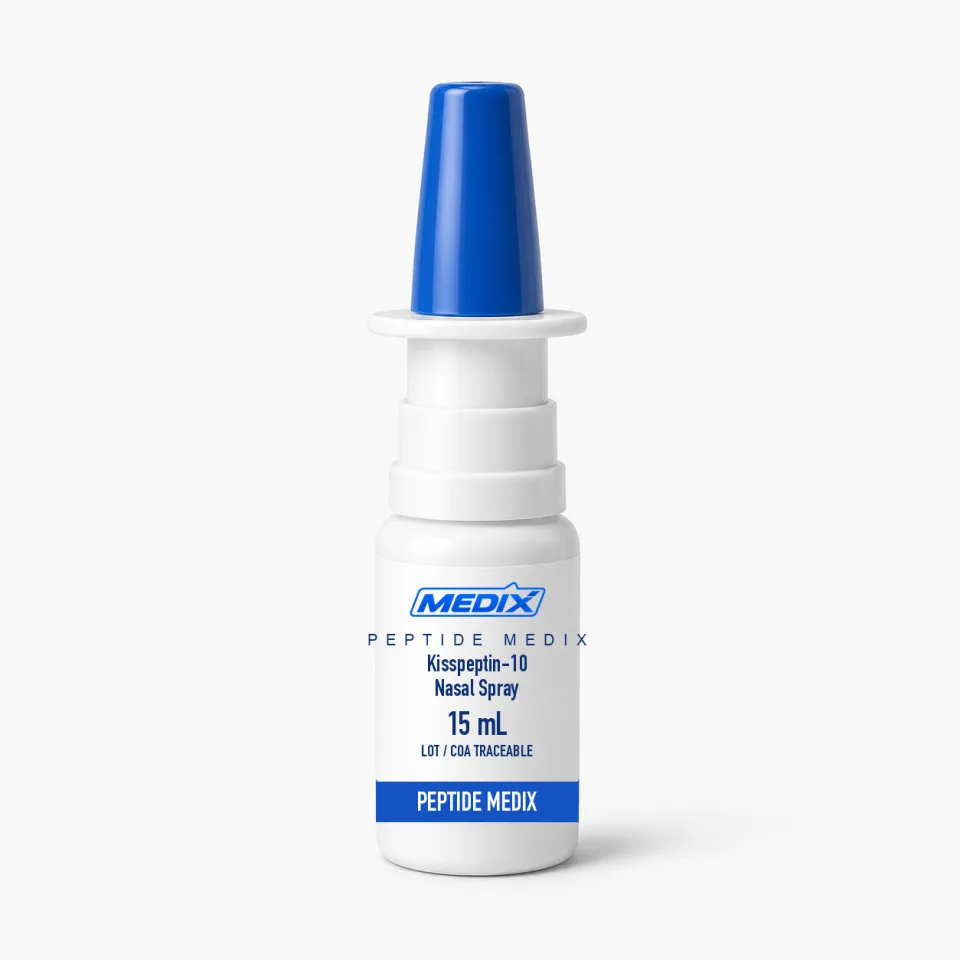
Peptides are poorly absorbed across the gut, so the nasal mucosa — thin, richly vascularised and directly accessible — is a recurring subject in delivery research. Studies with intranasal peptide solutions examine what fraction crosses the epithelium, how enzymatic degradation at the mucosal surface limits it, and whether the olfactory route offers any access to central compartments. A ready-mixed metered spray is the practical format for that work.
Kisspeptin signalling background
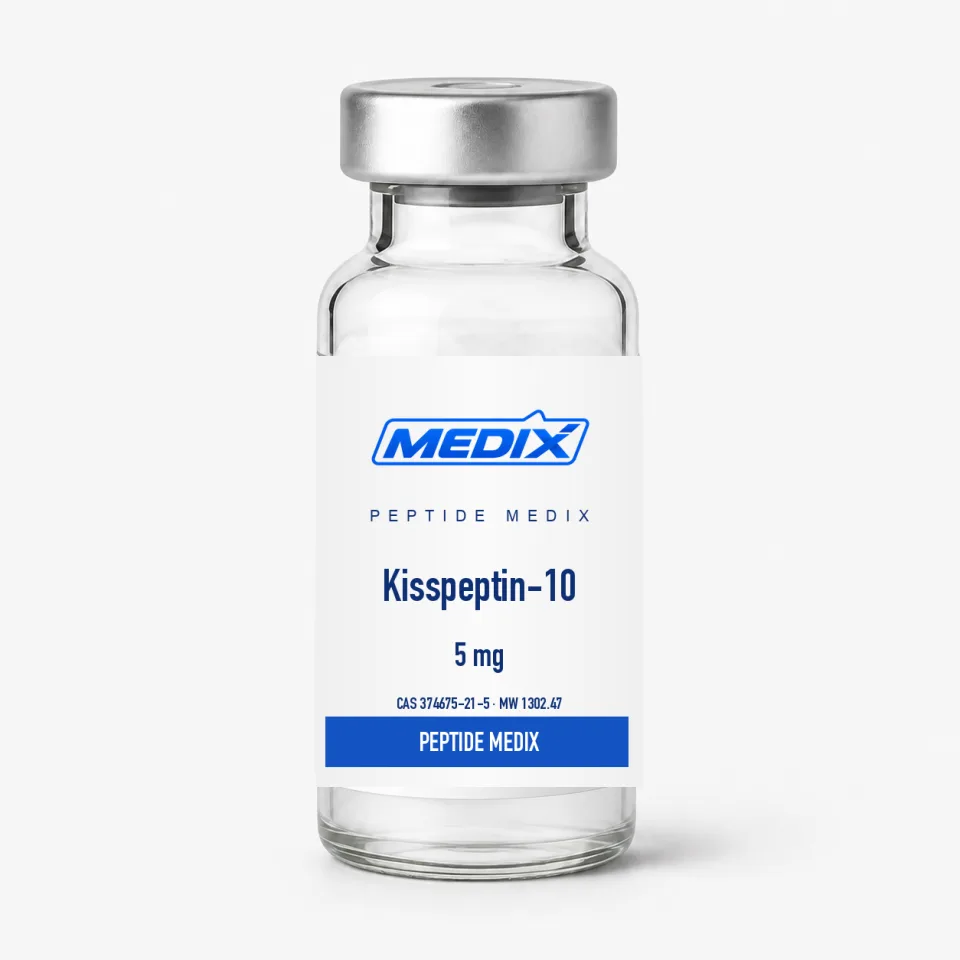
Kisspeptin-10 is the shortest fully active fragment of the KISS1 product. It binds KISS1R on GnRH neurons and, in published animal and human physiology work, has been linked to gonadotropin release — luteinising hormone in particular. Research areas include puberty onset, hypothalamic amenorrhoea models, the reproductive axis under metabolic stress, and reported effects on limbic and reward circuitry in imaging studies.
Endpoints examined with this format
- Per-actuation volume reproducibility and spray plume characterisation
- Stability of the decapeptide in aqueous vehicle over the in-use period
- Comparison of intranasal versus parenteral exposure profiles in animal models
Analytical considerations
Kisspeptin-10 contains tryptophan and an amidated C-terminus, so oxidation and deamidation are the degradation pathways most often monitored. Laboratories track the solution by reverse-phase HPLC across the study window and, where the question is formulation rather than biology, compare the aqueous fill against freshly reconstituted lyophilized peptide as a reference.
Relationship to the vial product
The molecule, receptor target and published literature are the same as for lyophilized Kisspeptin-10. Only concentration control and stability differ, so studies needing exact molar working solutions generally start from the powder while delivery-focused work uses the spray.