Research Overview
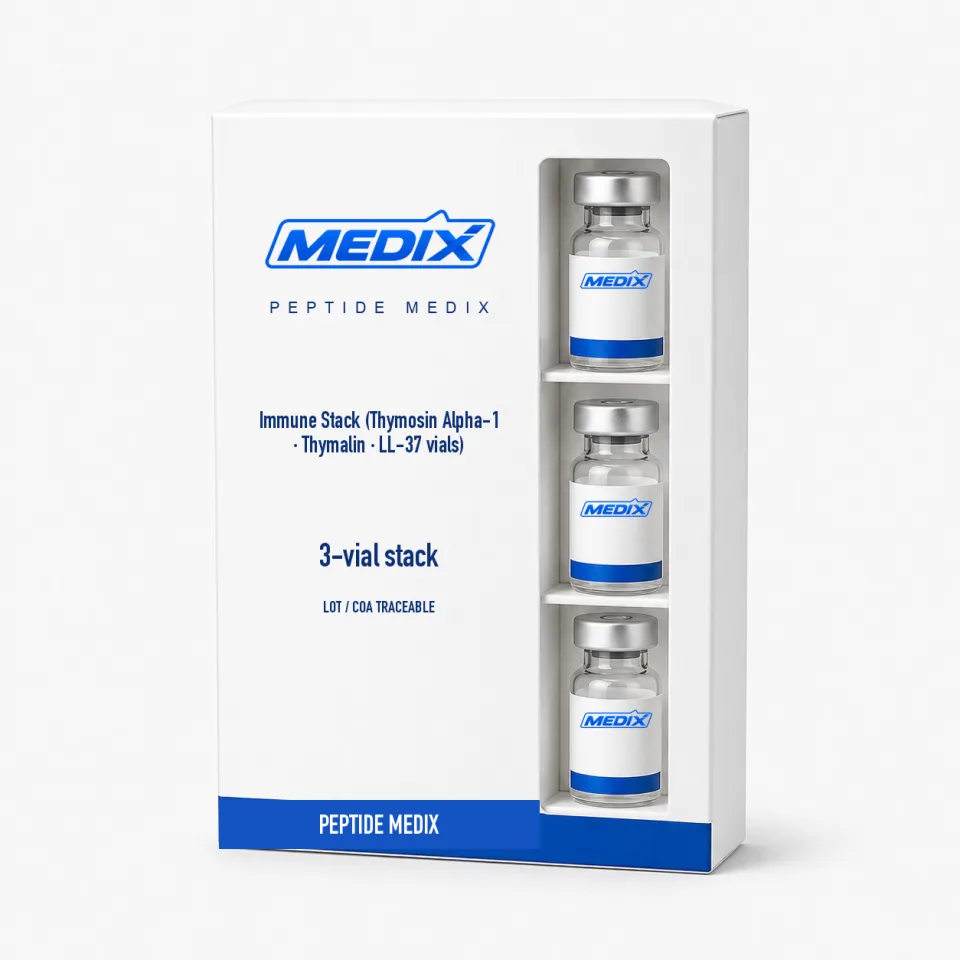
Thymosin Alpha-1
Thymosin Alpha-1 was purified from thymosin fraction 5 in the 1970s and sequenced as a 28-residue, N-terminally acetylated peptide. Its research literature is the most developed in this kit and concerns T-cell maturation markers, dendritic cell behaviour and Toll-like receptor signalling in cell culture. It is approved as a medicine in a number of countries outside the United States, though not by the FDA, and the material supplied here is research grade rather than pharmaceutical.
Thymalin
Thymalin belongs to the peptide bioregulator category described in Russian gerontology literature — a low-molecular-weight polypeptide fraction extracted from calf thymus rather than a single synthesised sequence. Because it is a complex rather than a defined molecule, no molecular formula or single molecular weight applies, and analytical characterisation reports a fraction profile. Published work has examined immune markers in aged animal models.
LL-37
LL-37 is generated by proteolytic cleavage of the human cathelicidin precursor hCAP18 and is the sole cathelicidin found in humans. Its 37 residues carry a strong net positive charge and adopt an amphipathic helix in membrane-mimetic environments, which underlies the extensive in-vitro literature on bacterial membrane disruption. Beyond direct antimicrobial assays, research has examined its interaction with host receptors, its neutralisation of lipopolysaccharide and its behaviour in wound-model systems.
Practical implications of the mix
These three demand different bench practice. LL-37 adsorbs readily to standard plastic and glass, so low-binding tubes and tips are usual, and its activity in antimicrobial assays is sensitive to salt concentration. Thymosin Alpha-1 and Thymalin are handled conventionally. Co-formulating them would be poor practice, which is why the kit keeps them separate.