Research Overview
Nuclear receptor pharmacology
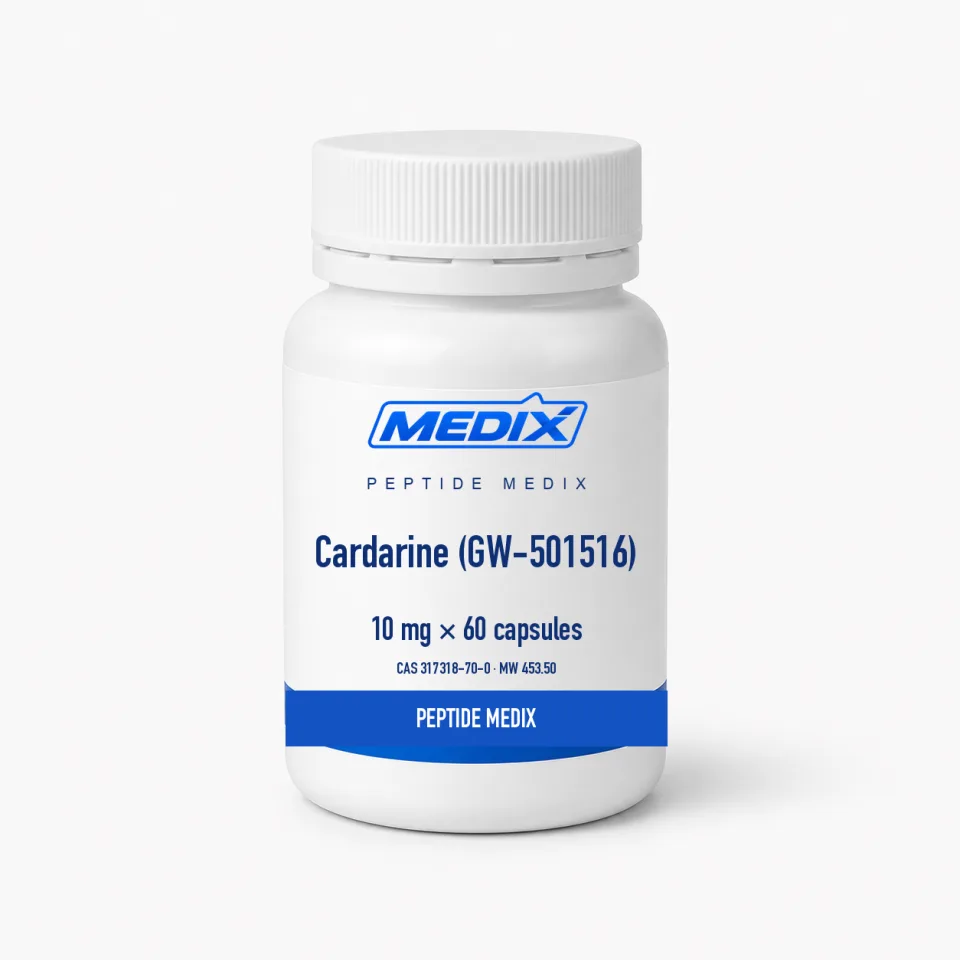
PPARδ is a ligand-activated transcription factor that partners with the retinoid X receptor and binds peroxisome proliferator response elements in target gene promoters. Unlike PPARγ, which is concentrated in adipose tissue, PPARδ is expressed widely, with notable levels in skeletal muscle. GW-501516 is used in cell and tissue work as a reference agonist for this receptor because of its selectivity over the alpha and gamma subtypes, and it appears frequently in studies that need a tool compound to switch the PPARδ programme on.
- Transcriptional induction of genes in fatty-acid uptake and beta-oxidation, including PDK4, CPT1 and UCP family members
- Substrate-selection questions — whether receptor activation shifts cultured myotubes and rodent muscle toward lipid rather than glucose utilisation
- Lipoprotein endpoints in obese and insulin-resistant animal models and in early human study
- Inflammatory and vascular endpoints in cell models expressing PPARδ
Analytical and anti-doping literature
A substantial body of method work exists for detecting the parent compound and its sulfoxide and sulfone metabolites in urine and blood by LC-MS/MS, driven by anti-doping surveillance. Related research covers long-detection-window assays, reference-standard characterisation, and screening of consumer products, where independent analyses have repeatedly reported mislabelled or contaminated material.