Research Overview
Mechanism: an AMP mimic, not an AMPK ligand
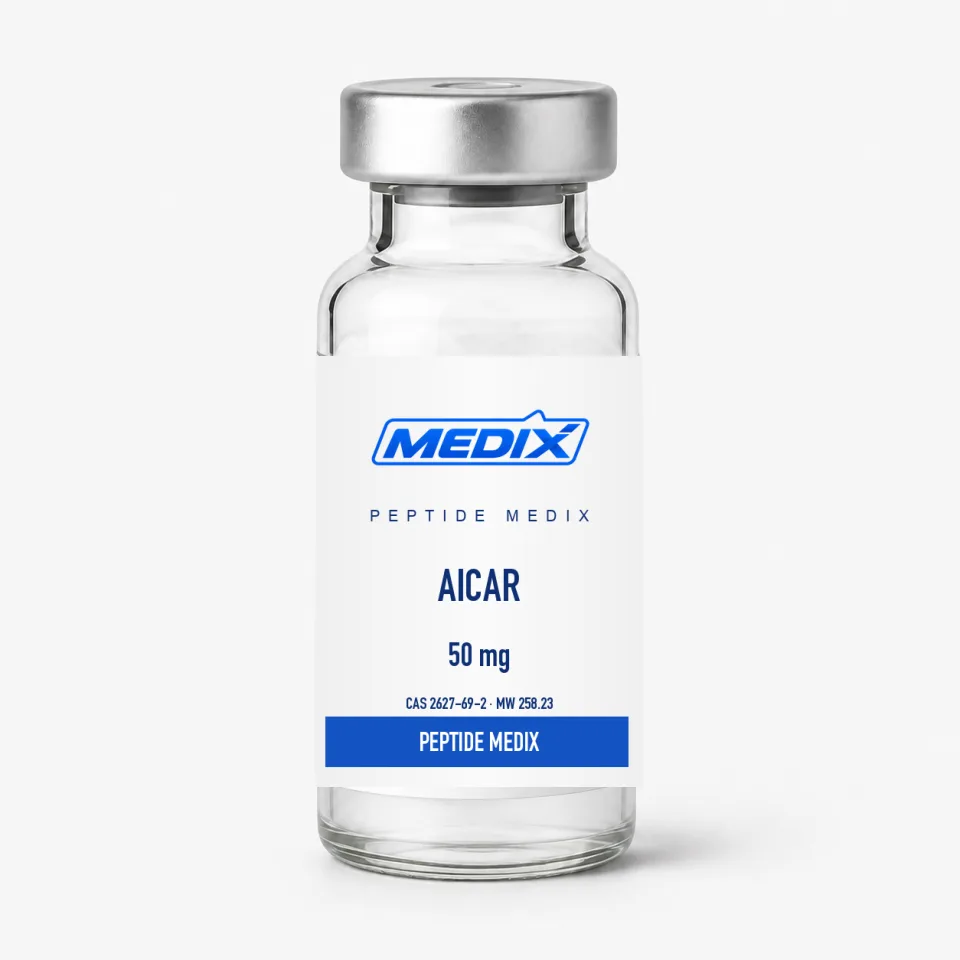
AICAR itself does not bind AMPK. It enters cells through equilibrative nucleoside transporters and is phosphorylated by adenosine kinase to ZMP. Because ZMP resembles AMP closely enough to occupy the regulatory nucleotide sites on the AMPK γ-subunit, it produces allosteric activation and promotes phosphorylation of Thr172 on the α-subunit by upstream kinases. This distinction matters experimentally: cells with low adenosine kinase activity respond poorly, which is a common source of variability between cell lines.
Metabolic research
- Glucose transport and GLUT4 translocation examined in isolated skeletal muscle preparations
- Suppression of hepatic gluconeogenic gene expression reported in rodent liver models
- Increased fatty-acid oxidation through acetyl-CoA carboxylase inhibition described in cultured myotubes
- Mitochondrial biogenesis markers such as PGC-1α studied after repeated exposure in animal work
The exercise-mimetic literature
Interest outside metabolism began with rodent experiments in which AICAR administration was reported to alter endurance-related gene programmes in sedentary animals, work usually discussed together with the PPARδ agonist literature. Those findings prompted anti-doping authorities to add the compound to the prohibited list under metabolic modulators, and validated detection assays for it exist. Researchers should note that translation of these animal findings to other species has not been established.