Research Overview
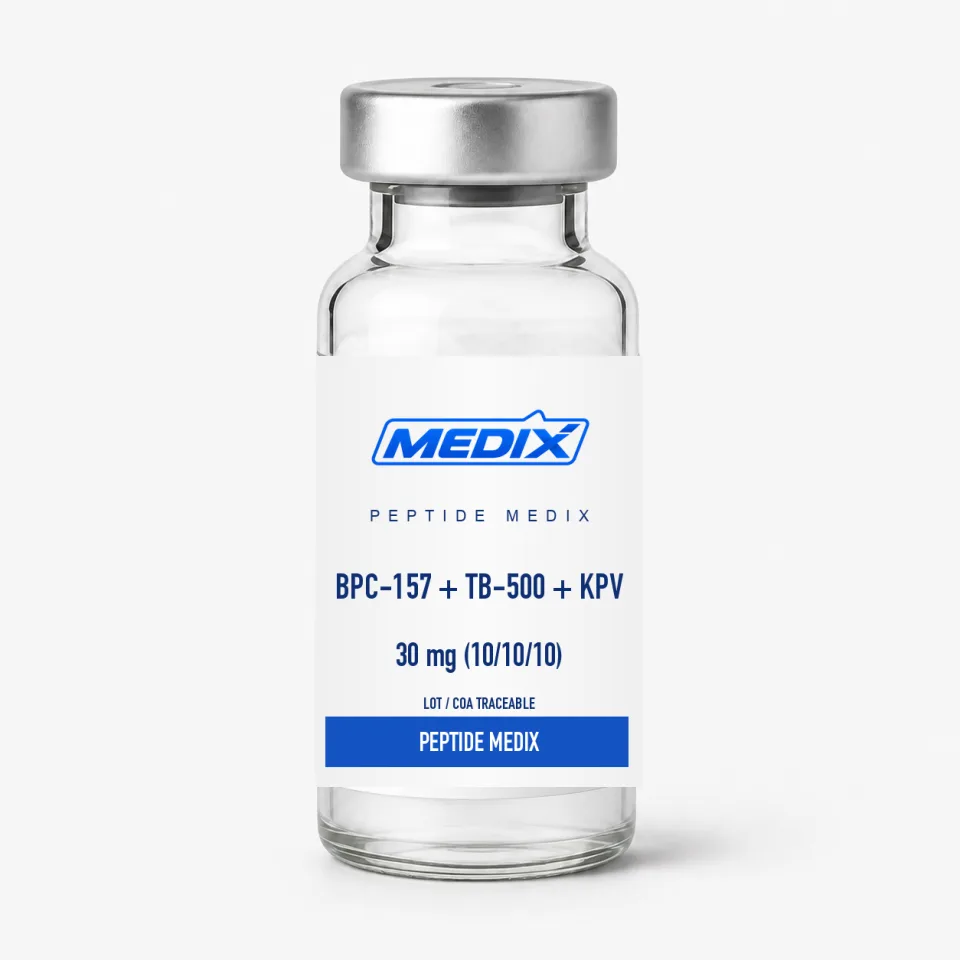
An equal-weight formulation
Most repair-oriented blends on the research market are weighted heavily toward one component. This one is not: each peptide is present at 10 mg, so the molar ratio is set mainly by molecular weight rather than by formulation choice. KPV is by far the smallest molecule at 342 g/mol against BPC-157 at 1,420 g/mol, which means the tripeptide contributes the largest number of molecules per milligram.
BPC-157
TB-500
TB-500 reproduces the actin-binding domain of thymosin beta-4. In-vitro research has examined actin sequestration and the migration of endothelial cells and keratinocytes, typically in scratch or transwell assay formats. It is included in repair blends for that migration-related literature rather than for any structural similarity to BPC-157.
KPV and inflammatory signalling
KPV has been studied in cell and rodent models of intestinal inflammation, with published interest in NF-κB pathway activity and in the transport of the tripeptide across epithelial cells. It is the component that gives this blend its distinct orientation compared with two-peptide BPC-157 and TB-500 preparations.