Research Overview
Receptor pharmacology
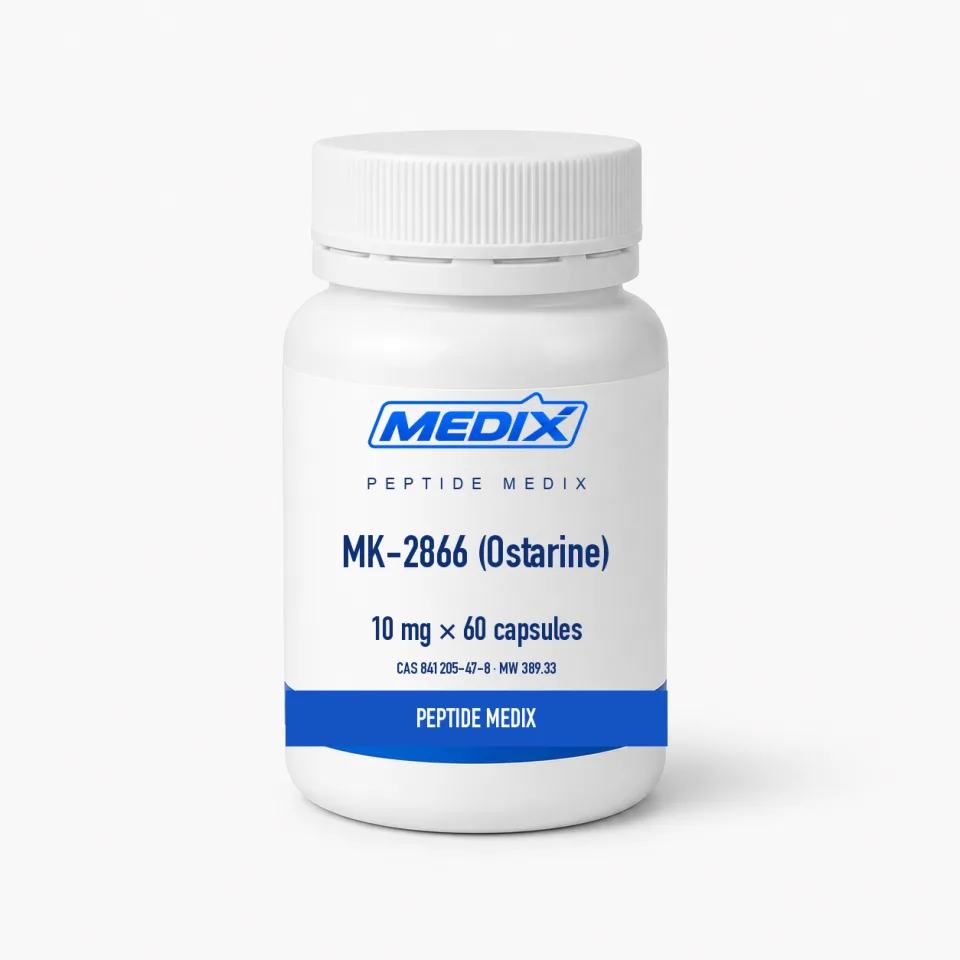
Ostarine binds the ligand-binding domain of the androgen receptor and has been characterised in the literature as a partial agonist. Because it lacks a steroid nucleus, it is not converted to oestrogens by aromatase or to dihydrotestosterone by 5-alpha-reductase — a difference researchers cite when comparing SARM and steroid pharmacology. Mechanistic studies have examined receptor conformation, nuclear translocation, and which coactivator and corepressor complexes are recruited in different tissues.
- Lean body mass, muscle fibre cross-sectional area and grip strength in rodent models, including orchidectomised animals.
- Bone mineral density and bone-turnover markers.
- Comparative endpoints in prostate and seminal vesicle tissue used to characterise the selectivity index.
- Suppression of endogenous gonadotropins and androgens as a class-level pharmacodynamic readout.
Enobosarm was studied in trials examining lean body mass and physical function in cancer-associated muscle wasting, and later in other indications. Reported trial results included increases in lean body mass, while co-primary functional endpoints were not consistently met — a documented reason the programme did not proceed to approval for those indications. No SARM has been approved by the FDA for any indication.
The FDA has publicly warned that SARMs including ostarine are not dietary ingredients, that products marketed as containing them are unapproved drugs, and that liver-related and other adverse events have been reported. The World Anti-Doping Agency lists SARMs under the S1 anabolic agent category, and ostarine is among the most frequently reported findings in doping-control laboratories — which is itself an active analytical-chemistry research area covering metabolite identification and detection windows.