Research Overview
Local mechanisms and a systemic arm
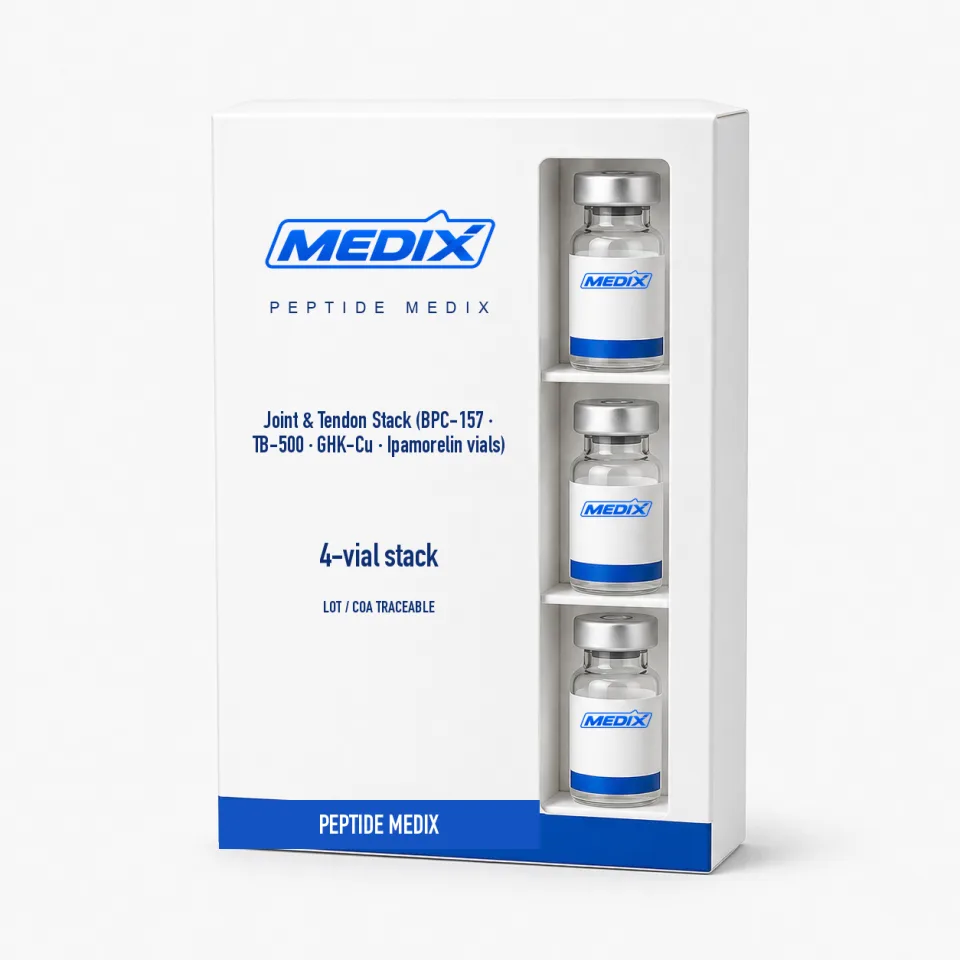
Three of the four peptides in this kit are studied at the level of the tissue itself — matrix synthesis, cell migration, granulation. Ipamorelin is not. It acts on pituitary somatotrophs through the ghrelin receptor, and its inclusion reflects the recurring appearance of growth hormone and IGF-1 signalling in tendon and ligament literature. A four-vial format lets a study separate the local and systemic arms rather than assume they act together.
BPC-157 and TB-500
BPC-157 has been examined in rodent models of tendon and ligament injury, with published observations on fibroblast outgrowth in culture and on markers associated with new vessel formation. TB-500 corresponds to the actin-binding region of thymosin beta-4, and its in-vitro literature concerns actin sequestration and endothelial and keratinocyte migration in scratch and transwell assays.
GHK-Cu
Ipamorelin
Ipamorelin is a pentapeptide with two non-standard residues, Aib and D-2-Nal, and a C-terminal amide. Its original characterisation reported growth hormone release in animal models at concentrations that did not appreciably move cortisol or prolactin, distinguishing it from earlier secretagogues in the GHRP series.