Research Overview
Why this peptide pairing is a standard design
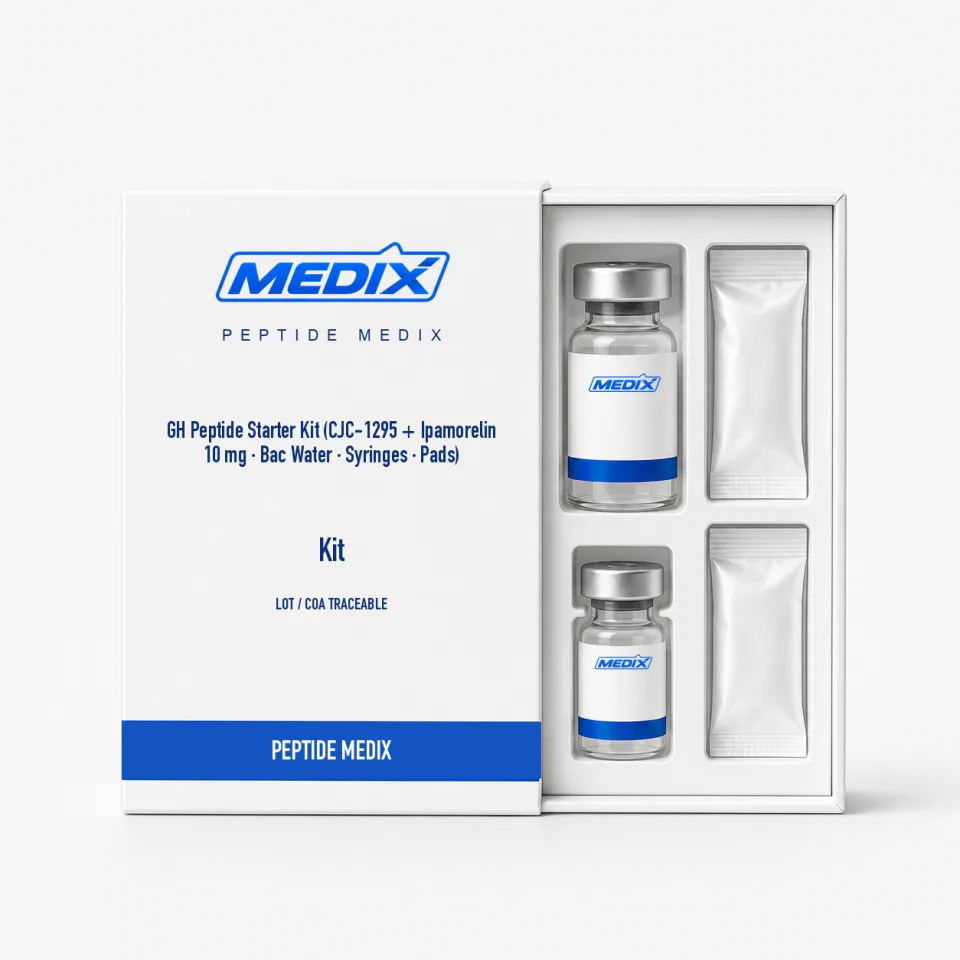
Growth hormone release from the pituitary is governed by more than one input. GHRH acting at the GHRH receptor is the classical stimulatory signal; the growth hormone secretagogue receptor 1a, whose endogenous ligand is ghrelin, is a separate route that also suppresses somatostatin tone. Because the two receptors are expressed on the same somatotroph and couple through different G proteins, engaging both is repeatedly reported as producing a larger response than either alone. This kit supplies the co-lyophilized version of that design in a single vial.
What each consumable contributes
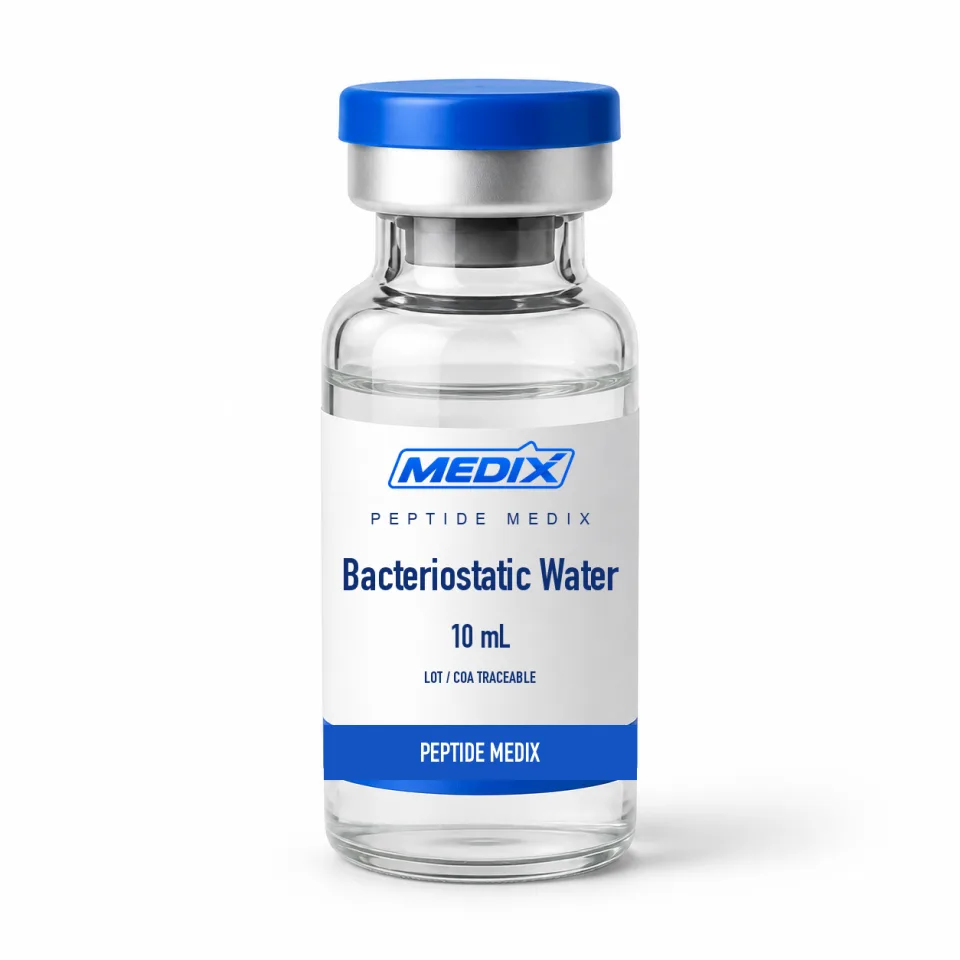
- Bacteriostatic water: the benzyl alcohol preservative permits repeated septum entry over a working period, unlike plain sterile water intended for single use
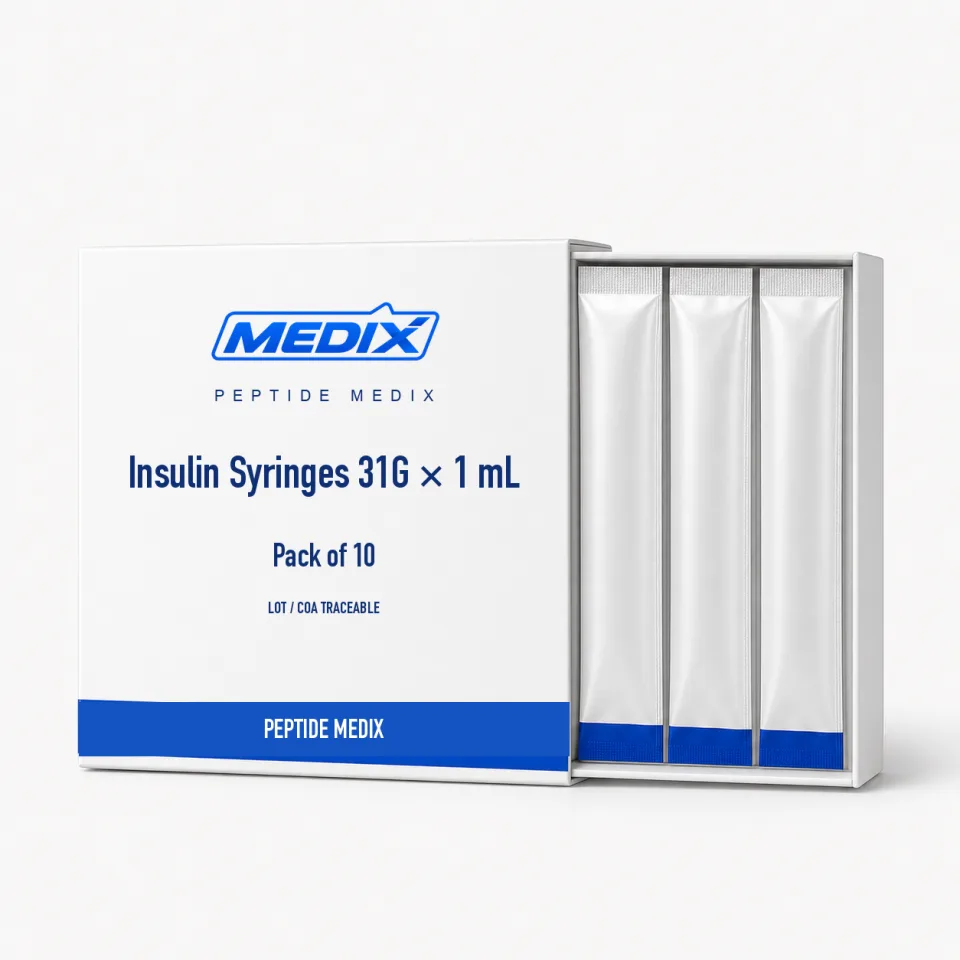
- Insulin-style syringes: fine unit graduations on a 1 mL barrel give the resolution needed for accurate small-volume transfer from a reconstituted vial
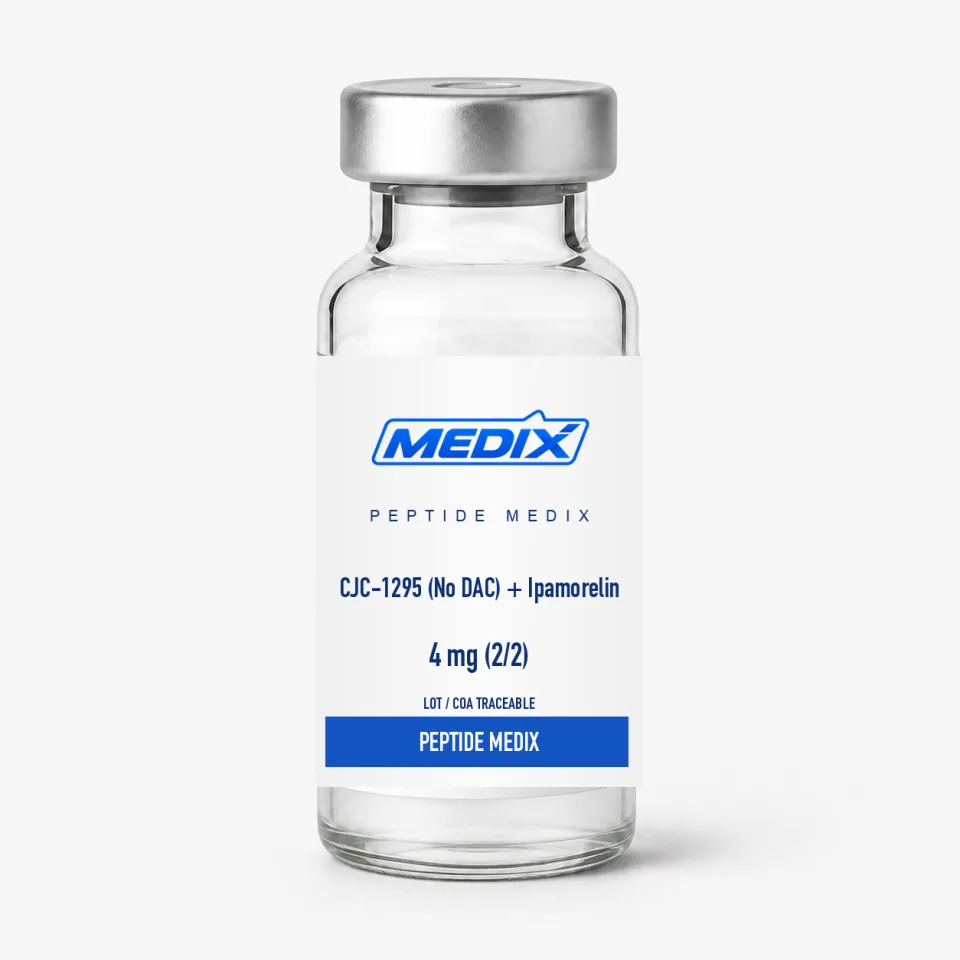
- The peptide vial: co-lyophilization fixes the ratio, removing one reconstitution step and one source of preparation variance
Reconstitution as an experimental variable
The concentration of a reconstituted vial is set entirely by the diluent volume the researcher adds, and that calculation is the most common source of error in early peptide work. A 10 mg blend vial made up to 2 mL gives 5 mg/mL of total peptide, meaning 2.5 mg/mL of each component. Recording diluent identity, volume, reconstitution date and the resulting concentration for both peptides at the time of preparation avoids reconstructing it from memory later.
Stability across the working period
Lyophilized peptide is stable for extended periods at −20 °C; the same material in solution is not. Once reconstituted, hydrolysis and oxidation proceed at rates that increase with temperature and light exposure, so refrigerated, dark, upright storage and a defined study window are standard practice. Studies running over several weeks generally re-verify concentration analytically rather than assuming the original calculation still holds.