Peptide Medix product catalog

Peptide Medix

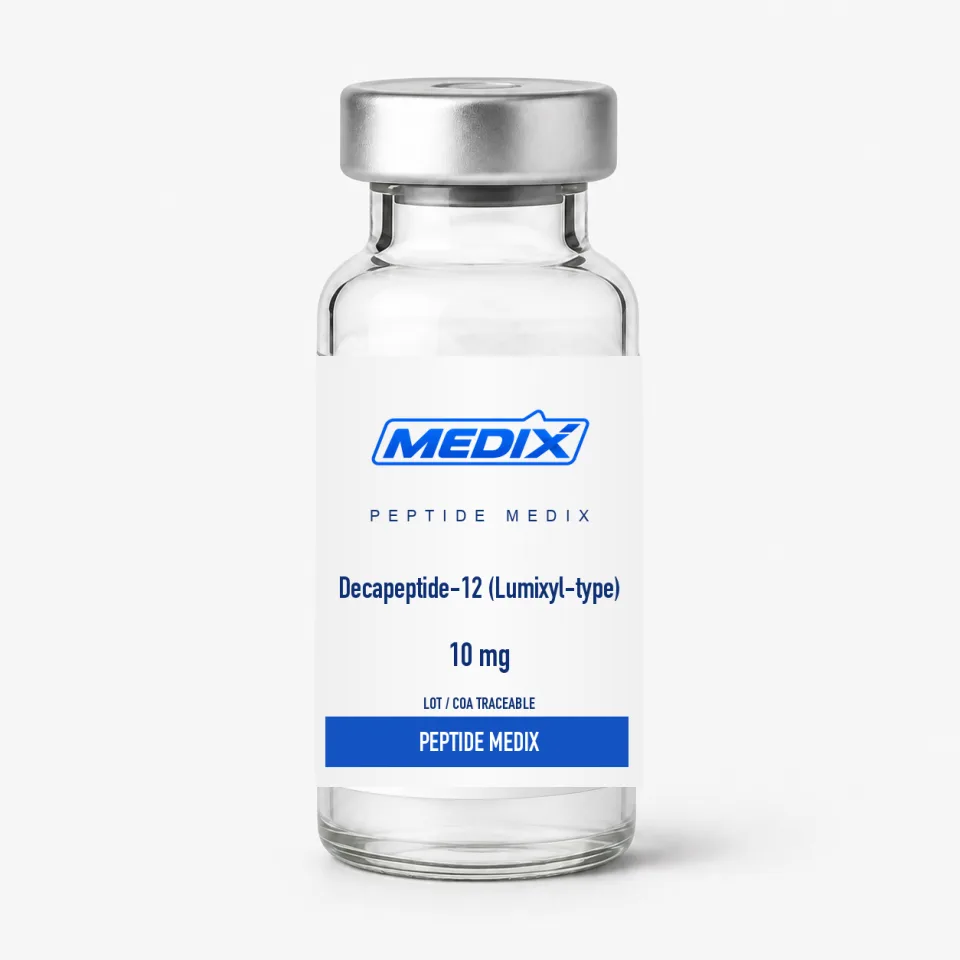
Decapeptide-12 (Lumixyl-type)

Ten-residue tyrosinase-inhibiting peptide used in melanogenesis research

Review catalog details Secure payments
Available to order · 2 of 2 options available
$63.00 $75.00 15% OFF

Choose an option

1
Categories: decapeptide-12 , lumixyl peptide , cosmetic peptides

Choose your delivery method

Standard Shipping is automatically selected at checkout. Customers can upgrade to a faster delivery option anytime.

Overview

Decapeptide-12 is a synthetic ten-residue peptide, sequence Tyr-Arg-Ser-Arg-Lys-Tyr-Ser-Ser-Trp-Tyr, identified through screening of combinatorial peptide libraries for sequences that bind and inhibit tyrosinase. It is the active behind the Lumixyl-type cosmetic systems and is listed under the INCI name Decapeptide-12. MyPeptide supplies it as a lyophilized research powder in 10 mg and 50 mg vials rather than as a finished cosmetic formulation.

Tyrosinase is the rate-limiting enzyme of melanin synthesis, catalysing the hydroxylation of L-tyrosine to L-DOPA and the subsequent oxidation to dopaquinone. Most non-peptide inhibitors used in this field — hydroquinone, kojic acid, arbutin — act as substrate analogues or chelate the enzyme's binuclear copper centre. A peptide inhibitor is mechanistically different: it presents a defined sequence that interacts with the enzyme surface, and because it is a peptide it carries a distinct stability and permeation profile from those small molecules.

Specifications

Brand Peptide Medix
Category Cosmetic Signal Peptides
Form Lyophilized white to off-white powder, sealed glass vial
Available sizes 10 mg, 50 mg
Purity ≥98% by HPLC; lot-matched COA available
Amino acid sequence Tyr-Arg-Ser-Arg-Lys-Tyr-Ser-Ser-Trp-Tyr
Chain length 10 amino acids (decapeptide)
INCI name Decapeptide-12
Also known as Lumixyl peptide; oligopeptide tyrosinase inhibitor
Peptide class Synthetic cosmetic decapeptide, enzyme-inhibitor type
Molecular target Tyrosinase, the rate-limiting enzyme of melanin biosynthesis
Notable residues Three tyrosines and one tryptophan — aromatic and light-sensitive; two arginines and a lysine give a net positive charge at neutral pH
Research areas Melanogenesis, tyrosinase inhibition kinetics, pigmentation models, comparative depigmenting agent studies, peptide skin permeation
Solubility Water-soluble; solutions are commonly buffered near neutral pH for enzyme assays
Storage (lyophilized) −20 °C, sealed and protected from light and moisture
Storage (reconstituted) 2–8 °C, protected from light, used within the study window
SKU DECAPEPTIDE-12-10-MG

Highlights

  • Ten-residue synthetic peptide, sequence Tyr-Arg-Ser-Arg-Lys-Tyr-Ser-Ser-Trp-Tyr
  • Supplied as lyophilized powder in 10 mg and 50 mg vials
  • ≥98% by HPLC with a lot-matched certificate of analysis
  • Reported to inhibit tyrosinase, the rate-limiting enzyme of melanogenesis
  • The active behind Lumixyl-type systems; INCI name Decapeptide-12
  • Studied in melanocyte culture, enzyme assay and reconstructed-epidermis models
  • Bulk powder format lets researchers set their own vehicle and concentration
  • Research use only — not a cosmetic, drug or consumer product

What's Included

  • The vial option and size selected above
  • Final item and quantity confirmed in cart
  • Laboratory-research-use labeling

Research Overview

Where it acts in the pigment pathway

Melanin synthesis begins with tyrosinase acting on L-tyrosine, and that step controls flux through the whole pathway. Downstream enzymes TRP-1 and TRP-2 shape the eumelanin-to-pheomelanin balance, but inhibiting tyrosinase reduces total output. Decapeptide-12 was selected specifically against this enzyme, which is why the standard readouts in its literature are enzyme activity in cell-free assays and melanin content in pigmented cell models rather than broader anti-inflammatory or matrix endpoints.

Why a peptide rather than a small molecule

Typical experimental readouts

  • Mushroom or human tyrosinase activity assays with DOPA oxidation measured spectrophotometrically
  • Melanin content and cell viability in B16 murine melanoma or primary human melanocyte culture
  • Reconstructed pigmented epidermis models for a tissue-level pigmentation endpoint
  • Franz cell permeation studies comparing vehicles for a hydrophilic decapeptide
  • Head-to-head comparison against hydroquinone, kojic acid or arbutin at matched conditions

Stability considerations

The sequence contains three tyrosine residues and a tryptophan. Aromatic side chains — tryptophan in particular — are prone to photo-oxidation, so light protection is not a generic precaution here but a specific one. Serine residues and the basic arginine/lysine content also make the peptide sensitive to pH extremes. Formulation work in this area typically reports pH, antioxidant content and light exposure explicitly, because those parameters materially affect measured activity over time.
Handling & Storage

Reconstitute with sterile or bacteriostatic water added slowly down the inner wall of the vial, then swirl gently rather than shaking. For enzyme kinetics, prepare the working solution in a buffer near physiological pH and record the buffer composition, since ionic strength and pH affect both peptide charge state and tyrosinase activity. Protect solutions from light throughout — the tryptophan and tyrosine residues are photo-oxidisable — and hold reconstituted material at 2–8 °C, using it within a defined study window. Aliquot rather than repeatedly freeze–thawing the same vial, swab the stopper before every entry, and log lot number, diluent, concentration and reconstitution date.

Decapeptide-12 (Lumixyl-type) FAQ

Is this the same peptide used in Lumixyl products?
It is the same sequence — the decapeptide listed under INCI name Decapeptide-12 that those systems are built around. What we supply is the raw lyophilized peptide in a research vial, not a finished formulation, so there is no cosmetic base, preservative system or added actives.
How is it thought to work?
Published work describes it as an inhibitor of tyrosinase, the rate-limiting enzyme converting L-tyrosine into the precursors of melanin. It was identified by screening peptide libraries for sequences that engage that enzyme, and the standard readouts in its literature are enzyme activity and melanin content in cell models.
What purity documentation is supplied?
Each lot is tested to at least 98% by HPLC and accompanied by a lot-matched certificate of analysis including mass-spectrometric identity confirmation of the ten-residue sequence. Quote the lot number printed on the vial when requesting the document.
Why does the vial need light protection?
The sequence contains one tryptophan and three tyrosine residues, and aromatic side chains of this kind are prone to photo-oxidation. Light exposure can therefore degrade the peptide and shift measured activity, which is why both powder and reconstituted solution should be kept dark.

This catalog listing is for laboratory research use only. It is not represented as a drug, food, supplement, cosmetic or diagnostic product, and it is not offered for human or veterinary use.

Customer Reviews

0 reviews
5 star
0%
4 star
0%
3 star
0%
2 star
0%
1 star
0%

Leave Your Review

Rating

No reviews yet — be the first!

Leave Your Review

Rating

Keep exploring

Related Products & Shopping Guides

Compare Decapeptide-12 (Lumixyl-type) with relevant categories, product topics, and practical shopping information.

Often researched together

Related research peptides, blends and lab supplies frequently ordered with Decapeptide-12 (Lumixyl-type).

15% OFF
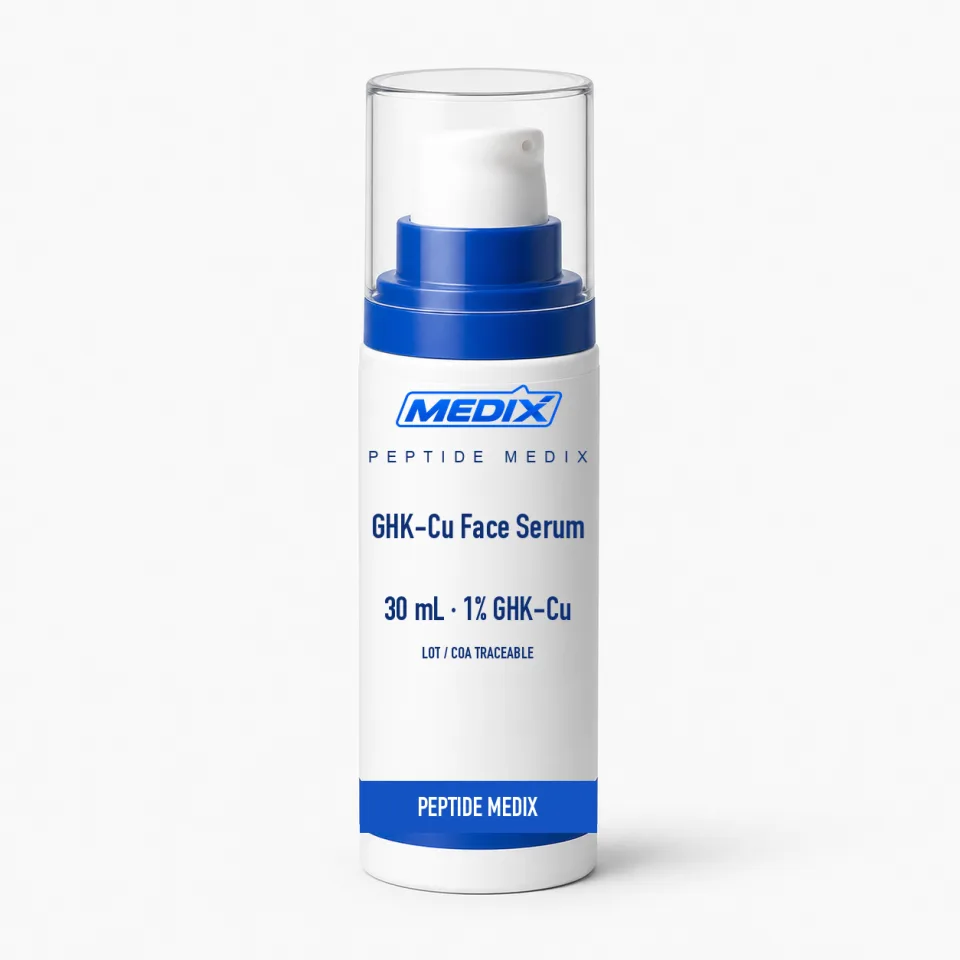
GHK-Cu Face Serum

Peptide Medix

GHK-Cu Face Serum

ghk-cu serum

2 options

$68.00 $80.00

View options and product details