Peptide Medix product catalog

Peptide Medix

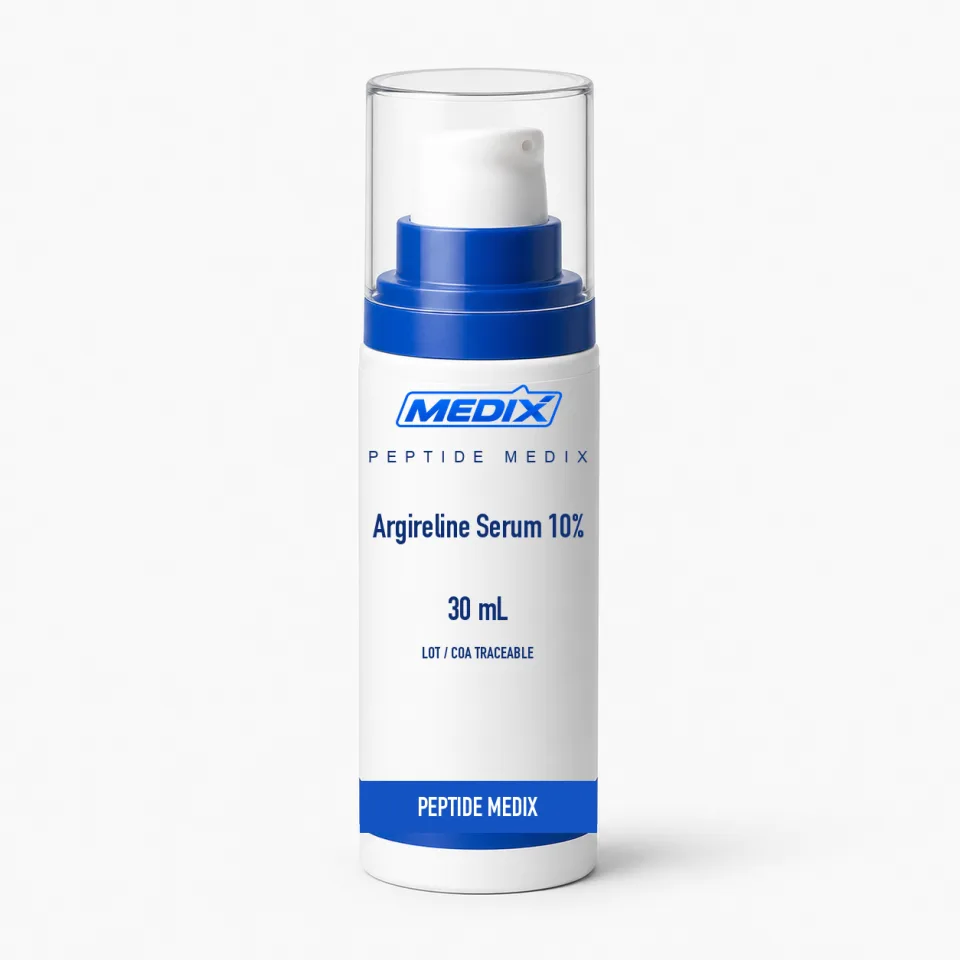
Argireline Serum 10%

Aqueous acetyl hexapeptide-8 serum at 10% concentrate loading, 30 mL

Review catalog details Secure payments
Available to order
$55.00 $65.00 15% OFF
1
Categories: argireline serum , acetyl hexapeptide-8 , cosmetic peptides

Choose your delivery method

Standard Shipping is automatically selected at checkout. Customers can upgrade to a faster delivery option anytime.

Overview

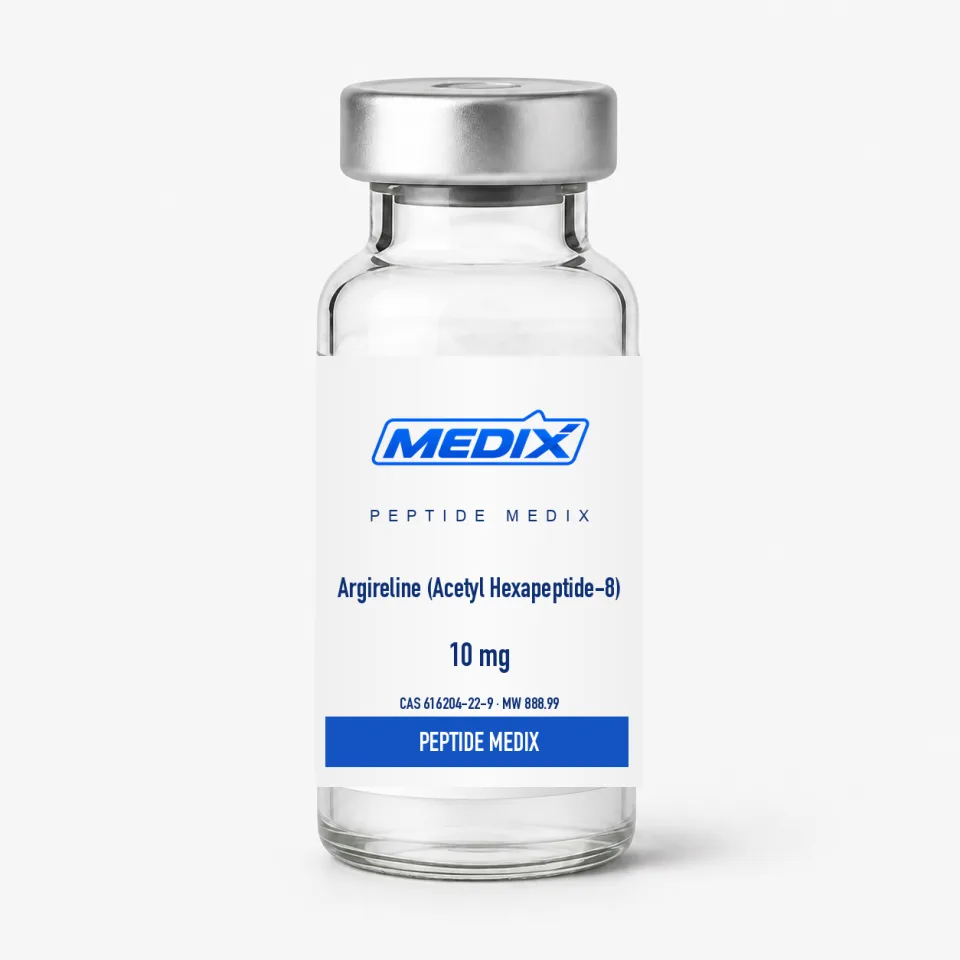
This is a ready-made aqueous serum built around acetyl hexapeptide-8, the cosmetic signal peptide marketed under the Argireline name, supplied in a 30 mL bottle. The active is the N-acetylated, C-terminally amidated hexapeptide Ac-Glu-Glu-Met-Gln-Arg-Arg-NH2, CAS 616204-22-9, molecular weight about 889 g/mol. It is the same material we supply as lyophilized powder in 10 mg and 50 mg vials, released against a lot-matched certificate of analysis.

The 10% designation follows cosmetic-formulation convention: it refers to the loading of the acetyl hexapeptide-8 concentrate in the finished serum, not to 10% free peptide by mass. Trade-grade peptide concentrates are themselves dilute aqueous solutions, so actual free-peptide content in the bottle is correspondingly lower and is stated on the lot label and certificate. Reading the percentage as literal peptide mass is one of the most common errors in this category, and we would rather state the convention plainly than let the number mislead.

Specifications

Brand Peptide Medix
Category Cosmetic Signal Peptides
Form Clear, low-viscosity aqueous serum in a 30 mL bottle
Available size 30 mL
Labelled strength 10% acetyl hexapeptide-8 concentrate loading; free-peptide content is lower and is stated per lot
Active Acetyl hexapeptide-8 (Argireline), synthetic cosmetic signal peptide
INCI name of active Acetyl Hexapeptide-8 (formerly acetyl hexapeptide-3)
CAS number (active) 616204-22-9
Molecular formula (active) C34H60N14O12S
Molecular weight (active) 888.99 g/mol
Amino acid sequence (active) Ac-Glu-Glu-Met-Gln-Arg-Arg-NH2
Peptide purity input ≥99% by HPLC with mass-spectrometric identity check; lot-matched COA available
Vehicle Aqueous, low viscosity, no added fragrance or colourant
Research areas SNARE complex assembly, exocytosis interference, expression-line formulation studies, peptide permeation and vehicle effects
Stability note The methionine residue oxidises readily in solution; keep cold, dark and tightly closed
Storage 2–8 °C preferred, protected from light; do not freeze
SKU ARGIRELINE-SERUM-30-ML

Highlights

  • 30 mL aqueous serum formulated with acetyl hexapeptide-8 (INCI: Acetyl Hexapeptide-8)
  • Labelled 10% by the cosmetic convention — concentrate loading, not free-peptide mass
  • Per-lot peptide content stated on the label and on the lot-matched COA
  • Built from ≥99% HPLC-purity peptide with mass-spectrometric identity confirmation
  • Same Ac-Glu-Glu-Met-Gln-Arg-Arg-NH2 sequence as our lyophilized Argireline vials
  • Low-viscosity, unfragranced vehicle suited to permeation and vehicle-comparison work
  • Refrigerated, light-protected storage — the methionine residue is oxidation-sensitive
  • Research use only — not a cosmetic, drug or consumer product

What's Included

  • The product option and size selected above
  • Final item and quantity confirmed in cart
  • Review the current ingredient listing before purchase

Research Overview

The SNAP-25 mimicry hypothesis

Neurotransmitter release depends on the SNARE complex — syntaxin-1A, VAMP and SNAP-25 — zippering together to bring vesicle and plasma membranes into fusion contact. Acetyl hexapeptide-8 was designed around the N-terminal region of SNAP-25 on the premise that a short mimetic could compete during complex assembly. In-vitro studies have examined catecholamine release from chromaffin cells and SNARE assembly in cell-free systems, and it is that competition, not any toxin-like enzymatic action, that the literature proposes. The peptide is frequently described in marketing as a botulinum-toxin analogue; mechanistically the two are unrelated, and the comparison does not survive contact with the biochemistry.

Formulation and delivery questions

  • Permeation of a charged, hydrophilic 889-dalton peptide across stratum corneum, which passive diffusion strongly disfavours
  • Vehicle effects — humectants, solvents and surfactants alter partitioning and can dominate any intrinsic difference between actives
  • Concentration reporting, since concentrate loading and free-peptide mass differ by more than an order of magnitude in this category
  • Combination behaviour with other cosmetic peptides such as Matrixyl or SNAP-8, where sequence overlap raises questions about competition

Analytical handling of a methionine-containing peptide

Methionine at position three is the practical weak point. It oxidises to the sulfoxide on air exposure, which is readily detected as a mass shift of sixteen daltons by LC-MS and as a shifted peak in reverse-phase HPLC. Any stability study on this serum should quantify sulfoxide formation over time rather than tracking total peptide alone, and arginine-rich sequences additionally warrant attention to adsorption losses on glass and plastic surfaces.

What the evidence supports

Published work on this peptide is predominantly in-vitro, supplemented by small manufacturer-associated studies with soft imaging endpoints. Independent, well-powered evidence is thin, and effect sizes in the cosmetic literature are modest and contested. The honest summary is that the mechanism is plausible in cell-free and cell-culture systems and that percutaneous delivery of a peptide this size remains the unresolved limiting step.
Argireline Serum 10% FAQ

Does 10% mean 10% peptide by weight?
No. In cosmetic formulation the percentage conventionally refers to the loading of the peptide concentrate, and those concentrates are themselves dilute aqueous solutions. Actual free acetyl hexapeptide-8 content is substantially lower and is stated on the lot label and certificate of analysis.
Why does this need refrigeration when the powder does not?
Because the methionine residue oxidises far faster in solution than in the lyophilized state. Cold, dark, tightly closed storage slows sulfoxide formation. The powder is stable frozen for much longer, which is why studies needing extended shelf life usually work from vials.
Is a certificate of analysis available?
Yes. The peptide used in manufacture is analysed by reverse-phase HPLC to ≥99% purity with mass-spectrometric identity confirmation, and a lot-matched COA is available on request. Quote the batch code printed on the bottle.
How does this compare with the Argireline vials?
Same molecule, different presentation. The vials supply 10 mg or 50 mg of lyophilized powder for researchers building their own vehicle at a defined concentration; this serum is a ready-made aqueous formulation for work where the finished vehicle is what is under test.

This catalog listing is for laboratory research use only. It is not represented as a drug, food, supplement, cosmetic or diagnostic product, and it is not offered for human or veterinary use.

Customer Reviews

0 reviews
5 star
0%
4 star
0%
3 star
0%
2 star
0%
1 star
0%

Leave Your Review

Rating

No reviews yet — be the first!

Leave Your Review

Rating

Keep exploring

Related Products & Shopping Guides

Compare Argireline Serum 10% with relevant categories, product topics, and practical shopping information.

Often researched together

Related research peptides, blends and lab supplies frequently ordered with Argireline Serum 10%.

15% OFF
Matrixyl Serum 3000

Peptide Medix

Matrixyl Serum 3000

matrixyl serum 3000
$55.00 $65.00

View options and product details

15% OFF
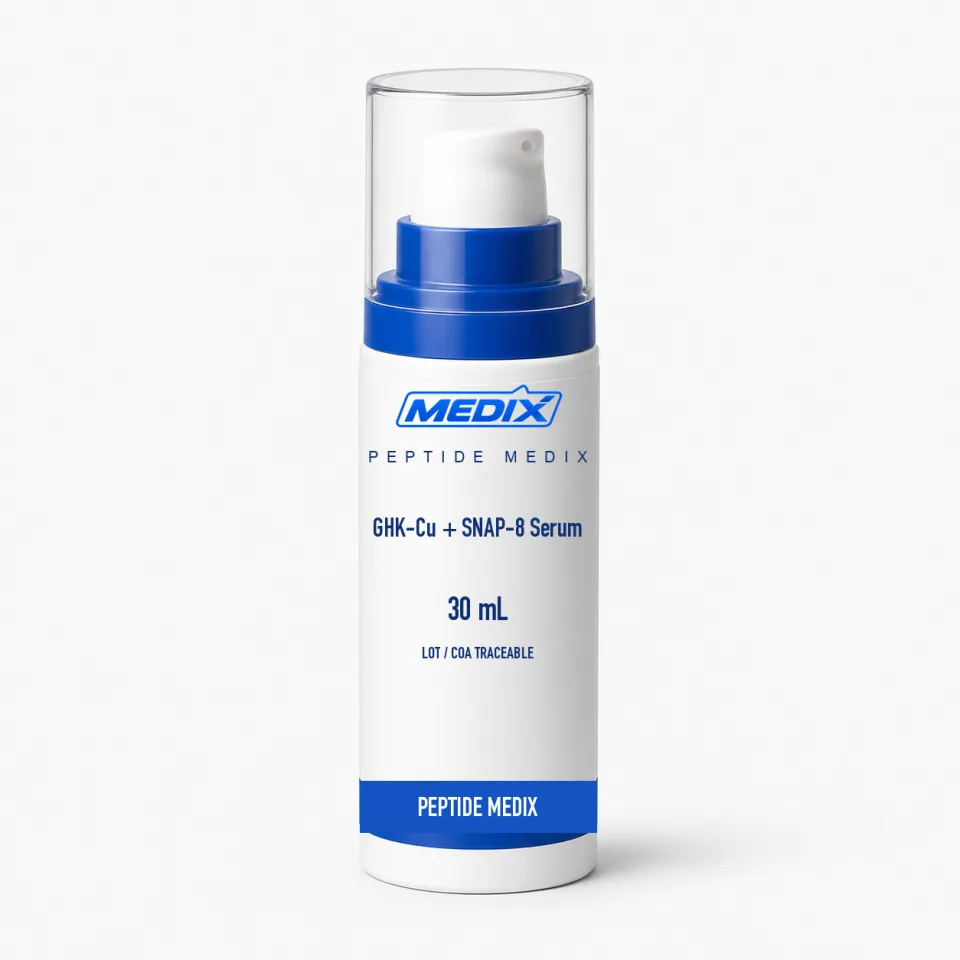
GHK-Cu + SNAP-8 Serum

Peptide Medix

GHK-Cu + SNAP-8 Serum

ghk-cu snap-8 serum
$123.00 $145.00

View options and product details