Research Overview
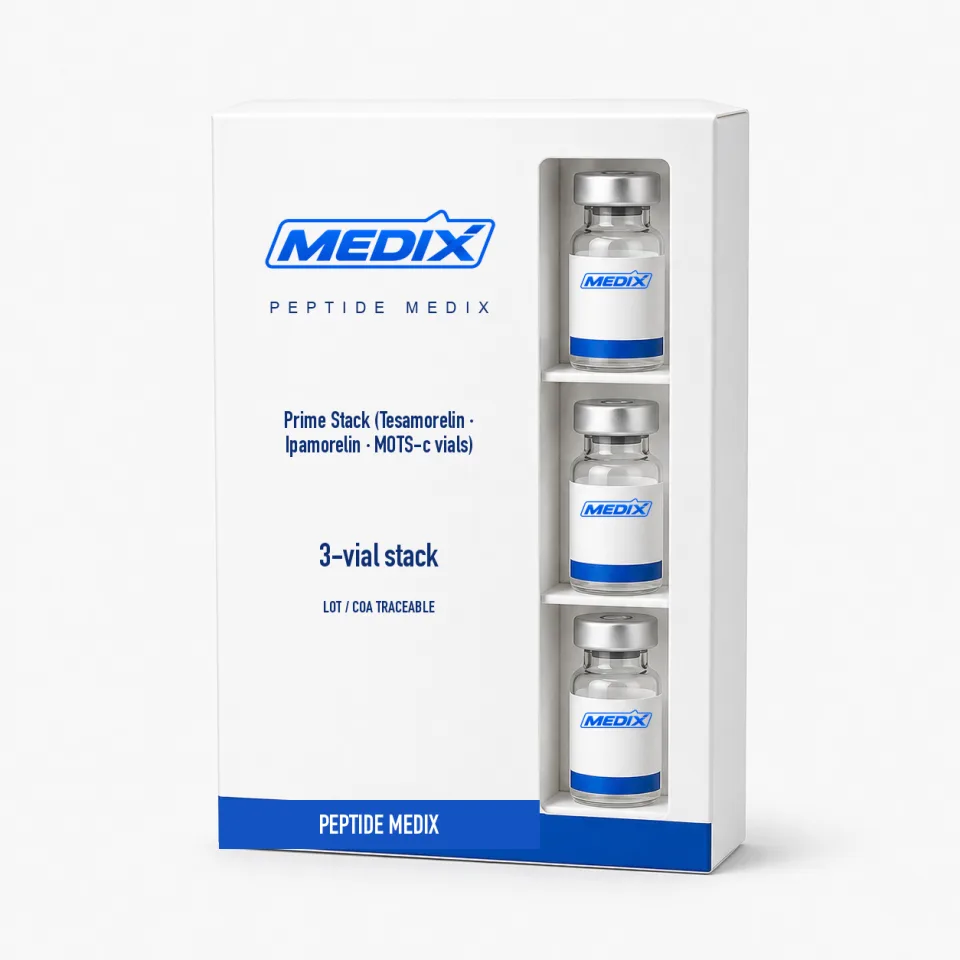
Tesamorelin
Tesamorelin is the full 44-residue GHRH sequence rather than the truncated 1-29 fragment used in sermorelin, modified at the N-terminus with a trans-3-hexenoyl group. That acylation blocks the DPP-4 cleavage site responsible for the rapid inactivation of native GHRH, giving a longer-lived molecule acting at the same class B G-protein-coupled receptor on pituitary somatotrophs. It has a regulatory history in the United States for a specific indication, though the material supplied here is research grade rather than pharmaceutical.
Ipamorelin
Ipamorelin is a pentapeptide containing two non-standard residues — aminoisobutyric acid and D-2-naphthylalanine — with a C-terminal amide. It acts at GHS-R1a, the ghrelin receptor, which was characterised through secretagogue research before its endogenous ligand was identified. Its published characterisation emphasised selectivity relative to earlier secretagogues such as GHRP-6.
MOTS-c
MOTS-c stands apart from the other two. Its open reading frame lies within the mitochondrial 12S rRNA gene, making it one of a small set of mitochondrial-derived peptides. Research has associated it with AMPK activation and folate-methionine cycle intermediates, with rodent work examining metabolic homeostasis endpoints and exercise-related physiology.
Why combine pituitary and mitochondrial arms
Growth hormone axis research and cellular energetics research have historically run on separate tracks with separate assay systems. A kit spanning both allows a single study panel to look at upstream endocrine signalling and downstream cellular energy handling without mixing the two into one uninterpretable preparation.