Research Overview
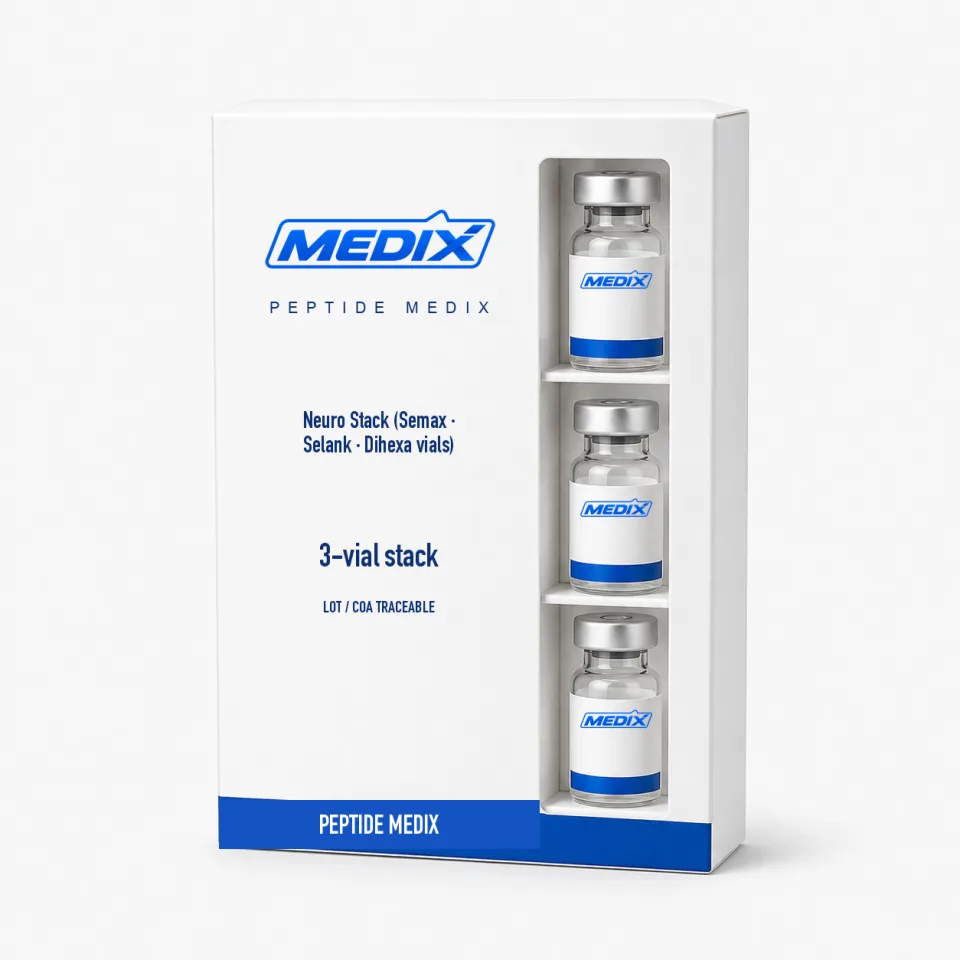
Semax
Semax takes the ACTH(4-7) sequence — which lacks the hormonal activity of full ACTH — and appends Pro-Gly-Pro at the C-terminus. That tripeptide tail markedly slows enzymatic degradation, a design principle used across this family of Russian-developed neuropeptides. Published research has examined its relationship to brain-derived neurotrophic factor and nerve growth factor expression in rodent brain tissue, along with work on trophic markers in models of cerebral ischaemia.
Selank
Selank applies the same Pro-Gly-Pro stabilisation to tuftsin, a tetrapeptide fragment of the immunoglobulin G heavy chain with a documented role in immune signalling. Its research literature is largely behavioural and neurochemical: rodent studies have looked at anxiety-model endpoints, monoamine turnover and effects on GABAergic and serotonergic markers. Because tuftsin itself is immunologically active, some studies also examine immune-related endpoints.
Dihexa
Dihexa is not a conventional peptide analogue. It derives from angiotensin IV, which acts at the AT4 receptor, and was developed as a small, metabolically stable molecule intended to cross biological barriers more readily than its parent. Its most-cited research concerns hepatocyte growth factor and the c-Met receptor tyrosine kinase, with in-vitro reports of effects on dendritic spine density in cultured hippocampal neurons.
Why the concentrations differ
Dihexa is roughly half the molecular weight of Semax or Selank and is typically examined at far lower concentrations in cell work, which is a practical argument against co-formulating these three. Separate vials let each be prepared in its own working range.