Research Overview
Design origin
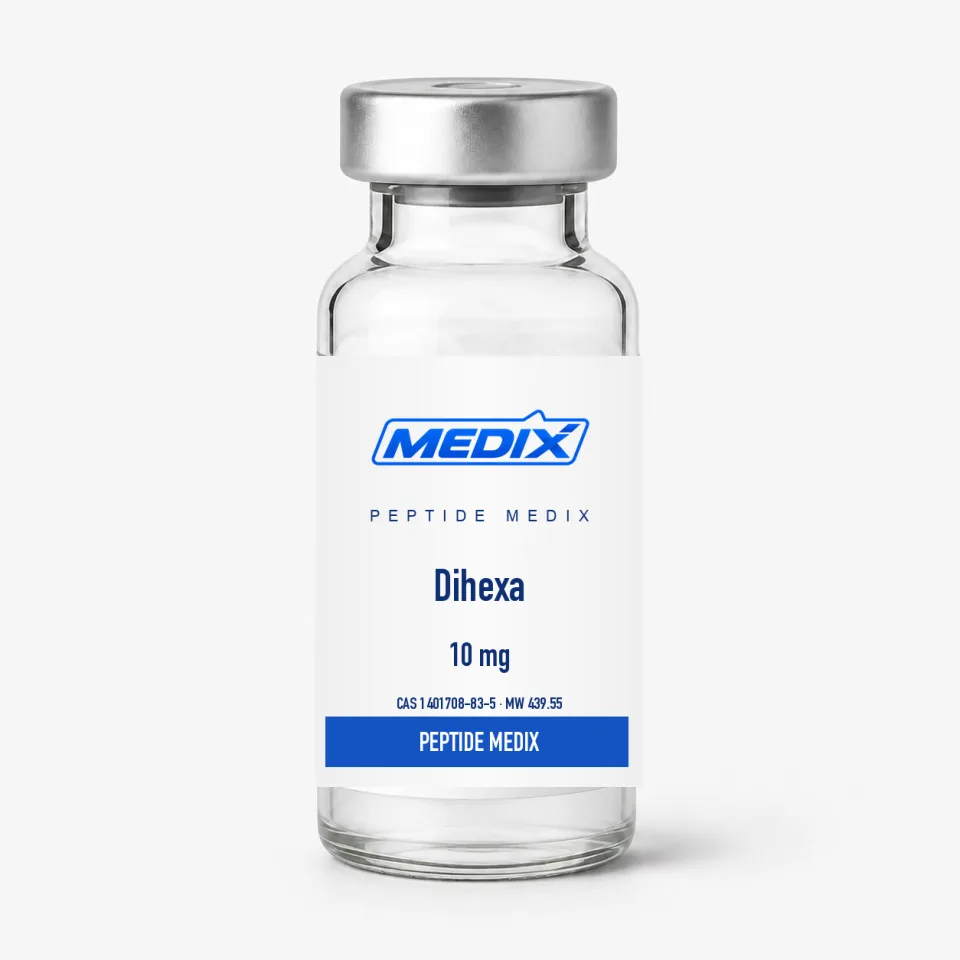
Angiotensin IV and related fragments were reported decades ago to influence learning and memory endpoints in rodents, but their peptide nature made them short-lived and poorly brain-penetrant. Dihexa was engineered to keep the essential recognition elements while replacing the vulnerable structure with lipophilic, protease-resistant caps. It is therefore best described as a peptidomimetic rather than a peptide.
HGF/c-Met mechanism
The most cited mechanistic claim is that Dihexa acts as a positive modulator of hepatocyte growth factor signaling through the c-Met receptor tyrosine kinase, with published work reporting that its effects on neuronal cultures are lost when HGF or c-Met is blocked. HGF/c-Met is a well-characterized pathway in tissue repair and neural development, which is what makes this proposed mechanism interesting and also why it warrants careful independent replication.
- Dendritic spine formation and synapse counts in cultured hippocampal neurons
- Spatial learning tasks in rodent models of cholinergic or ischemic cognitive impairment
- Electrophysiological measures of synaptic connectivity in slice preparations