Research Overview
What the modifications do
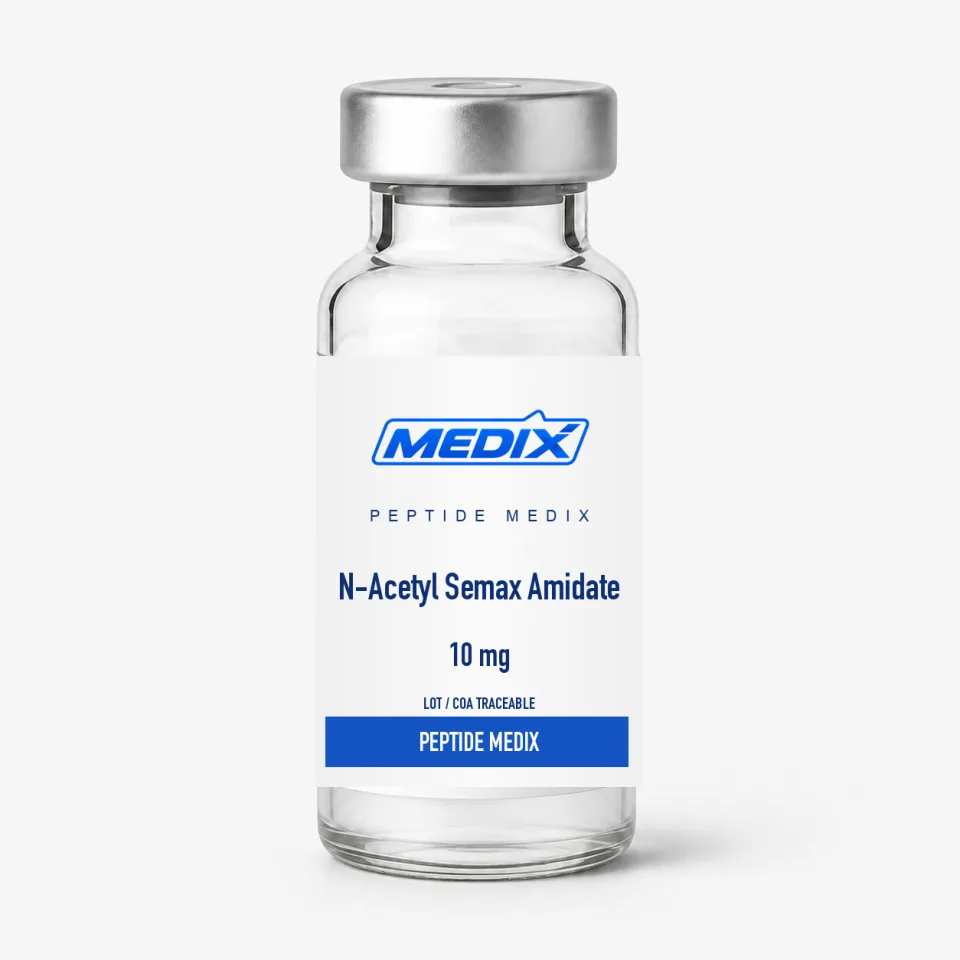
Acetylation neutralizes the free alpha-amino group at the N-terminus, and amidation replaces the terminal carboxylate with a neutral amide. Together these block the two most common routes of exopeptidase degradation — aminopeptidase and carboxypeptidase cleavage — and reduce net charge. In the wider peptide literature this pairing is a routine and well-validated approach to extending half-life; many endogenous neuropeptides are naturally C-terminally amidated.
Comparative stability studies
- Incubation in plasma, serum or brain homogenate with HPLC or LC-MS quantification of remaining intact peptide over time
- Simulated mucosal and enzymatic challenge assays used to compare protected and unprotected analogs
- Analytical characterization of degradation fragments to identify which cleavage sites are actually blocked
Shared research context with Semax
Because the backbone is unchanged, the biological questions asked of this analog largely mirror those asked of Semax: reported influence on BDNF and NGF expression, monoaminergic and cholinergic markers, and behavioral endpoints in rodent attention and learning paradigms. Whether terminal protection meaningfully changes activity in any given model is itself an open experimental question rather than a settled result.
Interpretation and limits
Analytical confirmation
Terminal modifications are easiest to verify by mass: acetylation and amidation together shift the observed molecular ion relative to unmodified Semax, so a mass-spectrometry trace confirms both changes are present on the finished material. Laboratories comparing analogs should also record net peptide content and residual counterion from the certificate of analysis, since those values affect how stock concentrations normalize between the protected and unprotected preparations.