Peptide Medix product catalog

Peptide Medix

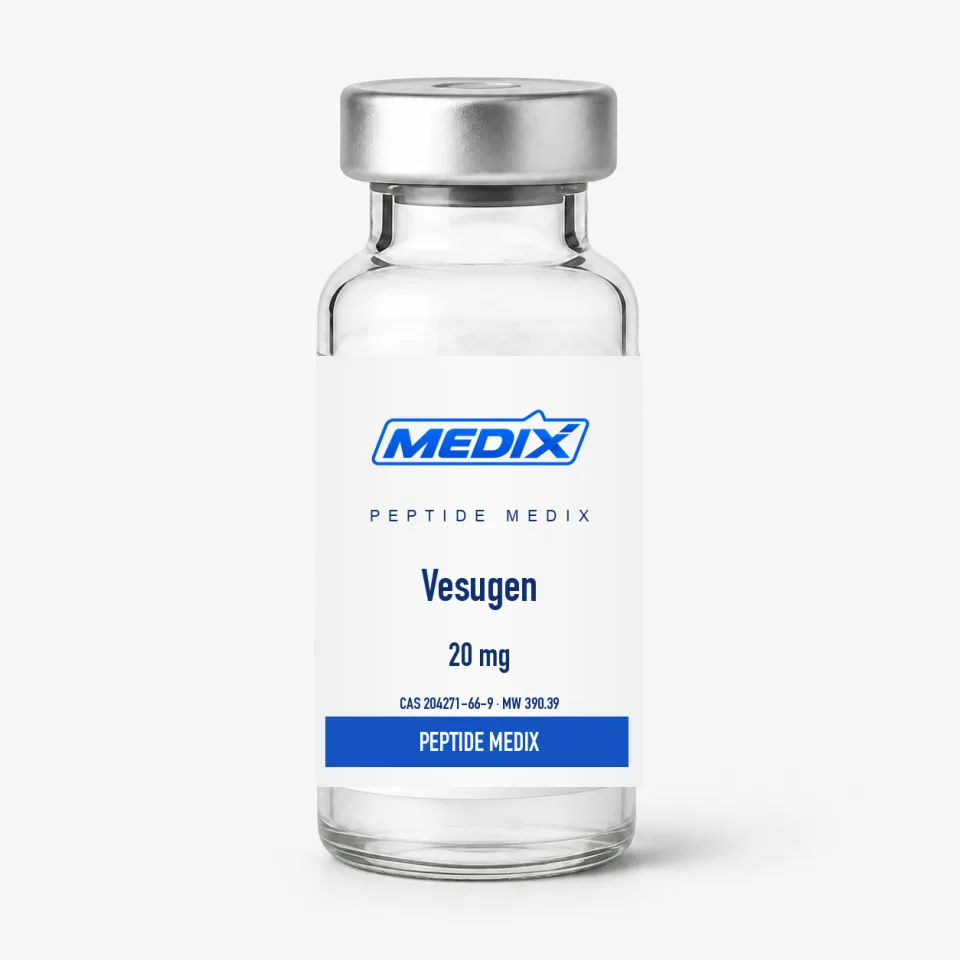
Vesugen

Lys-Glu-Asp (KED) tripeptide bioregulator used in vascular research models

Review catalog details Secure payments
Available to order
$63.00 $75.00 15% OFF
1
Categories: vesugen , ked peptide , lys-glu-asp

Choose your delivery method

Standard Shipping is automatically selected at checkout. Customers can upgrade to a faster delivery option anytime.

Overview

Vesugen is a synthetic tripeptide composed of L-lysine, L-glutamic acid, and L-aspartic acid (Lys-Glu-Asp, or KED). It is the vascular member of the Khavinson short-peptide bioregulator series, developed from earlier preparations made from vessel-wall tissue and then reduced to a defined three-residue sequence that can be synthesised and analysed precisely.

Structurally, KED extends the Vilon dipeptide by a single aspartate residue, which gives it a second free carboxylate and a more strongly anionic character at physiological pH. That difference is part of why the peptide is interesting to structural chemists: the series offers a set of closely related molecules that differ by one residue at a time, making it possible to test how small changes in sequence alter reported binding preferences for DNA and for cell-surface targets.

Laboratory work with Vesugen concentrates on endothelial cell cultures, isolated vessel preparations, and rodent models where markers of vascular tone, endothelial gene expression, and age-related changes in vessel wall structure are measured. Our material ships as a 20 mg lyophilized vial produced by solid-phase peptide synthesis and purified by HPLC to a ≥99% specification, with a lot-matched certificate of analysis available. It is supplied for laboratory research only.

Specifications

Brand Peptide Medix
Category Khavinson Bioregulators
Form Lyophilized powder in a sealed glass vial
Purity ≥99% by HPLC; lot-matched COA available
Available sizes 20 mg
CAS number 204271-66-9
Molecular formula C15H26N4O8
Molecular weight 390.39 g/mol
Amino acid sequence Lys-Glu-Asp (KED), linear tripeptide with free N- and C-termini
Peptide class Khavinson short-peptide bioregulator (tripeptide)
Tissue association Vascular and vessel-wall peptide preparations
Research areas Endothelial cell models, vascular tissue, gene expression, vascular ageing
Storage (lyophilized) −20 °C, sealed and protected from light and moisture
Storage (reconstituted) 2–8 °C, protected from light; use within the study window
Solubility Bacteriostatic or sterile water; readily soluble in aqueous buffers
SKU VESUGEN-20-MG

Highlights

  • ≥99% purity by HPLC with a lot-matched certificate of analysis available
  • 20 mg lyophilized powder in a sealed glass vial, shipped from a United States facility
  • Synthetic tripeptide Lys-Glu-Asp (KED), CAS 204271-66-9, MW 390.39 g/mol
  • Vascular member of the Khavinson short-peptide bioregulator series
  • Studied in endothelial cell cultures and isolated vessel preparations
  • Differs from the Vilon dipeptide by a single aspartate residue, useful for structure comparisons
  • Readily soluble in aqueous buffers for in-vitro assay work

What's Included

  • The vial option and size selected above
  • Final item and quantity confirmed in cart
  • Laboratory-research-use labeling

Research Overview

Position in the peptide series

Vesugen is described in the Khavinson literature as the vascular counterpart to Pinealon (nervous tissue) and Vilon (thymus). The claim that each short sequence carries tissue specificity is the central and most contested hypothesis of the whole series, and KED is one of the sequences most often used to test it.

Endothelial and vessel models

Published experiments have applied KED to cultured endothelial cells and to isolated vessel segments, measuring proliferation, expression of adhesion molecules and nitric-oxide-pathway components, and morphological markers of the vessel wall. Reported changes are generally small and concentration-dependent, and the assays used differ enough between papers that direct comparison is difficult.

Peptide-DNA interaction studies

KED appears in molecular-modelling and spectroscopy papers that examine how tri- and tetrapeptides might recognise particular nucleotide sequences. The series is attractive for this work because the members differ by only one residue, allowing systematic comparison. These are physicochemical studies; they do not by themselves establish a biological mechanism.

Ageing-related research

Analytical notes

With two free carboxylates and one free amine, KED is strongly polar and its net charge shifts with buffer pH. Researchers running binding or chromatography work should record buffer composition carefully, since retention and apparent affinity can vary with ionic strength.
Handling & Storage

Store sealed vials at −20 °C, shielded from light and moisture. Bring a vial to room temperature before opening so the powder does not draw in condensation. Reconstitute with bacteriostatic or sterile water added gently down the vial wall, then swirl rather than shake until the solution is clear. Refrigerate reconstituted material at 2–8 °C, keep it dark, and mark the container with the date and concentration. If the study spans several sessions, split the solution into single-use aliquots and freeze them to avoid repeated freeze-thaw cycles.

Vesugen FAQ

What is Vesugen?
Vesugen is the synthetic tripeptide Lys-Glu-Asp (KED) from the Khavinson short-peptide bioregulator family, associated in that literature with vascular tissue. It is supplied as a lyophilized research chemical for laboratory investigation only.
What purity is it supplied at?
Every lot is HPLC tested against a ≥99% purity specification, and a lot-matched certificate of analysis is available. The COA lists the batch number, purity result, identity confirmation, and physical description of the powder you receive.
How does it differ from Vilon?
Vesugen is Vilon's Lys-Glu sequence extended by one aspartate residue. That single addition changes the molecular weight, the net charge at neutral pH, and the tissue association reported in the source literature, which is why the two are often compared directly.
How should the vial be stored?
Keep the unopened lyophilized vial at −20 °C, away from light and moisture. After reconstitution, hold the solution at 2–8 °C for the planned study window, or freeze single-use aliquots if the material will be used over a longer period.
Which solvent is normally used?
Bacteriostatic or sterile water is standard for reconstituting this peptide in laboratory workflows. It dissolves readily in aqueous media; buffer choice beyond that depends on the assay and should be validated for pH and ionic strength compatibility.

This catalog listing is for laboratory research use only. It is not represented as a drug, food, supplement, cosmetic or diagnostic product, and it is not offered for human or veterinary use.

Customer Reviews

0 reviews
5 star
0%
4 star
0%
3 star
0%
2 star
0%
1 star
0%

Leave Your Review

Rating

No reviews yet — be the first!

Leave Your Review

Rating

Keep exploring

Related Products & Shopping Guides

Compare Vesugen with relevant categories, product topics, and practical shopping information.

Often researched together

Related research peptides, blends and lab supplies frequently ordered with Vesugen.

15% OFF
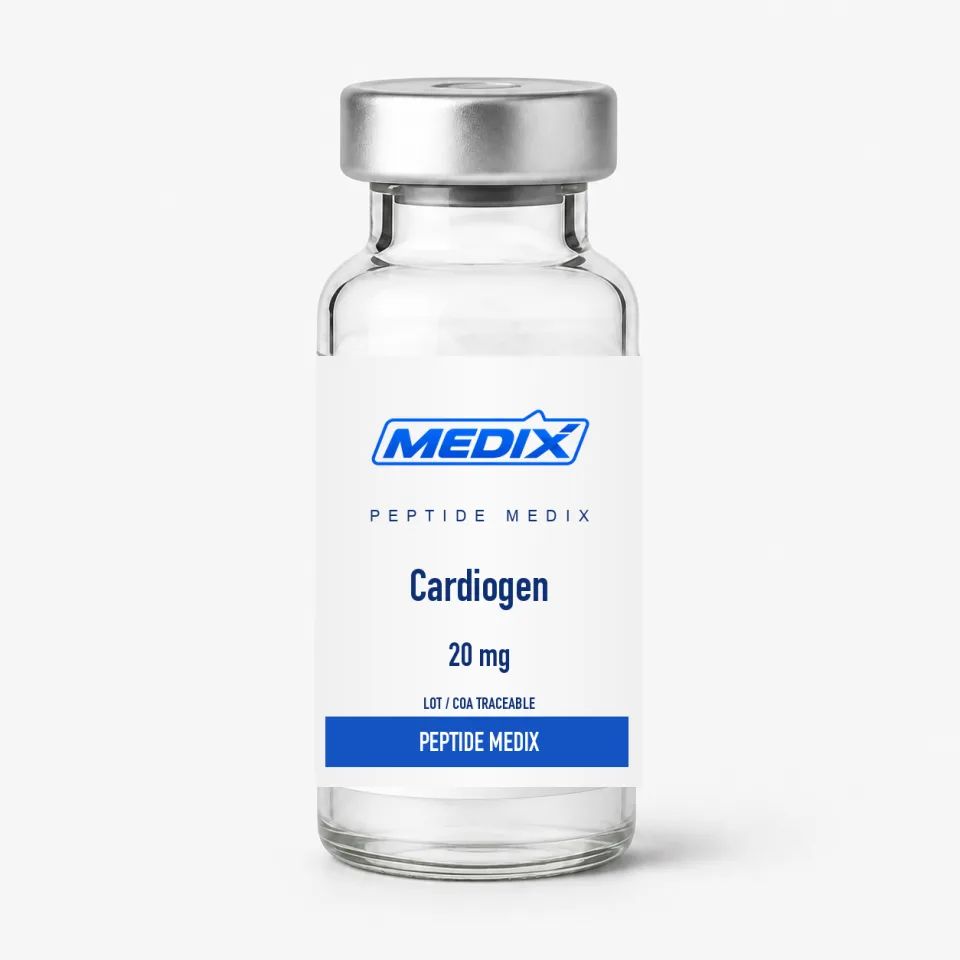
Cardiogen

Peptide Medix

Cardiogen

cardiogen
$63.00 $75.00

View options and product details

15% OFF
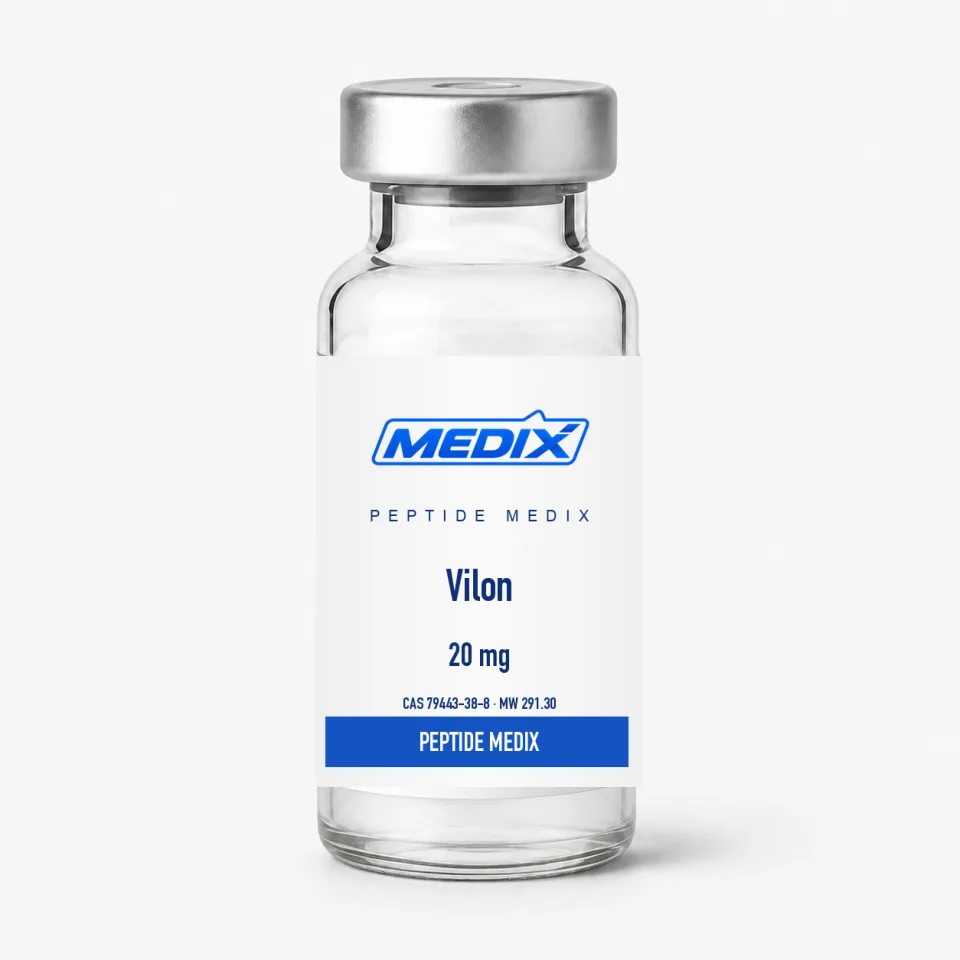
Vilon

Peptide Medix

Vilon

vilon
$63.00 $75.00

View options and product details

15% OFF
Pinealon

Peptide Medix

Pinealon

pinealon
$63.00 $75.00

View options and product details

15% OFF
Bronchogen

Peptide Medix

Bronchogen

bronchogen
$63.00 $75.00

View options and product details

15% OFF
Cartalax

Peptide Medix

Cartalax

cartalax
$63.00 $75.00

View options and product details

15% OFF
Chonluten

Peptide Medix

Chonluten

chonluten
$63.00 $75.00

View options and product details