Peptide Medix product catalog

Peptide Medix

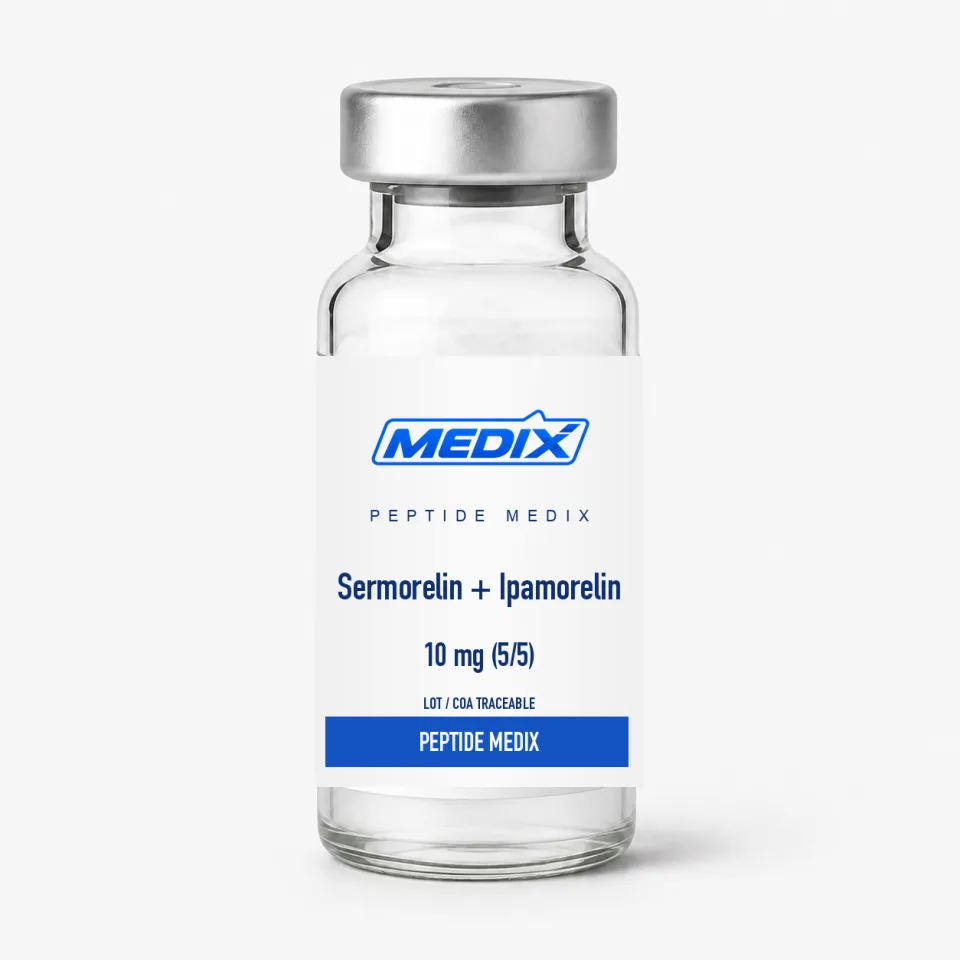
Sermorelin + Ipamorelin

Native GHRH (1-29) fragment paired with a selective ghrelin-receptor pentapeptide

Review catalog details Secure payments
Available to order · 2 of 2 options available
$97.00 $115.00 15% OFF

Choose an option

1
Categories: sermorelin ipamorelin , growth hormone blends , ghrh analogue

Choose your delivery method

Standard Shipping is automatically selected at checkout. Customers can upgrade to a faster delivery option anytime.

Overview

Sermorelin is GRF (1-29) amide: the first twenty-nine residues of human growth hormone-releasing hormone, the shortest fragment that retains full receptor activity. Unlike the modified analogues in this category it carries no substitutions and no acyl group — the sequence is native. That makes it the closest available proxy for endogenous GHRH and the reason it remains the reference compound in pituitary-function research, where an unmodified ligand is preferable to a stabilised one.

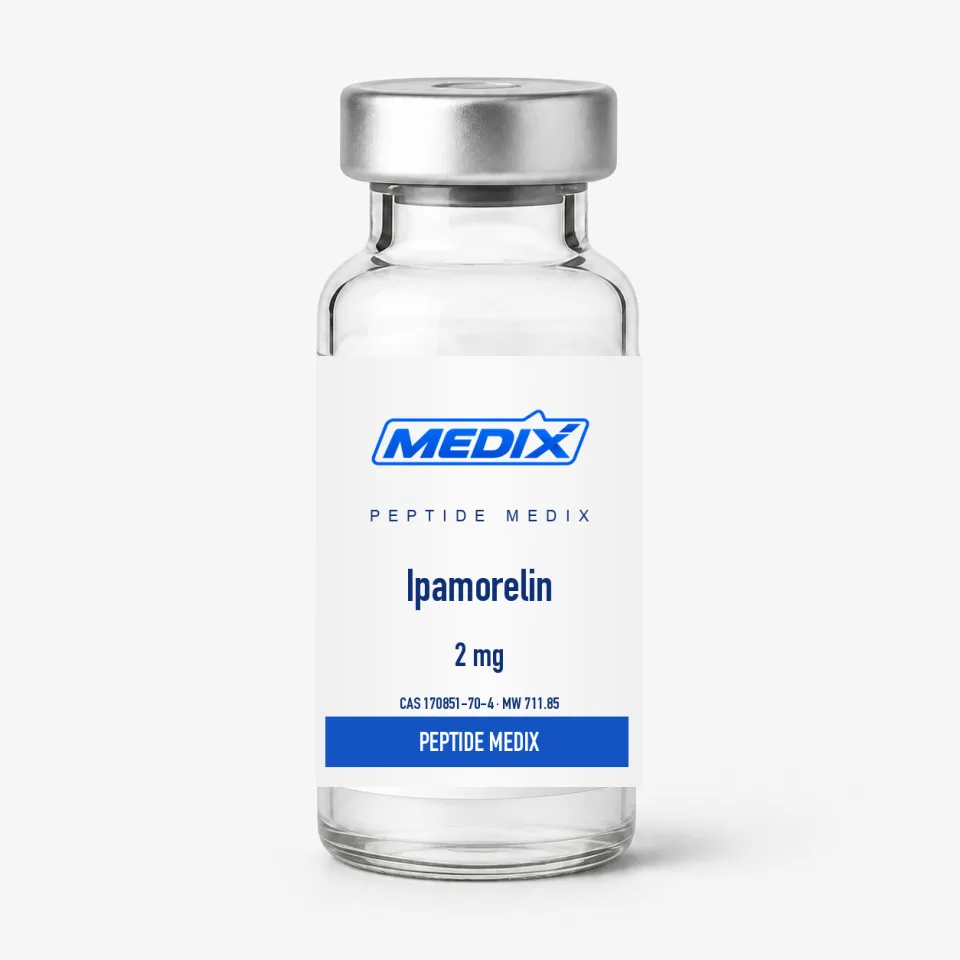
Ipamorelin supplies the second pathway. It is a pentapeptide agonist at the growth hormone secretagogue receptor, developed at Novo Nordisk and characterised as unusually selective: in the original pharmacology it released growth hormone with minimal effect on ACTH, cortisol or prolactin, unlike the earlier GHRP-6 and GHRP-2 compounds. Pairing it with Sermorelin brings a second receptor into play and reduces somatostatin tone, which otherwise limits how strongly a somatotroph responds to GHRH stimulation.

The combination is studied where investigators want a physiologically faithful stimulus rather than a maximally stabilised one. MyPeptide supplies both peptides co-lyophilized in a single sealed vial at a 1:1 ratio, third-party tested by HPLC with a lot-matched certificate of analysis. Laboratory research use only.

Specifications

Brand Peptide Medix
Category Growth Hormone Blends
Form Co-lyophilized powder, sealed glass vial
Purity ≥99% by HPLC per component; lot-matched COA available
Available sizes 10 mg (5 mg/5 mg), 20 mg (10 mg/10 mg)
Blend ratio 1:1 Sermorelin to Ipamorelin
CAS number Sermorelin: 86168-78-7 · Ipamorelin: 170851-70-4
Molecular formula Sermorelin: C149H246N44O42S · Ipamorelin: C38H49N9O5
Molecular weight Sermorelin: 3357.93 g/mol · Ipamorelin: 711.85 g/mol
Sermorelin sequence Tyr-Ala-Asp-Ala-Ile-Phe-Thr-Asn-Ser-Tyr-Arg-Lys-Val-Leu-Gly-Gln-Leu-Ser-Ala-Arg-Lys-Leu-Leu-Gln-Asp-Ile-Met-Ser-Arg-NH2 (GRF 1-29 amide)
Ipamorelin sequence Aib-His-D-2-Nal-D-Phe-Lys-NH2
Peptide class Native GHRH fragment with a growth hormone secretagogue receptor agonist
Research areas Pituitary somatotroph function, pulsatile GH release, sleep-architecture models, IGF-1 axis, ageing models
Storage Lyophilized: −20 °C, protected from light and moisture. Reconstituted: 2–8 °C, use within the study window.
Solubility Bacteriostatic water
SKU SERMORELIN-IPAMORELIN-10-MG-5-5

Highlights

  • Co-lyophilized 1:1 blend — 5 mg/5 mg or 10 mg/10 mg of Sermorelin and Ipamorelin
  • ≥99% purity by third-party HPLC per component, with a lot-matched certificate of analysis
  • Sermorelin is the unmodified native GHRH (1-29) amide sequence — no substitutions, no acyl group
  • The shortest GHRH fragment that retains full receptor activity, and the classic reference ligand
  • Ipamorelin adds selective GHS-receptor agonism with minimal cortisol and prolactin effects
  • Short duration for both components, keeping the combined signal pulsatile rather than sustained
  • Sealed vacuum-dried vial shipped from a US facility; no diluent included

What's Included

  • The vial option and size selected above
  • Final item and quantity confirmed in cart
  • Laboratory-research-use labeling

Research Overview

Sermorelin — the native fragment

Ipamorelin — the second pathway

Ipamorelin binds the growth hormone secretagogue receptor, the receptor for ghrelin. Its selectivity profile is the reason it is preferred over GHRP-6 and GHRP-2 in modern designs: comparable secretagogue potency with far less disturbance of ACTH, cortisol and prolactin, so hormone endpoints are less confounded.

Why they are paired

  • Two distinct receptors on the same somatotroph, so the effects are complementary rather than redundant.
  • GHS-receptor agonism lowers somatostatin tone, raising the ceiling on the GHRH response.
  • Both are short-acting, preserving pulsatility — important in a feedback-regulated axis.
How this differs from the CJC-1295 blend

Handling & Storage

Warm the sealed vial to room temperature before opening so moisture does not settle on the cake. Direct bacteriostatic water down the inner glass wall rather than onto the powder and swirl gently until the solution clears — shaking shears peptide chains and causes foaming that interferes with accurate withdrawal. Sermorelin is the less stable of the two components in solution, so most protocols keep the reconstituted vial refrigerated at 2–8 °C, shielded from light, and use it within a defined study window. Log the concentration of each component separately, keep unopened vials at −20 °C, and label every working stock for laboratory research use only.

Sermorelin + Ipamorelin FAQ

How is Sermorelin different from CJC-1295 (No DAC)?
Both are 29-residue GHRH fragments, but Sermorelin is the unmodified native sequence while CJC-1295 (No DAC) carries four substitutions that resist DPP-4 cleavage. Sermorelin is therefore shorter-acting and closer to endogenous GHRH, which is why it remains the reference ligand in pituitary-function research.
Why combine a GHRH fragment with Ipamorelin?
They act at different receptors on the same pituitary cell. Sermorelin engages the GHRH receptor while Ipamorelin activates the ghrelin receptor and reduces somatostatin tone, which otherwise caps the response. Animal and cell models report a larger measured growth hormone pulse from the pair than from either alone.
Are both peptides third-party tested?
Yes. Each component is analysed independently by HPLC for purity and mass spectrometry for identity before co-lyophilization. The certificate of analysis is matched to the lot number printed on your vial and can be requested before ordering or after delivery.
What does 20 mg (10/10) mean?
It is total peptide mass split evenly between the components — 10 mg of Sermorelin and 10 mg of Ipamorelin. The smaller vial contains 5 mg of each. Both peptides are dried together as a single cake, so reconstitution yields a fixed 1:1 solution.
How stable is Sermorelin once reconstituted?
Less stable than the modified GHRH analogues, since the native sequence is readily cleaved. Keep reconstituted vials at 2–8 °C, protect them from light and repeated warming, and plan study windows accordingly rather than assuming multi-week solution stability.
Can this blend be used in humans?
No. It is supplied strictly for in-vitro and laboratory animal research by qualified personnel. It is not a drug, supplement or cosmetic as sold, has no approved use in this form, and must not be administered to humans or animals outside a properly authorised study. No dosing guidance is provided.

This catalog listing is for laboratory research use only. It is not represented as a drug, food, supplement, cosmetic or diagnostic product, and it is not offered for human or veterinary use.

Customer Reviews

0 reviews
5 star
0%
4 star
0%
3 star
0%
2 star
0%
1 star
0%

Leave Your Review

Rating

No reviews yet — be the first!

Leave Your Review

Rating

Keep exploring

Related Products & Shopping Guides

Compare Sermorelin + Ipamorelin with relevant categories, product topics, and practical shopping information.

Often researched together

Related research peptides, blends and lab supplies frequently ordered with Sermorelin + Ipamorelin.

15% OFF
Sermorelin

Peptide Medix

Sermorelin

sermorelin

3 options

$38.00 $45.00

View options and product details

15% OFF
Ipamorelin

Peptide Medix

Ipamorelin

ipamorelin

3 options

$34.00 $40.00

View options and product details

15% OFF
Ipamorelin + GHRP-2

Peptide Medix

Ipamorelin + GHRP-2

ipamorelin ghrp-2
$85.00 $100.00

View options and product details