Research Overview
A compound that revealed a receptor
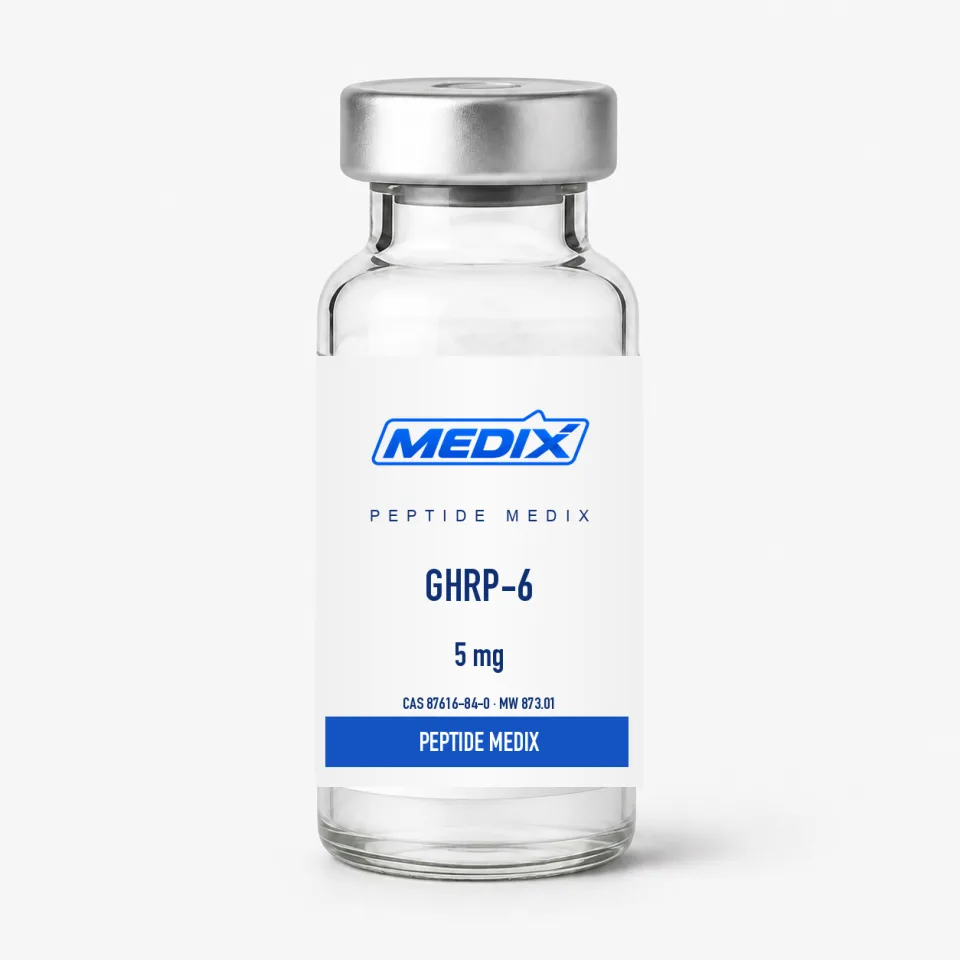
GHRP-6 occupies an unusual place in endocrine history. Because its growth hormone-releasing activity persisted when GHRH signalling was blocked, researchers concluded that a separate receptor had to exist. The peptide was then used as the ligand in the expression-cloning work that identified GHS-R1a, and the orphan receptor that resulted drove the search that uncovered ghrelin. Reviews of that period routinely use GHRP-6 as the anchor compound.
Signalling mechanism
Activation of GHS-R1a by GHRP-6 couples through Gq to phospholipase C, generating inositol trisphosphate and mobilising intracellular calcium in pituitary somatotrophs. Assays in the literature measure calcium transients, IP-1 accumulation and receptor internalisation, and the receptor's high constitutive activity is a recurring methodological consideration in these experiments.
Appetite and gastrointestinal models
- Rodent feeding studies where GHRP-6 has been reported to increase food intake more strongly than ipamorelin, consistent with mimicking ghrelin's orexigenic signal
- Gastric emptying and motility preparations examining ghrelin-receptor involvement in gut function
- Cytoprotection models in gastric and cardiac tissue, where GHRP-family peptides have been investigated for effects independent of growth hormone release
Comparative pharmacology
GHRP-6 is the baseline against which GHRP-2, hexarelin and ipamorelin are ranked. Comparative studies examine potency, the degree of concurrent cortisol and prolactin response, and receptor selectivity — differences that trace back to substitutions in the same six-residue scaffold. All findings described here come from cell-based and animal research and are not statements about human outcomes. Its long presence in the literature is itself an advantage for method work: decades of published chromatographic and mass spectrometric data make GHRP-6 a convenient reference peptide when laboratories validate new detection methods or benchmark column performance for tryptophan-rich sequences.